
Buying Guides
Wholesale & Private Label
Do Guitar Strings Have a Shelf Life? A Dealer Stock Guide
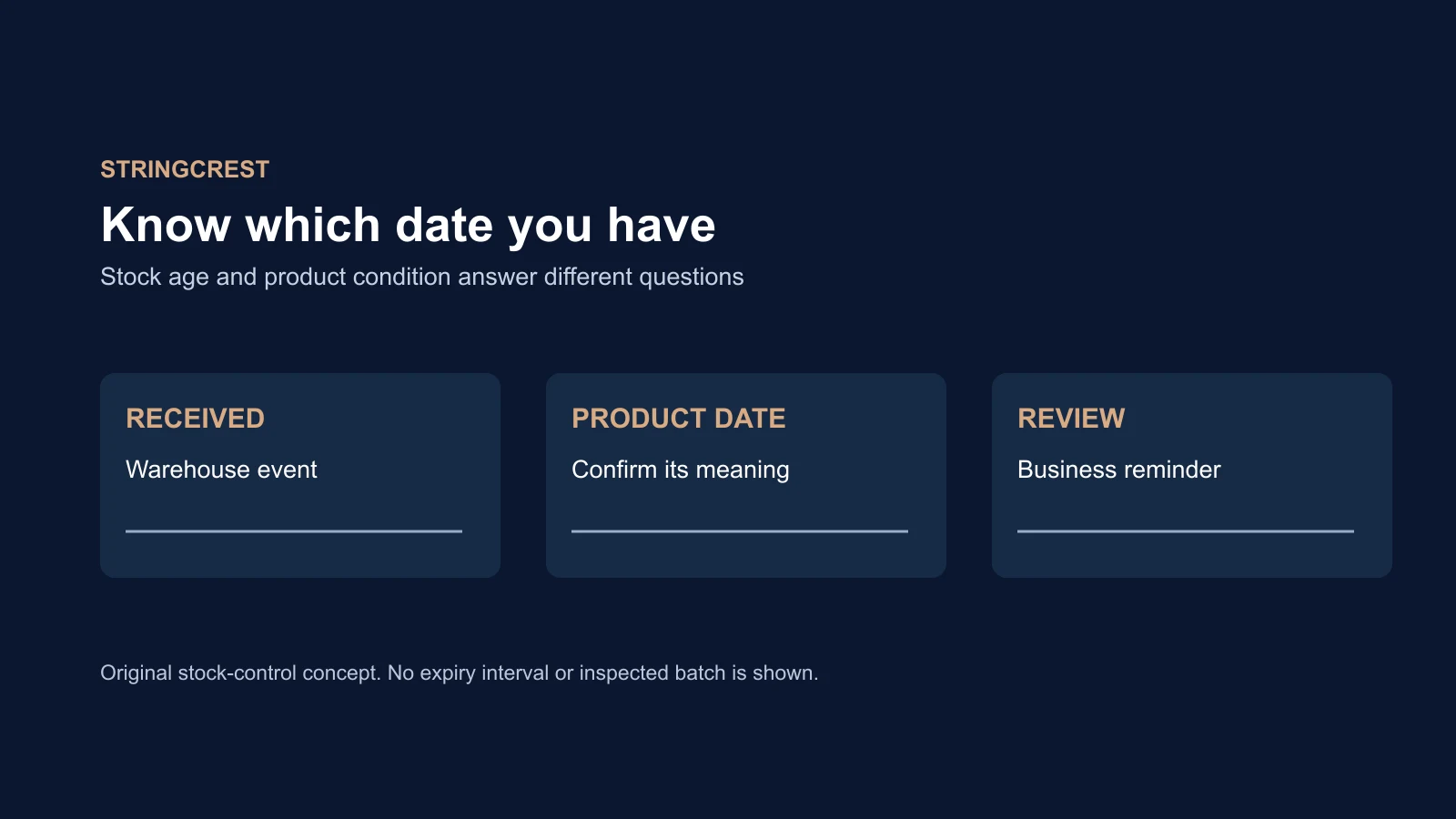
Separate arrival dates, product dates and internal review dates. Use an evidence-based stock-status record to rotate unopened strings and review uncertain or damaged packs.
Introduction
Unopened guitar strings can deteriorate before installation, but a dealer cannot assign every pack the same reliable number of years of shelf life. The useful decision depends on the identified string and package, the maker’s applicable guidance, storage history and current condition. An early warehouse receipt date is a reason to review stock; it does not by itself prove either expiry or indefinite freshness.
For dealers and importers asking do guitar strings have a shelf life, this guide separates three jobs: interpreting product dates, rotating saleable inventory and handling packs whose condition or history needs review. It provides an original stock-status record and a practical return-to-stock decision path. It does not publish a StringCrest shelf-life guarantee or claim that a package has passed a storage test.
Separate shelf life from playing life
Shelf life concerns the product before its intended use under defined storage conditions. Playing life concerns what happens after installation and exposure to use, handling and the player’s expectations. A statement about long-lasting tone during use does not establish how many unopened warehouse years a particular pack can be held.
Protective packaging is relevant to that distinction. In its company history, Ernie Ball describes Element Shield packaging and later protective envelopes as measures to maintain its strings’ freshness. That is a named manufacturer’s packaging history, not a calendar limit for every brand or evidence that a different pouch provides the same protection.
The humid-climate packaging guide covers the design and qualification of protective packages. This article addresses a different question: what the dealer should do with an identified unit already held in stock. A supplier’s packaging claim needs its applicable product and conditions attached before it becomes a stock decision.
If no documented duration exists for the exact product, leave the duration unconfirmed in the internal record. Set a review date for the business’s own stock-control task without describing that date as a scientifically established expiry. A calendar reminder can organize work even when it does not certify product condition.
Identify which date you actually have
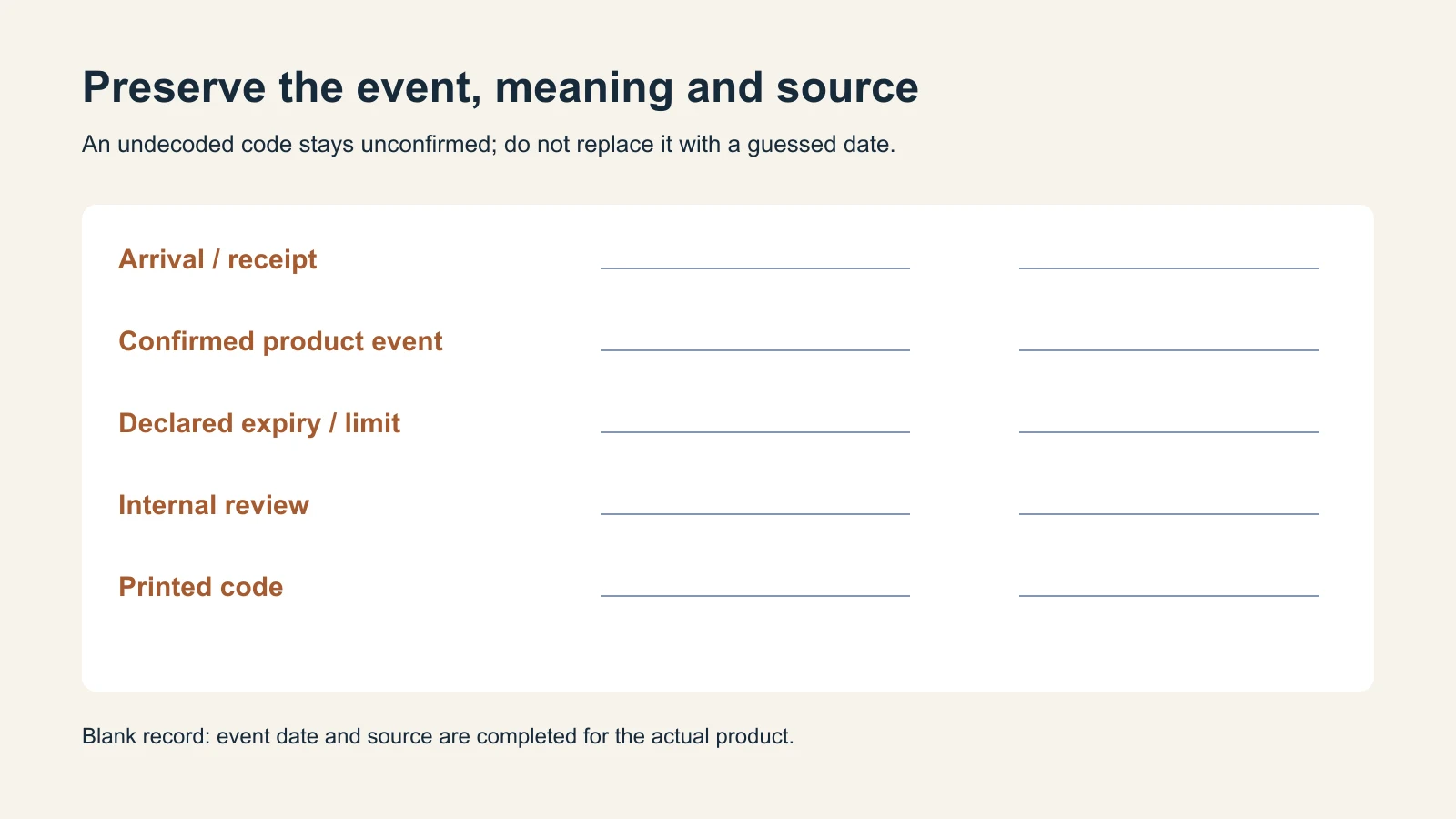
Keep the date, its meaning and its source in separate fields. A warehouse receipt, a production date and an explicit expiry date answer different questions. A batch code may require the supplier’s interpretation before it can answer any of them.
| Date or identifier | What it can establish | What it does not establish by itself |
|---|---|---|
| Warehouse arrival date | When that business received the unit | Manufacturing date or full previous storage history |
| Confirmed production or packing date | A documented event in the product’s history | A universal service interval or expiry |
| Supplier-declared expiry or storage limit | A stated limit under its applicable conditions | Permission to ignore damage or excursions |
| Internal review date | When the dealer plans another stock check | A manufacturer’s shelf-life promise |
| Undecoded batch code | An identifier that may support tracing | A date guessed from its appearance |
Where a label uses a standardized date identifier, verify its actual meaning. GS1 Finland’s data-identifier explanation distinguishes production, best-before and expiration attributes. That distinction does not mean every guitar-string pack carries these data or that a retail barcode automatically contains an expiry date. Ask the supplier to explain the actual code on the actual pack.
Keep the original code exactly as printed, including leading zeros. Store a readable photograph and the supplier’s explanation alongside any interpreted date. If staff cannot establish the code’s meaning, record the gap rather than replacing it with the arrival date and calling it manufacture.
Give unopened, opened and suspect units different statuses
The printed retail carton and the protective enclosure are separate layers. Identify which layer was opened, punctured, crushed or resealed. An opened display carton does not automatically prove that an inner pouch is damaged, while an intact-looking outer carton does not establish every inner seal’s condition.
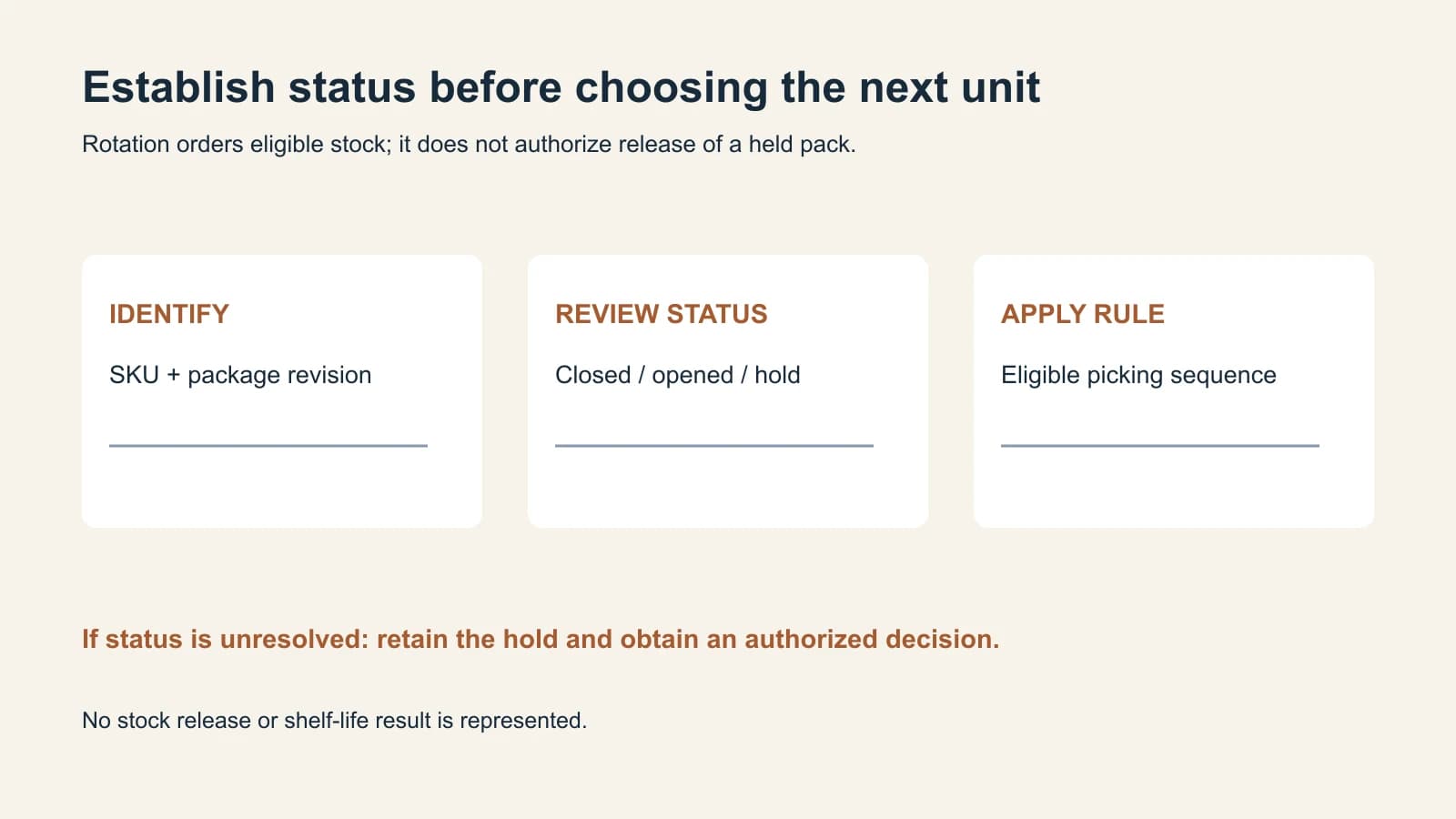
Use a small set of clear internal statuses with a written definition. For example, a dealer can distinguish saleable closed stock, an opened inspection or service unit, and stock on hold pending a decision. These are proposed management labels, not the results of a completed inspection or universal release criteria.
When a complete set is opened to supply a single string, remove that unit from the unopened-set count. Record the remaining components and their identities separately. The sets-versus-singles inventory guide explains the quantity and replenishment consequences; the shelf-history question is whether those components still have the same protection and handling record.
Keep returned stock separate until its identity, handling history and disposition have been reviewed. A customer’s statement that a packet was unused does not establish that it remained sealed or stored under the supplier’s conditions. The business needs an authorized decision about its status before it re-enters the unopened-stock location.
Rotate stock without confusing age and condition
First-in, first-out uses a known receipt sequence to organize picking. If a supplier actually declares an applicable expiry date, an expiry-based sequence can be useful for the eligible stock. Neither method should move a held unit back into saleable stock merely because it is the next one in the sequence.
Consider a hypothetical pair of deliveries for the same SKU. The older delivery has a traceable receipt record and intact packs. The newer delivery has several visibly damaged pouches. Picking the newer units to avoid old stock would ignore the condition issue. The appropriate action is to keep the damaged units under review and apply the rotation rule only to stock eligible for sale.
A rotation method also depends on identity. If the same retail name now covers a revised package or component specification, retain that revision in the record. Merging old and new revisions under one undifferentiated bin can hide which supplier guidance applies.
Keep a stock-status record that can support a decision
The original worksheet below follows a unit group or lot through a review. Define what the group contains before recording an observation. One examined packet is not proof of the condition of every pack in a shipment.
| Record field | Information to enter |
|---|---|
| Product identity | SKU, set or single, construction and package revision |
| Trace reference | Printed lot/code and the supplier’s confirmed interpretation |
| Time history | Known event dates, their meanings and source documents |
| Storage history | Known locations, handling events and relevant condition records |
| Package status | Which layers are closed, opened, damaged or uncertain |
| Observation scope | Units actually examined and method used |
| Current status | Eligible stock, opened service stock or hold under the business’s rule |
| Decision | Authorized disposition, reason, date and responsible person |
Keep observations separate from conclusions. “A puncture was visible on the primary pouch” records an observed condition. “All strings in the carton are corroded” is a much wider conclusion requiring its own evidence. Where a sample is opened, identify that unit and preserve the condition in which it was examined.
Do not clean, polish or repackage a questioned component before the supplier has the evidence needed to assess it. The rust, tarnish and receiving guide addresses visible surface concerns. Use that process when a condition issue appears rather than treating age as the only explanation.
A temperature or humidity record can document part of the storage history. It does not automatically establish the conditions inside every pack or provide a validated lifetime model. If a supplier needs particular monitoring conditions, agree their scope and how records will be connected to the product held.
Ask for a bounded supplier answer
A useful supplier request identifies the exact pack and asks which guidance applies, what its date code means and what review is needed after a known storage or package event. If the supplier offers a duration, ask when it starts and which construction, package revision and storage conditions it covers.
Distinguish a product recommendation from an assurance covering your inventory. A general statement about sealed packaging may not address a returned packet, a damaged seam or an undocumented prior warehouse. Keep unresolved conditions visible until an authorized response connects them to the stock being considered.
For a private-label project, discuss the desired distribution route and storage objective before printing a duration on artwork. Supporting documentation should concern the complete proposed string-and-package system. A film specification or an accelerated comparison alone should not be converted into a number of real-world shelf years.
Use the packaging claims evidence guide for public wording and substantiation. The practical output of this stock review is narrower: a traceable decision for a defined group of units, plus any supplier questions still open.
FAQ
Should a dealer discard every pack after one year?
This guide establishes no one-year rule. Follow applicable supplier guidance and the business’s documented review criteria for the identified product. Known damage or an unresolved condition still needs assessment regardless of age.
Does a sealed-looking pack prove the strings are fresh?
It is one observation about the enclosure, not a complete record of its protection, contents or history. Keep product identity, applicable guidance, storage information and any inspection evidence together.
Can we reset the shelf-life clock by repacking strings?
Changing the package does not erase the product’s previous history or create a validated new duration. Record the repacking event and obtain an applicable decision about the product and its new protection before making a claim.
Conclusion
The question for a dealer is whether an identified unit remains eligible for its intended sale or use under the applicable conditions. Separate product dates from warehouse dates, preserve opened and held statuses, and apply rotation only after stock eligibility is clear.
For a new protection or stock-control project, begin with StringCrest’s private-label discussion page. Send Your Stock and Package Requirements with the product identity, revision and unresolved questions. Any shelf-life wording or stock disposition needs evidence for the actual product; this educational framework is not a guaranteed storage term.
FROM GUIDE TO PRODUCT
Connect this guide to StringCrest product ranges.
Review the relevant range, then bring the instrument, complete specification and open questions into one project brief.
YOUR PRODUCT · YOUR BRAND
Discuss your next string project with Frank.
Share your instrument category, target market, gauge or material direction and private-label packaging requirements.

ABOUT THE AUTHOR
Frank Zou
Frank works directly with musical-instrument brands, importers and distributors on string specifications, product selection and private-label project requirements.
Meet Frank