
Wholesale Planning
Materials & Construction
Double Ball End Guitar Strings: A Headless Fit Guide
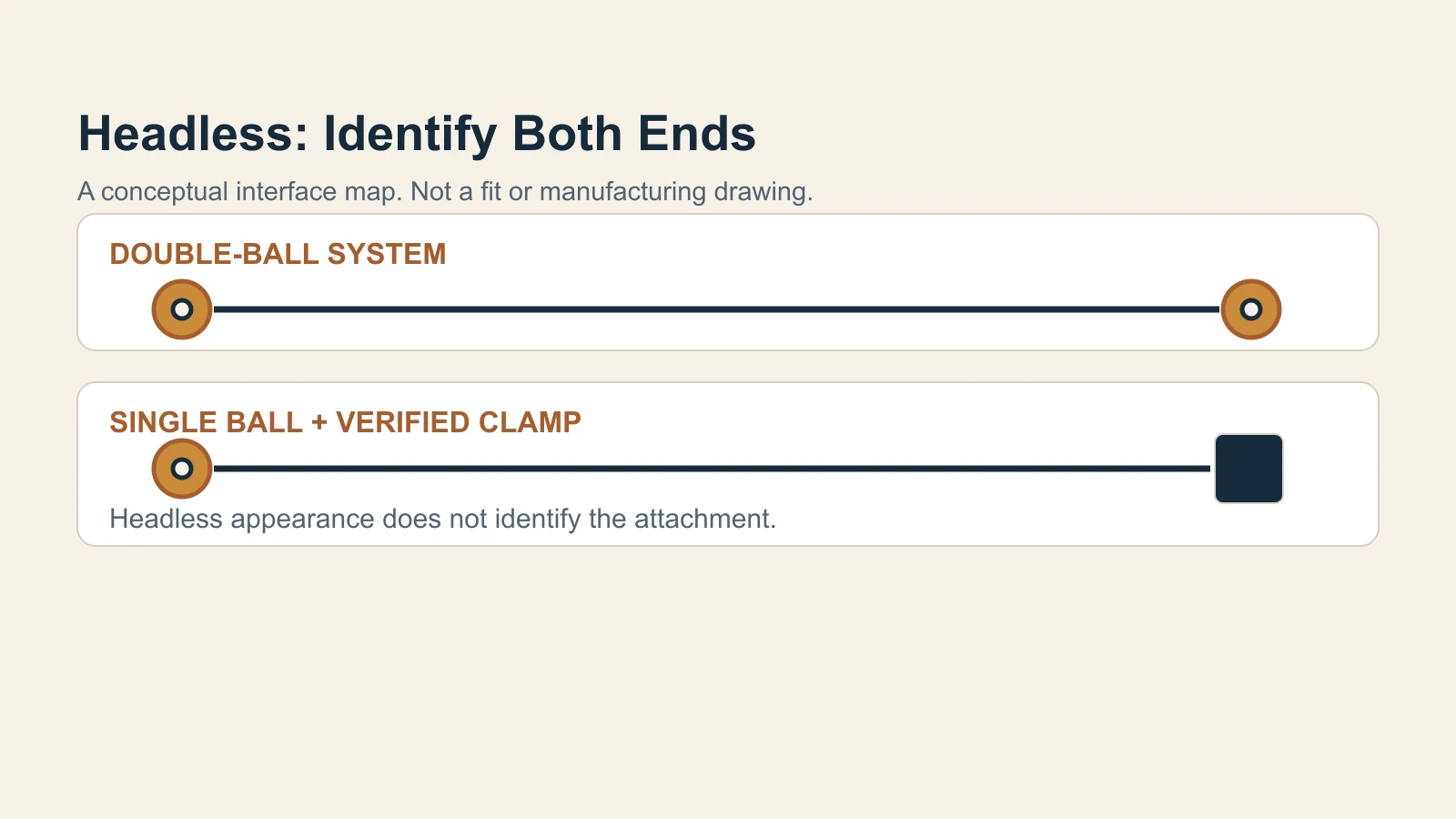
A headless guitar does not identify its string format. Separate two retained balls, a free-end lock and an applicable adapter before defining the fit brief.
Introduction
Double ball end guitar strings have a retained ball at each end, but a headless guitar does not automatically require them. Some instruments use a precisely made double-ball string; others retain one ball at the bridge and clamp the free end near the nut. A particular model may also permit a single-ball adapter. Identify the actual retention system before choosing a replacement or preparing a private-label brief.
For a US dealer or importer, “headless, six strings” leaves the main fit question unanswered. The useful record names the guitar, bridge and headpiece revisions, the string format, and the maker's applicable instructions. It then defines the relevant end references and length requirements for each component. A familiar gauge set or scale length cannot supply those missing answers.
Identify the two ends before ordering
A double-ball construction and a single-ball clamping installation secure the string in different ways. The following official examples establish that distinction; they do not approve an unspecified replacement.
| Documented system | What identifies the string arrangement | What the buyer still needs |
|---|---|---|
| Double-ball string on a compatible instrument | A manufactured ball at both ends, with the required finished length | Exact string and hardware compatibility, both seating interfaces and the maker's length definition |
| Single-ball string with a head-end lock | One ball is retained at the bridge; a free end is secured by the specified lock | Applicable hardware revision, string construction, reach and clamping instructions |
| Single-ball use with an adapter | A documented accessory changes the permitted attachment arrangement | The exact adapter, its applicable instrument and installation instructions |
D'Addario's ESXL120 page identifies a double-ball electric set made to Steinberger specifications. It supports that named product description, rather than a claim that every headless instrument accepts the same string.
Steinberger's Synapse restringing instructions describe precisely made double-ball strings and also give a separate single-ball method using the headpiece's clamping screws. The two methods belong to that documented instrument arrangement. Do not assume a different headpiece has the same provision.
A separate example is the Strandberg EGS Rev 7 string-change guide. Its procedure combines a bridge-end ball with a string lock at the other end. The page directs EGS Arc users to different instructions. That revision distinction matters more than a general “headless compatible” label; this article does not reproduce either installation sequence.
The Steinberger GT-PRO Deluxe page lists an optional Single Ball String Adaptor, STADG06. An adapter is therefore another item to identify, not an attachment feature to assume from the guitar's outline. Confirm the actual instrument, accessory and current instructions before treating that option as applicable.
Define length from the retention references
In a double-ball application, adding spare loose string is not the same solution as supplying extra material for a conventional tuner post. The manufactured end relationship must suit the intended hardware and its adjustment arrangement. Steinberger's Synapse instructions describe the double-ball option as a precise-length string that does not need cutting. That is a reason to obtain the specified component, not a universal length to copy into another project.
Keep three records distinct:
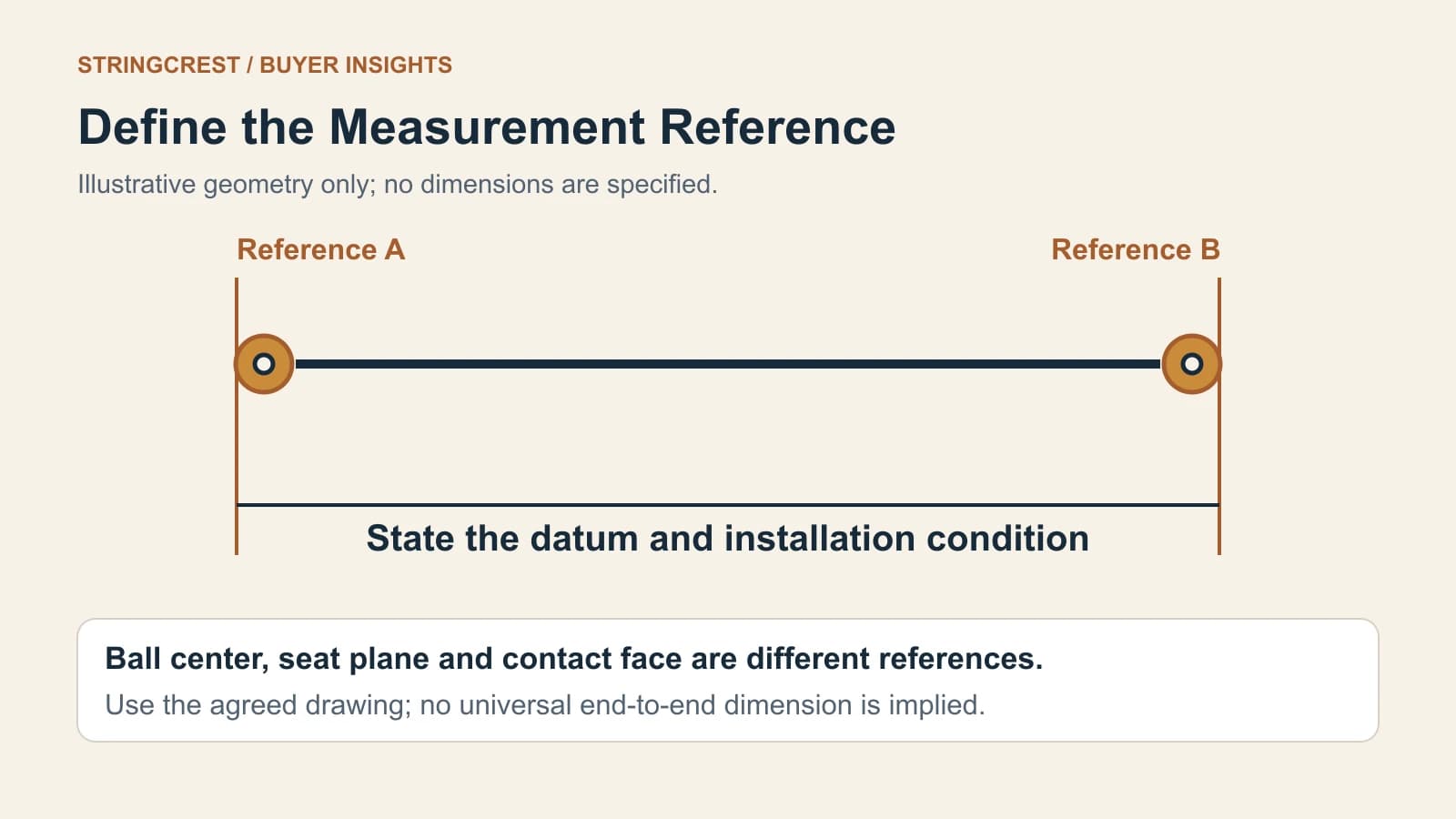
- Speaking length: the intended vibrating section between the applicable nut or zero-fret contact and saddle contact.
- Installed retention references: the places where the hardware supports the two retained ends, or the bridge end and specified clamping region.
- Supplied component definition: the manufacturer's drawing references for the finished string and its ends, measured under the stated method and condition.
These references may be related, but they are not interchangeable. “Ball to ball” can still be ambiguous if one person measures outer edges and another uses seating surfaces. Mark the actual datums on a drawing or clearly identified reference view. Ask which condition applies to the string measurement and which tuner or bridge state applies to the instrument record. Leave the value open until the responsible maker or supplier defines it.
The existing electric-string length guide covers general supplied length, installed paths and tuner preparation. This headless brief adds the question that ordinary spare-length advice cannot answer: what finished end relationship does this retention system require?
Use a retention-specific fit brief
Start with the exact instrument and known hardware. A replacement bridge, headpiece or adapter can change the question even when the guitar's model name remains the same. Preserve the maker document and revision that identify the arrangement actually present.
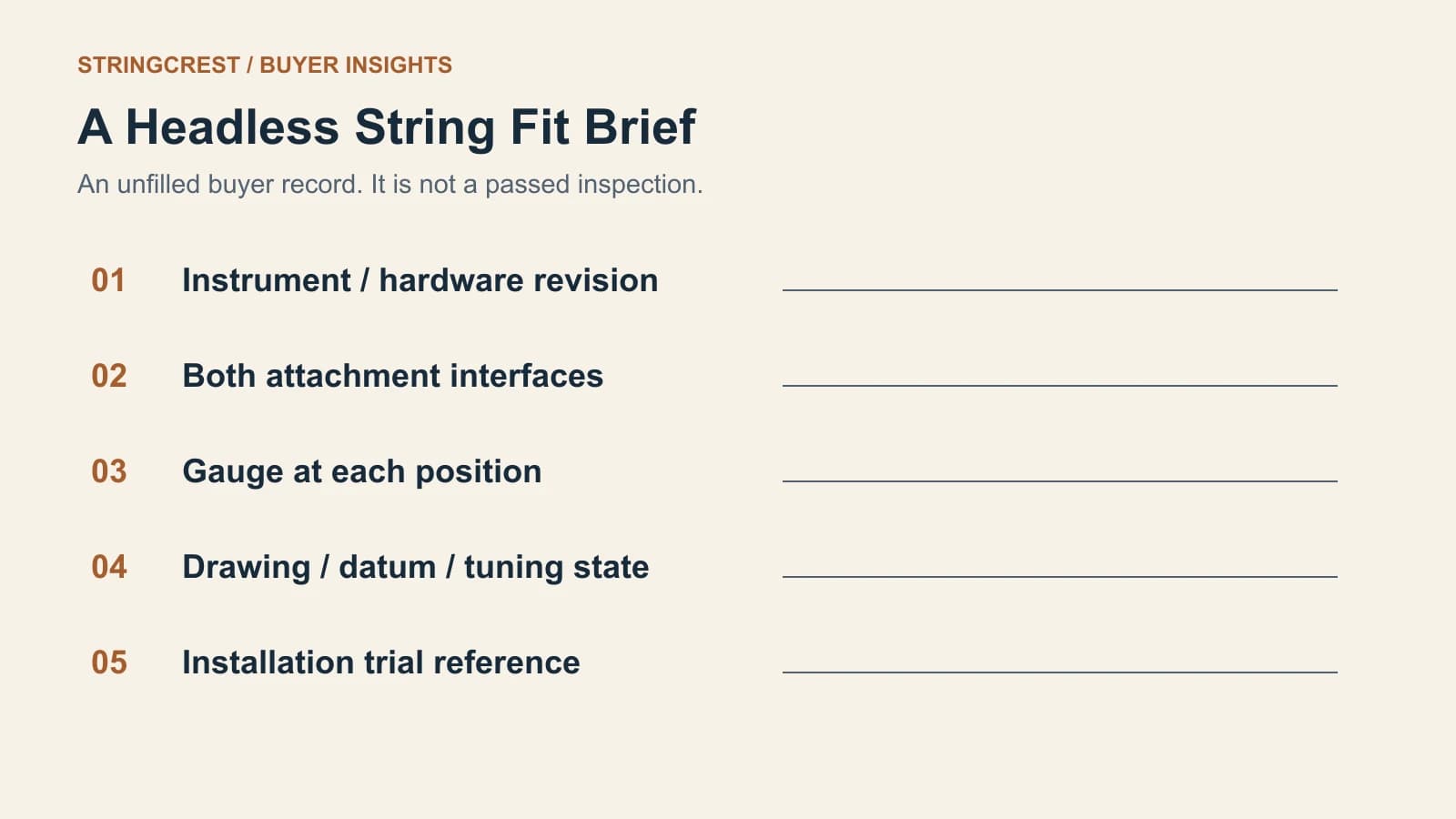
The following is a blank buyer record. It contains no recommended dimensions, production tolerances or completed installation results. The reference letters are labels to agree with the relevant drawing, not standardized industry datums.
Instrument / version / reference specimen: ______
Bridge / headpiece / adapter part and revision: ______
Maker instruction or drawing / revision / date: ______
| Fit question | Requirement, source and unresolved entry |
|---|---|
| What is retained at each end? | Bridge end: ____; head end: ____; source: ____ |
| Where does the measurement start and finish? | Datum A: ____; datum B or clamp reference: ____; marked drawing/view: ____ |
| What length is being specified? | Dimension definition: ____; value/unit: ____; measurement condition/method: ____ |
| Which hardware state applies? | Maker-defined adjustment or reference state: ____; instruction reference: ____ |
| What must pass through or seat in the hardware? | End geometry and clearance requirements: ____; applicable drawing/source: ____ |
| Where may construction transitions lie? | End wrap, full winding or other transition requirements: ____; source: ____ |
For a six-string proposal, carry those references into a component table. Positions 1–6 below run from the treble side to the bass side; they do not prescribe a tuning. Enter the intended note with its octave and the actual component identity. A different string count needs a corresponding record.
| Physical position | Target note / component reference | End and length requirement reference | Candidate evidence / open question |
|---|---|---|---|
| 1 | ______ | ______ | ______ |
| 2 | ______ | ______ | ______ |
| 3 | ______ | ______ | ______ |
| 4 | ______ | ______ | ______ |
| 5 | ______ | ______ | ______ |
| 6 | ______ | ______ | ______ |
Record each position's actual gauge and construction with its component specification; do not infer the inner strings from the packet's two outside gauges. An end-wrap or winding transition also needs its own location information where it affects the target passage or contact. A supplied overall length alone leaves those questions open.
Separate an identified candidate from an observed fit
Use documented for a requirement or component supported by an identified source. Keep unknown when a needed end, length reference or hardware revision is missing. Mark a mismatch only when the candidate contradicts a confirmed requirement, such as an end type or dimension explicitly excluded by the applicable hardware specification. A lack of compatibility evidence remains unknown.
Those descriptions are documentary findings. A separate installation record must state what was actually fitted, by whom, under which instructions and with what result. None of the blank entries above represents an approved sample. An identified candidate is not yet evidence of installed seating, usable adjustment range or removal behavior on the buyer's guitar.
The electric-string end and bridge-fit guide covers the broader end-seat and sample-observation process. Keep this article's specific headpiece, adapter and end-reference information attached to that record. If the hardware or string changes, identify the change before carrying an earlier fit conclusion forward.
FAQ
Can an ordinary single-ball set replace a double-ball set?
Only when the actual instrument's documented clamping method or an applicable adapter permits it. The Synapse method and GT-PRO accessory above are named examples, not universal conversion instructions. Confirm the proposed component and required reach before changing the installation.
Is every double-ball set suitable for every Steinberger system?
A general brand reference does not settle the exact system. Steinberger's accessory information distinguishes TranScale and TransTrem-calibrated guitar strings from its other guitar entries. Retain the specific instrument and string classification. The ESXL120 description alone does not establish suitability for every special system.
Should a double-ball string be cut to make it fit?
Do not turn a finished double-ball component into another format by guesswork. Its two retained ends are part of the specified construction. If it does not engage as instructed, preserve its identity and ask the maker or an appropriate technician to resolve the mismatch. A trimming direction for a free-end lock does not establish a method for altering a double-ball string.
Conclusion
Order a headless replacement from the actual retention system. Establish whether it needs two manufactured balls, a free-end lock or a documented adapter; then agree the relevant interfaces, length datums and component identities. Keep missing information and observed installation results separate.
StringCrest's electric guitar category is a starting point for a project discussion. It does not establish a double-ball SKU, adapter supply, production capability or compatibility approval.
FROM GUIDE TO PRODUCT
Connect this guide to StringCrest product ranges.
Review the relevant range, then bring the instrument, complete specification and open questions into one project brief.
YOUR PRODUCT · YOUR BRAND
Discuss your next string project with Frank.
Share your instrument category, target market, gauge or material direction and private-label packaging requirements.

ABOUT THE AUTHOR
Frank Zou
Frank works directly with musical-instrument brands, importers and distributors on string specifications, product selection and private-label project requirements.
Meet Frank