
Materials & Construction
Wholesale Planning
Acoustic Guitar String Ball Ends and Bridge-Pin Fit: A Wholesale Sample Checklist
A controlled bridge-fit check for wholesale acoustic guitar string samples.
Introduction
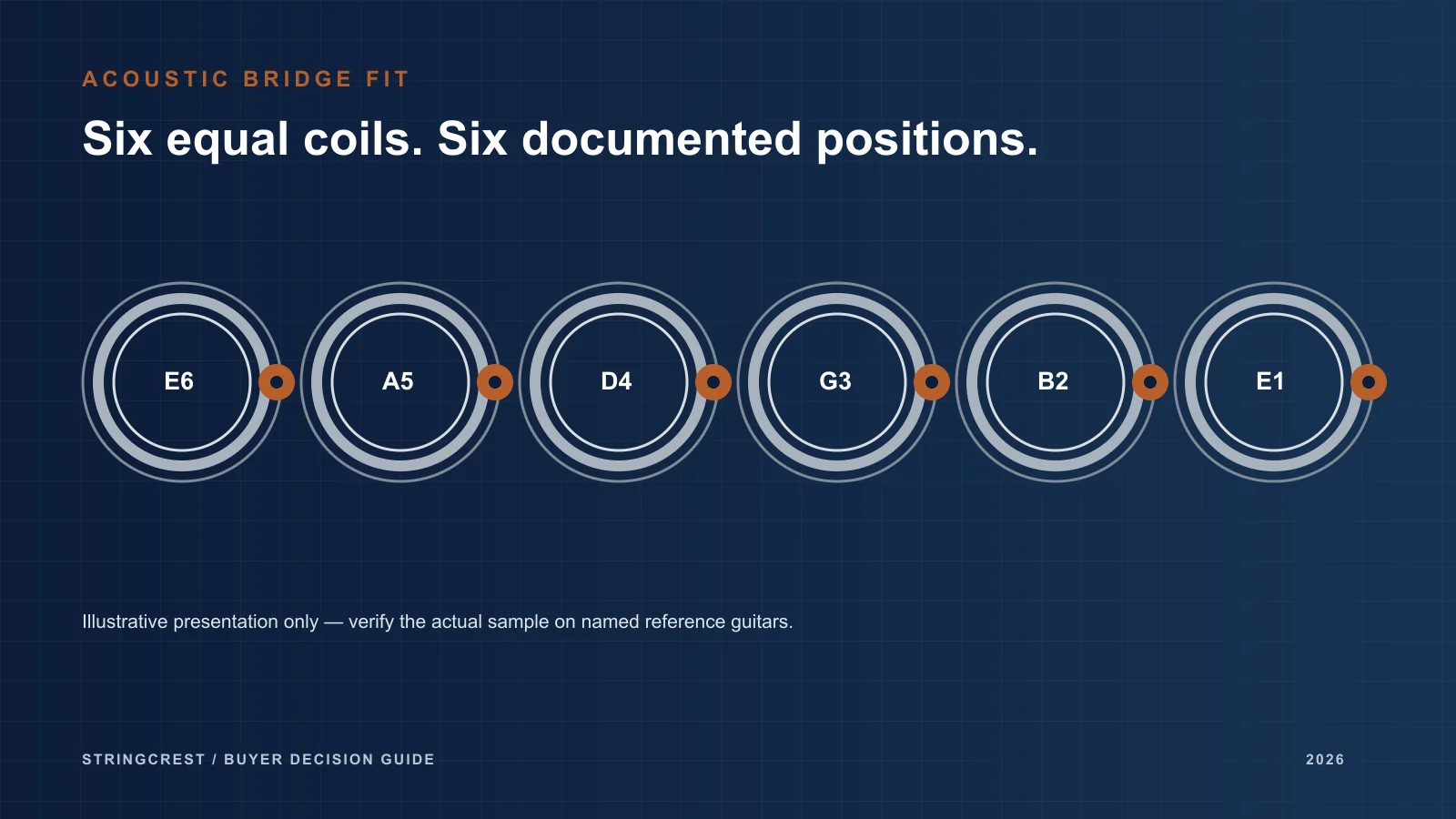
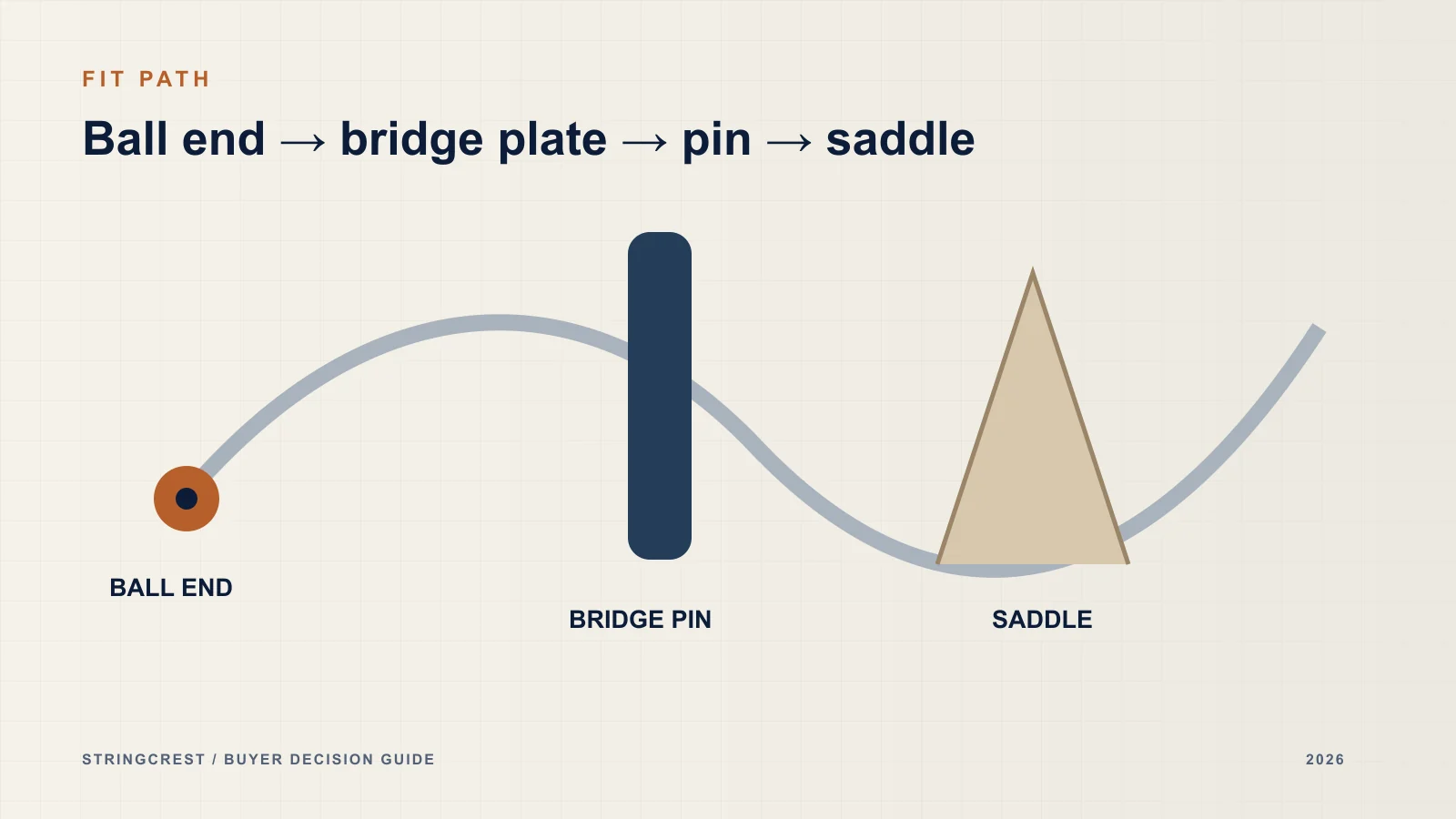
For a steel-string acoustic guitar, the ball end, bridge plate, bridge pin and saddle form one installation path. A sample can have the expected gauge and material yet still need investigation if the ball end does not seat predictably on the buyer's reference instruments. The correct question is not whether one ball-end geometry is universally best. It is whether the complete six-position sample can be installed, tuned and removed consistently on the instruments and bridge systems the buyer defined.
This checklist is for distributors, retailers and private-label buyers evaluating wholesale acoustic guitar string samples. It does not authorize modification of a guitar, prescribe a universal bridge-pin dimension or claim that one short trial proves long-term durability or tone.
Record the complete six-position sample
Keep every string tied to its position
Assign a sample code and revision. Record all six positions from low E through high E, gauge or agreed diameter, material direction, plain or wound allocation, ball-end construction, overall or usable length where relevant, and packaging identity. Keep individual sleeves with the set during review.
Metal strings intended for retail presentation should be evenly circularly coiled and should not be folded into hairpin bundles. Coil appearance is a packaging check, not proof of measured length. If length is contractual, define the reference points, tool and tolerance before comparing samples.
Select reference guitars before installation
List the make or internal asset ID, model, scale length, bridge and pin type, current setup, tuning and relevant condition of every reference guitar. Use instruments representative of the buyer's actual channel rather than choosing only one convenient test guitar. If the channel includes unusual bridges or proprietary pin systems, treat those as separate fit cases.
Inspect the instrument first
Do not use a damaged bridge, worn pin or questionable bridge plate to judge a string sample without recording that condition. Photograph the bridge area before installation. If repair or modification may be needed, stop and use a qualified technician. A string trial should not become an uncontrolled guitar repair.
Observe the seating path, not just the pin head
Official Fender, Taylor and Martin instructions all emphasize that the ball end must be seated against the internal bridge or bridge-plate area rather than hanging on the end of the pin. Installation methods vary by instrument. Follow the reference guitar maker's instructions and record the method used.
After inserting the string and pin, apply only the normal controlled pull used by the approved installation method. Confirm that the ball end finds a stable seat, the pin remains in its expected position and the string passes toward the saddle without an unexplained snag. Do not hammer or force a bridge pin.
Tune in controlled steps
Bring the string toward pitch gradually using the guitar maker's safe method. Watch for a pin that rises unexpectedly, a ball end that slips, a winding transition that reaches an unintended contact point or a string that cannot follow the expected path. Stop if the instrument or string shows a safety concern.
Record installation observations separately for all six positions. A low-E result does not prove the high-E position, and a successful first installation does not prove repeatability. If the sample is removed and reinstalled, document that as a separate cycle.
Separate fit from subjective playing response
Fit observations include seating, pin behavior, clearance, winding-transition location and stable tuning after the defined settling period. Playing observations may include feel, response and balance on named tasks. Keep them in different fields. This prevents a preferred sound from hiding a mechanical fit issue, or a fit difference from becoming an unsupported performance claim.
Use the same tasks for each candidate
Define a short task set such as open-string tuning, first-position chords, controlled strumming and single-note comparison. Use the same player or documented procedure, reference guitar, pick or fingerstyle approach and observation time where practical. Describe what happened; do not convert one player's preference into a universal promise.
Compare more than one relevant bridge case
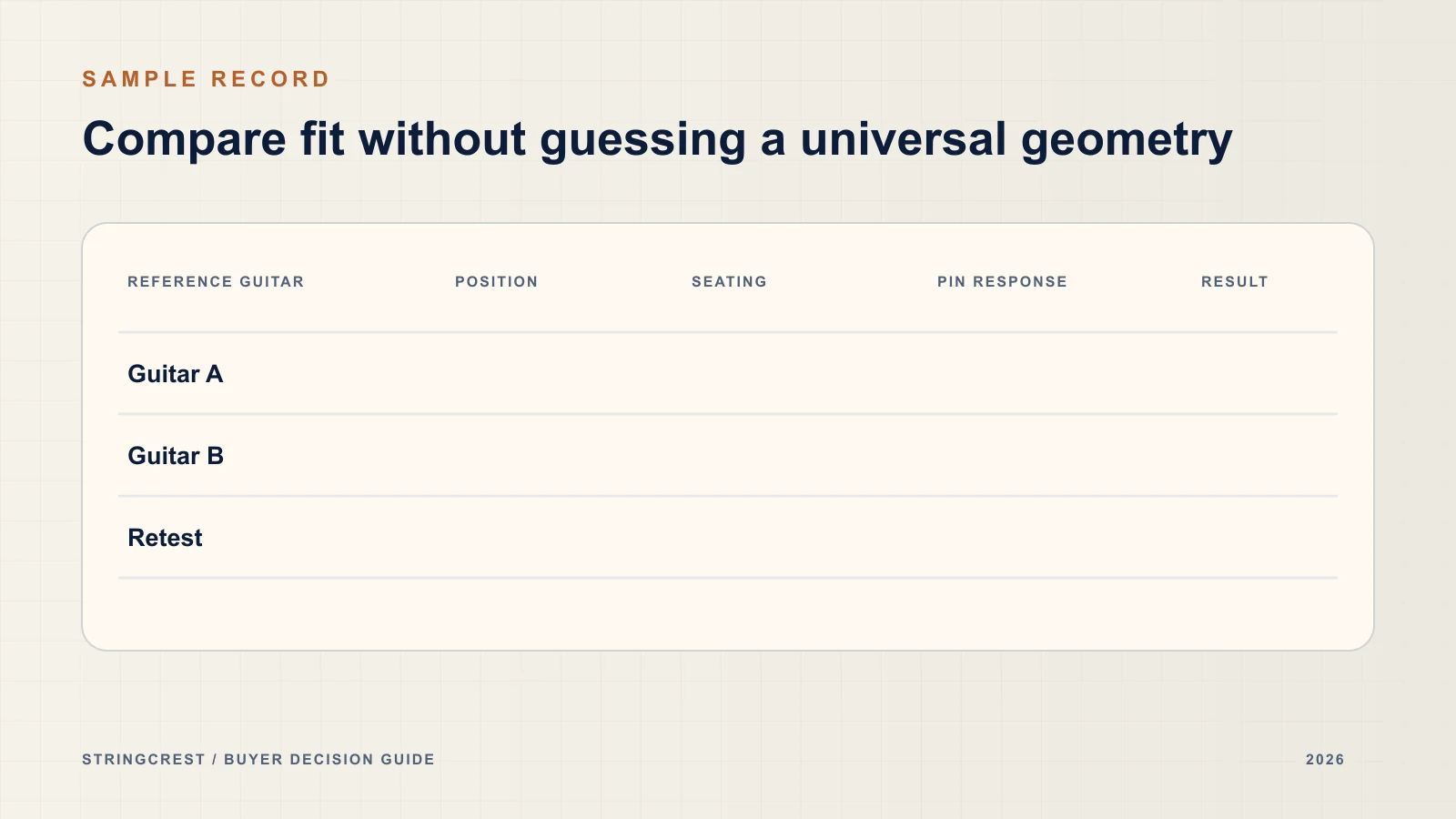
If the buyer sells into a broad acoustic market, compare the sample on at least the distinct bridge systems included in the approval scope. A set approved only on Guitar A should not silently become approved for every acoustic guitar. The approval sheet must state the tested references and exclusions.
Review removal and evidence retention
When the trial is complete, loosen and remove strings according to the instrument maker's guidance. Record pins that are unusually difficult to remove, visible marks, damaged winding or ball-end movement. Preserve the coded set and photographs when an exception needs supplier review.
Do not reuse a visibly damaged string as the only production reference. Retain the signed specification, sample code, instrument record, installation sheet, photographs and disposition. If any controlled field changes, issue a new revision and define whether retesting is required.
Decide the approval scope
Use clear outcomes: approved for named references, approved with a documented condition, additional sample required, or not approved. Avoid a vague “fit passed.” The decision should identify revision, positions, reference guitars, observer, date and unresolved questions.
FAQ
Should the bridge pin be pushed completely to its collar?
Not as a universal rule. Pin design and manufacturer guidance differ. Follow the reference guitar's instructions and judge whether the ball end is correctly seated without forcing the pin.
Can a ball end be approved by measuring its outside diameter alone?
No. Diameter may be one controlled field, but fit also depends on the complete end construction, string path, bridge, pin and installation method.
Does one correctly installed low-E string approve the whole set?
No. Record all six positions. Plain and wound strings, transitions and end constructions may interact differently with the bridge system.
Can this trial prove corrosion resistance or service life?
No. It can document identity, installation and short controlled observations. Durability claims need a separate method, environment and adequate observation period.
What if the pin rises while tuning?
Stop, reduce tension safely and verify the seating method and instrument condition. Preserve the observation. Do not solve it by forcing or hammering the pin.
Conclusion
An acoustic ball-end fit approval is a controlled interface test, not a universal claim. Identify all six strings, select named reference guitars, follow the instrument maker's installation method and record seating, pin behavior and string path separately from subjective response. Freeze the approved revision only after the scope and exceptions are explicit.
To build a project-specific evaluation sheet, send StringCrest the six-position specification, reference guitars, bridge types and intended markets. The team can discuss which sample fields need confirmation before a wholesale order.
Sources
FROM GUIDE TO PRODUCT
Connect this guide to Acoustic Guitar Strings.
Review the relevant range, then bring the instrument, complete specification and open questions into one project brief.
YOUR PRODUCT · YOUR BRAND
Discuss your next string project with Frank.
Share your instrument category, target market, gauge or material direction and private-label packaging requirements.

ABOUT THE AUTHOR
Frank Zou
Frank works directly with musical-instrument brands, importers and distributors on string specifications, product selection and private-label project requirements.
Meet Frank