
Instrument and configuration
Identify the instrument, size or scale, string count, tuning and intended fit.
PRIVATE LABEL STRING DEVELOPMENT
StringCrest supports brands, distributors and importers planning musical instrument string ranges. Begin with the instrument, complete set specification, market position and packaging scope. Availability and final requirements are confirmed for each project. Order lead time is within two months of order confirmation.
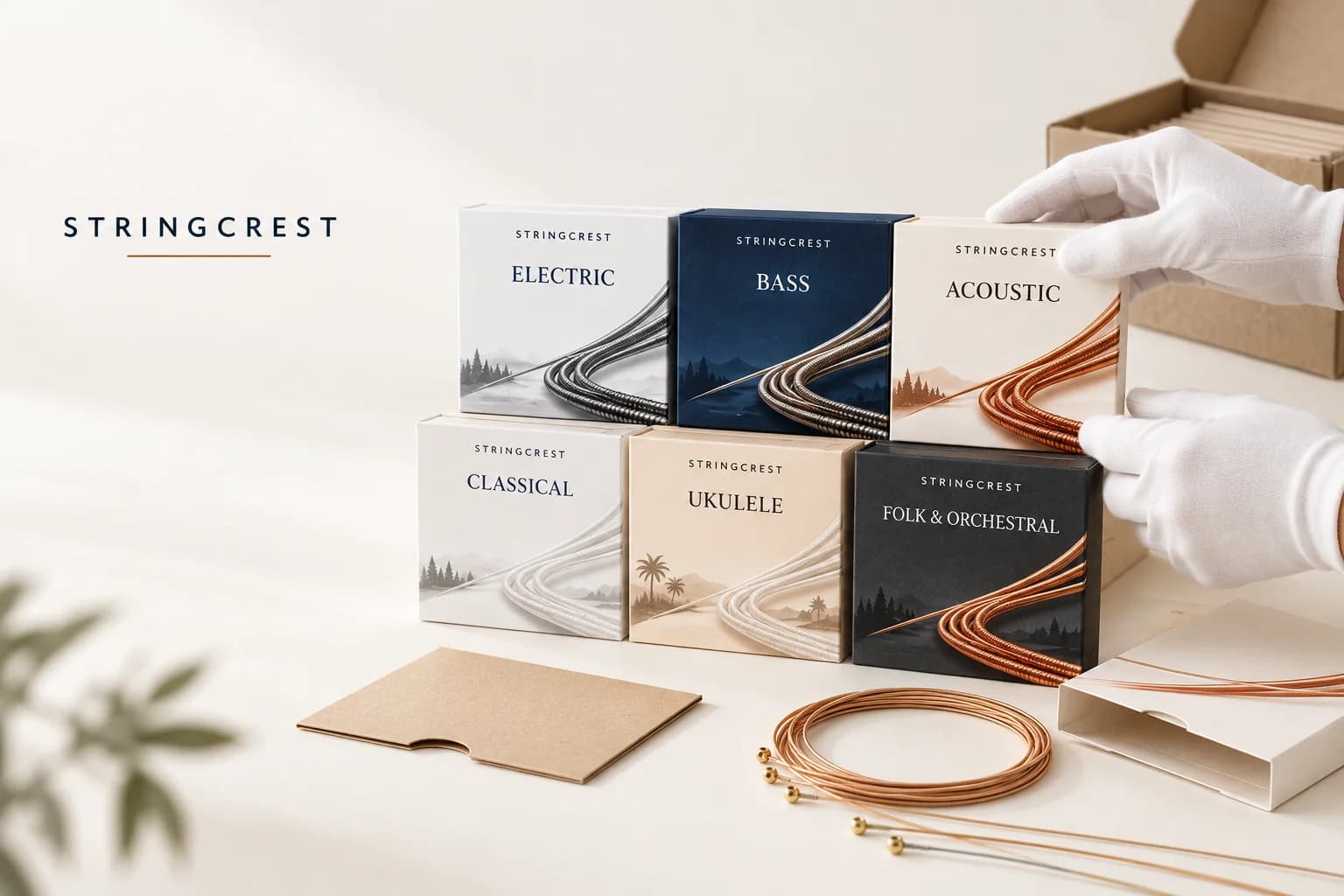
START WITH THE DECISION
A category name or outer gauge pair is not a complete specification. Share what is known, identify open decisions and keep product approval separate from unverified marketing claims.
Identify the instrument, size or scale, string count, tuning and intended fit.
List every string position, material, construction and end requirement that has been confirmed.
Explain the target market, sales channel and the role each proposed set should play in the range.
State the pack format, artwork status, languages, product identifiers and information that still needs evidence.
A CONTROLLED PATH
The exact sequence depends on the project. These four stages provide a practical structure for discussing what must be supplied, reviewed and approved.
Share the category, full-set requirements, target market and packaging direction.
Clarify available constructions and define what the sample is intended to answer.
Record the approved product revision, pack information and remaining open items.
Confirm the applicable commercial, packaging and inspection details before the next stage.
TWO CONNECTED RECORDS
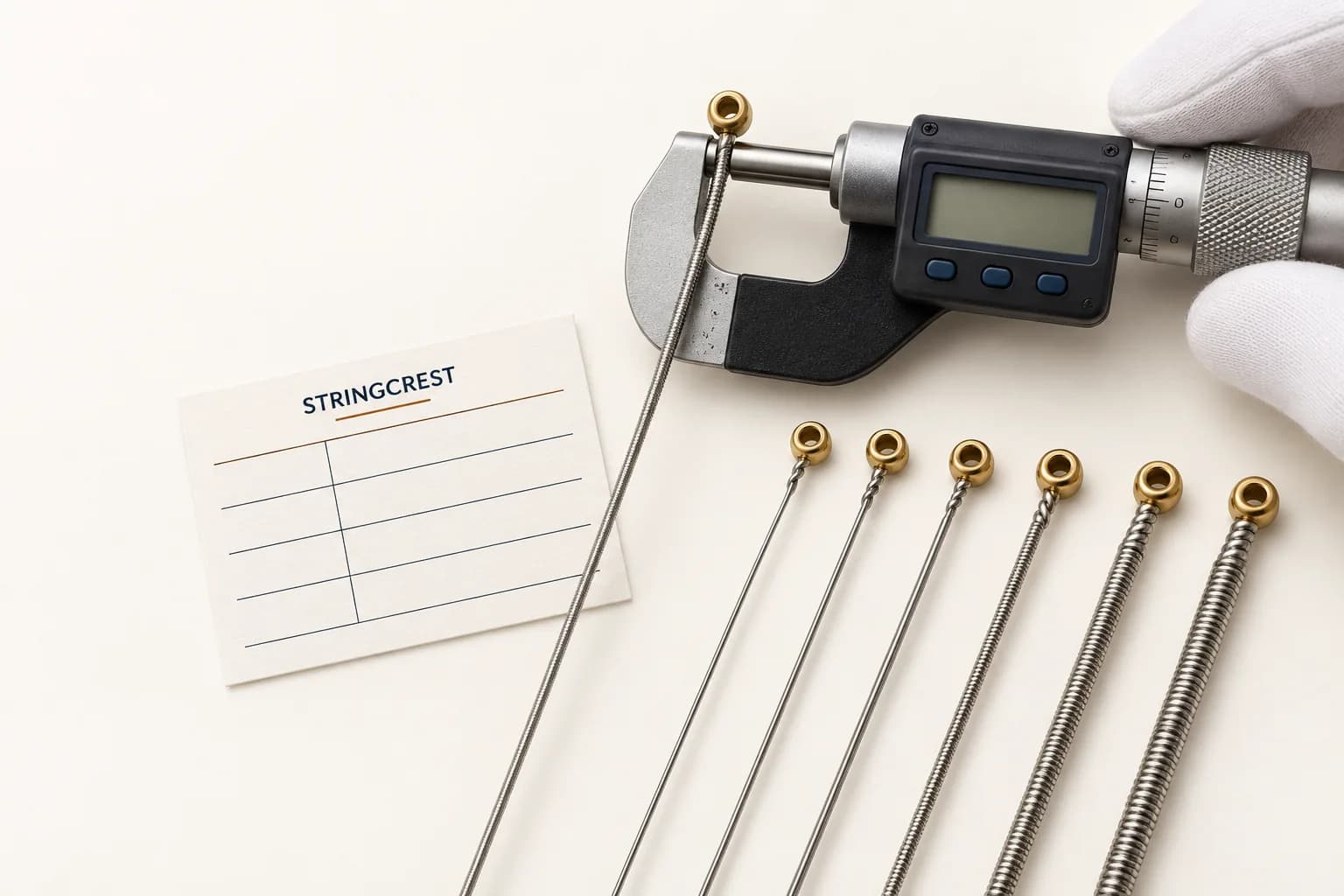
Strings are made to the customer specifications agreed for the order. Keep the instrument, positions, gauges, materials, construction, ends and approved sample identity in one controlled record. Do not infer missing inner gauges or performance claims from a family name.
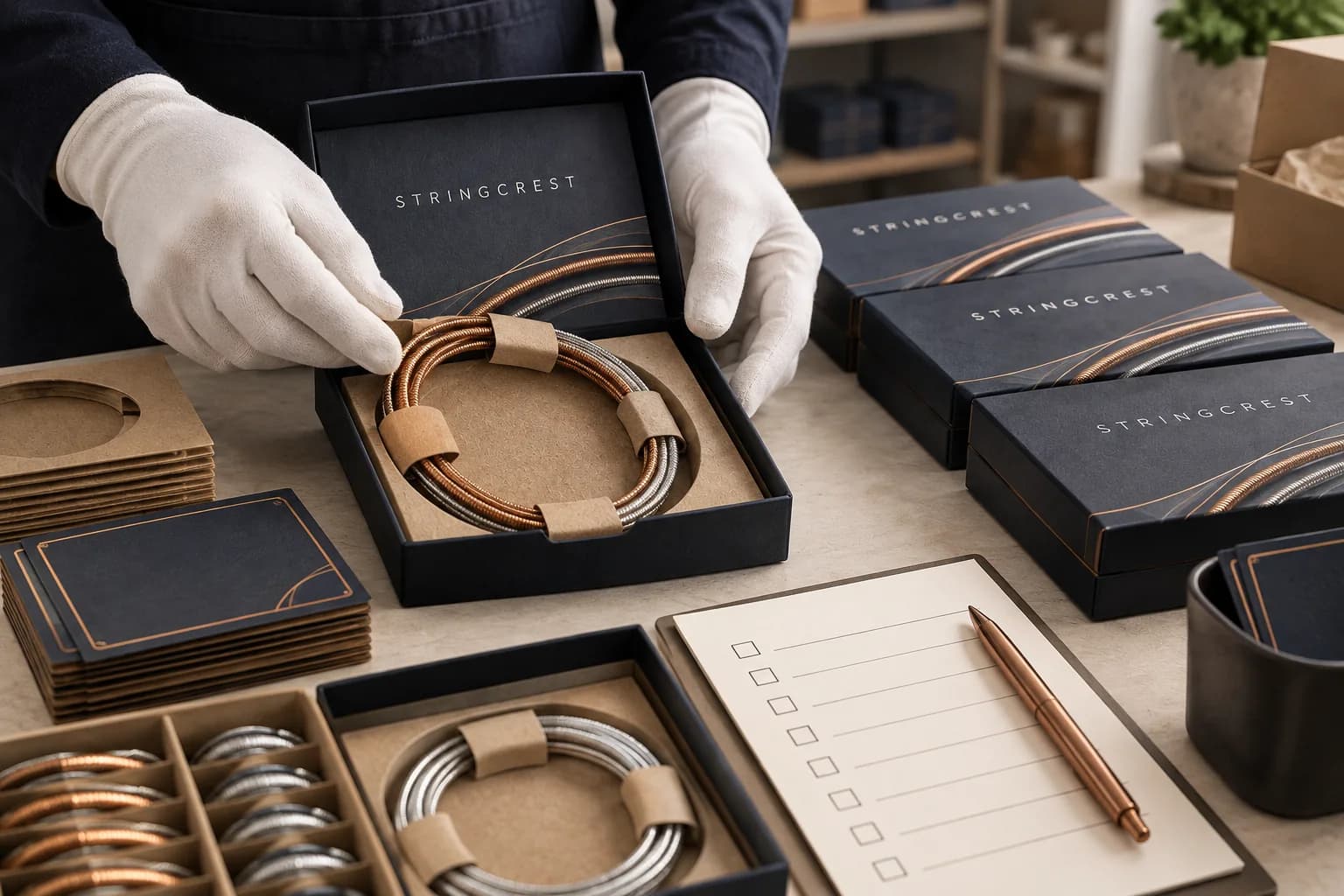
Packaging specifications can be customized to customer requirements. Connect every artwork revision to the approved product identity. Check naming, set data, barcode ownership, market language and any claim that requires supporting evidence.
BUYER RESOURCES
Use these guides to structure supplier qualification, packaging information and sample evaluation before approving a range.
A practical framework for qualifying product scope, sample discipline, document control, traceability, packaging and first-order inspection.
Read guideA practical handover framework linking product specifications, retail presentation, protective requirements and artwork approval.
Read guideA repeatable sample, approval and shipment-inspection workflow for wholesale and private-label guitar string buyers.
Read guideA receiving framework for documenting surface changes and preparing a supplier review without guessing causes or cleaning away evidence.
Read guideYes, as a discussion reference. It does not replace a complete, approved specification. Mark what should be matched, what should change and which details still require confirmation.
A visual system can be shared, but each SKU still needs the correct product identity, set data and revision control. Variable information should be checked on every final artwork.
Order lead time is within two months of order confirmation. Minimum order quantity and product availability are confirmed against the agreed product and packaging requirements.
At minimum, identify the approved product revision, packaging revision, quantities and open issues. Any required inspection or shipment records should also be defined for the project.
Send the instrument categories, known specifications, target market and packaging status. We will use that information to clarify the next practical step.