
Wholesale Planning
Wholesale Buying
How to Qualify a Private-Label Guitar String Manufacturer Before Launch
A practical framework for qualifying product scope, sample discipline, document control, traceability, packaging and first-order inspection.
Introduction
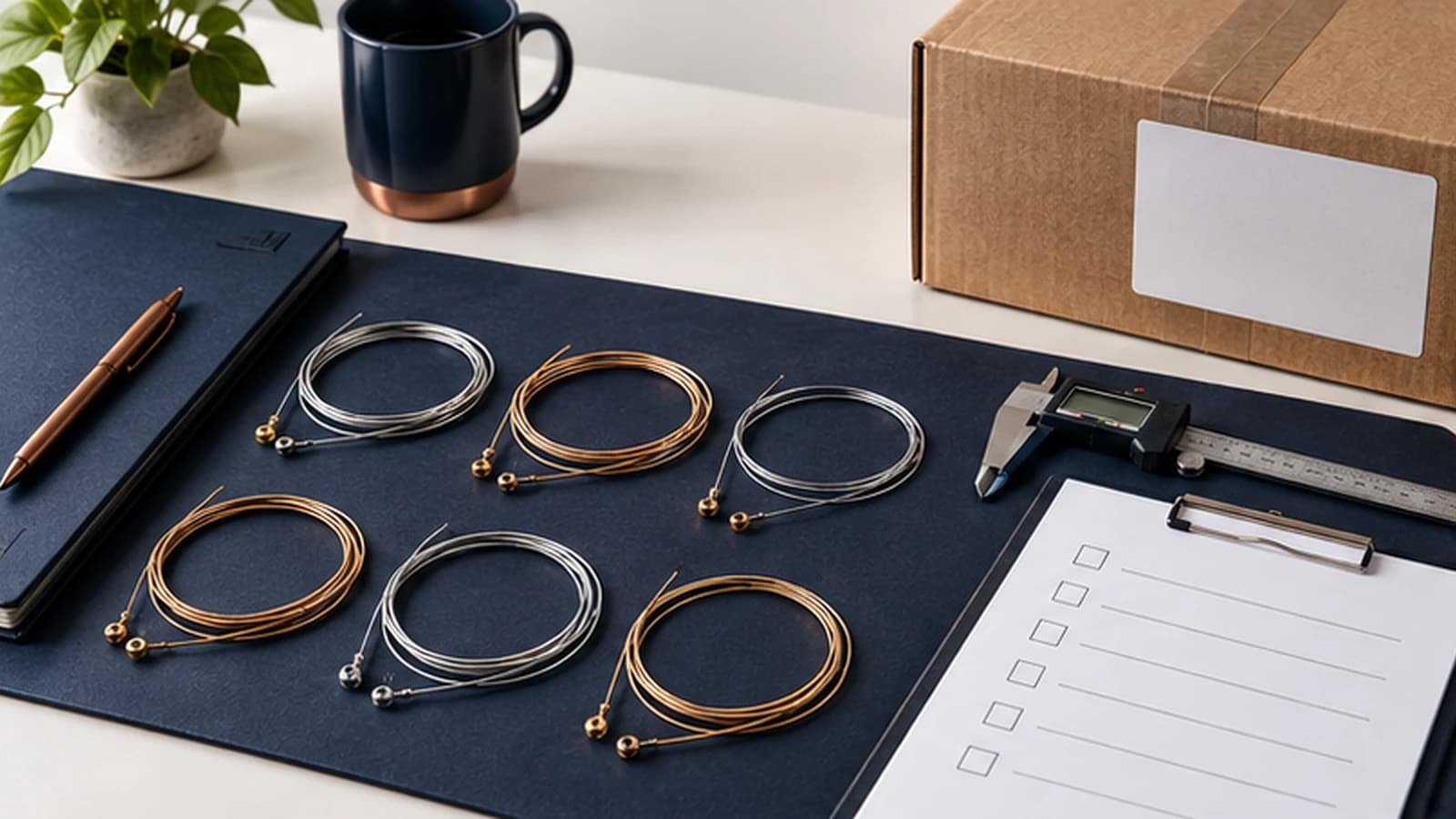
Qualifying a private-label guitar string manufacturer is not the same as collecting a catalog and a price. A B2B buyer must confirm that the proposed supplier can translate a product brief into controlled samples, preserve the approved construction, manage packaging revisions and provide traceable records for each order. The process should test communication and change control as carefully as the strings themselves.
Begin with the products and risks that matter to the launch. A buyer sourcing electric, acoustic and classical strings does not need the same evidence for every family. Steel guitar strings require clear gauge, core, wrap and ball-end control. For the classical nylon tie-end sets discussed here, record the material at each of the six positions and confirm straight tie ends without metal ball ends. Packaging, barcodes and multi-language content add another revision layer.
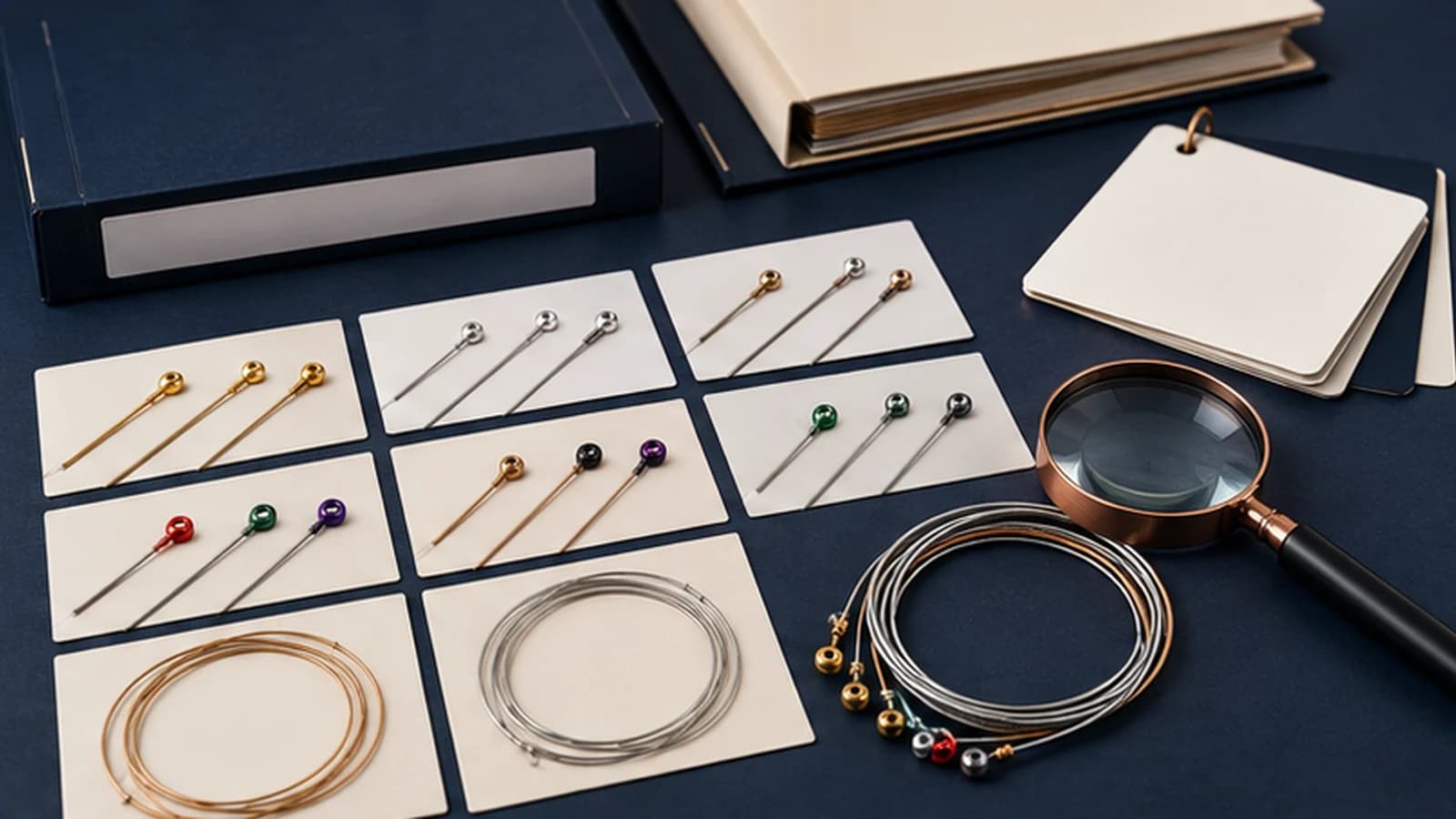
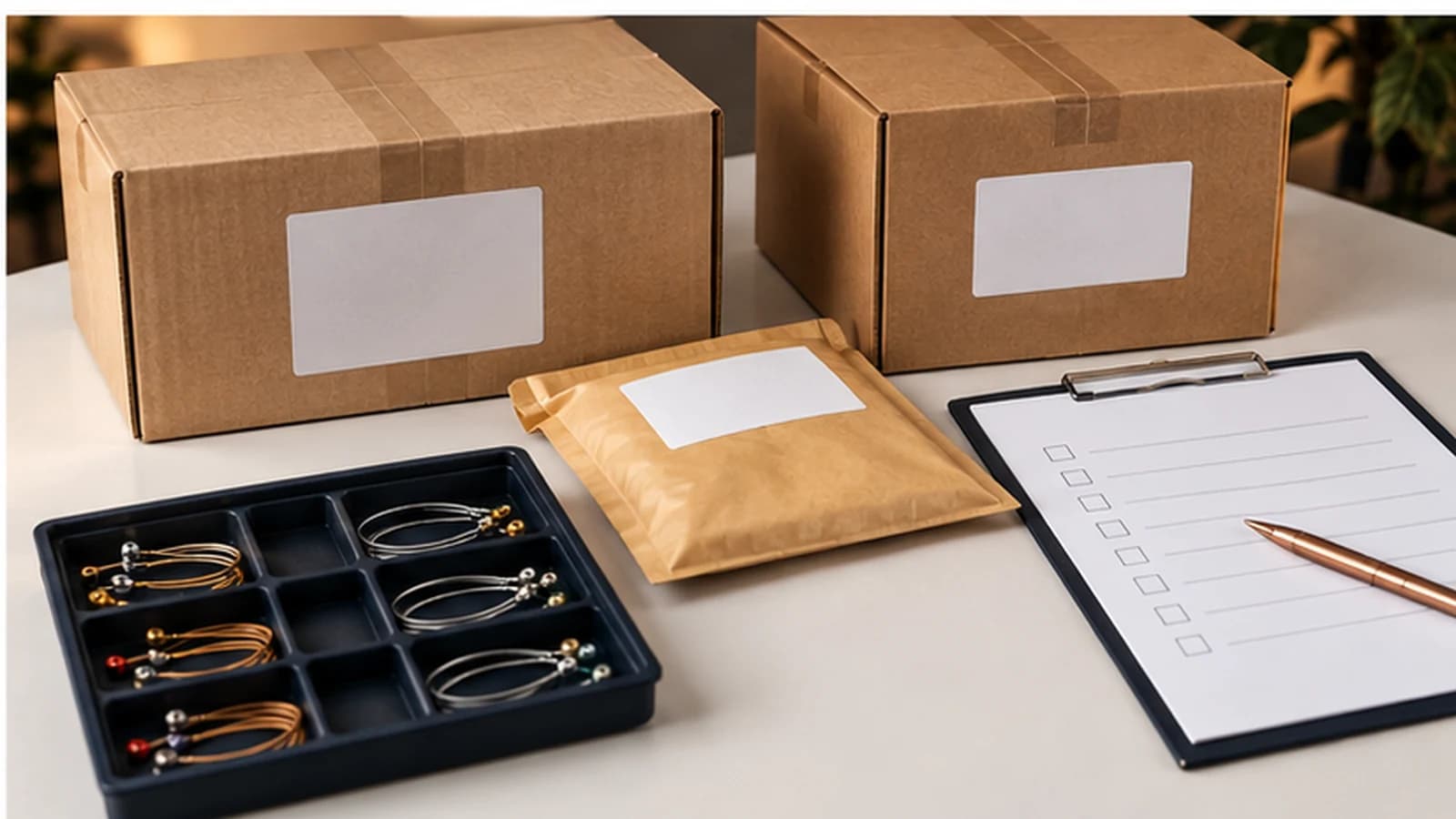
StringCrest Co., Ltd. is a musical instrument string factory supporting custom and private-label product development; see our company profile. This guide explains how buyers can qualify a defined product and packaging scope. The illustrative review scenes do not represent real supplier audits or production approvals. Qualification decisions still need project evidence, a stated scope and agreement with the supplier; this guide does not prescribe a universal score or MOQ.
Start with a qualification scope
Define what is being qualified: a company, a production site, a product family, a specific SKU and packaging configuration, or some combination. Approval of one nickel-plated electric set does not automatically approve nylon classical strings, orchestral strings or every packaging material from the same supplier.
Create a scope statement with:
- legal supplier identity and contracting entity;
- production location relevant to the quoted product;
- product families and processes in scope;
- intended markets and packaging languages;
- required sample stages;
- inspection and documentation expectations;
- change-notification requirements;
- responsible contacts and approval authority.
If the commercial contact and production party are different entities, record each role. Ask who purchases wire and packaging, who winds or assembles sets, who prints and packs, who releases the order and who handles corrective action. A transparent cooperation model can be workable; an unclear model makes responsibility difficult to manage.
If you are still deciding which candidates fit the project, use the manufacturer shortlist checklist first. Here, the next task is to connect each qualification decision to a specific record and identify what is still unresolved.
Build an evidence index for the approval decision
Use one index to connect the scope, records and decision. Copy the table below into the project file. The prompts describe evidence to request; they do not imply that a supplier has supplied it or passed a review.
| ID | Decision and evidence to locate | Record reference and revision | Review status and open action |
|---|---|---|---|
| Q1 | Supplier identity, production roles and approved product scope | ||
| Q2 | Product matrix with fixed, proposed and open fields | ||
| Q3 | Coded sample, evaluation record and approval decision | ||
| Q4 | Current specifications and change-notification agreement | ||
| Q5 | Packaging components, artwork revision and pack-out approval | ||
| Q6 | Backward and forward trace exercise, including gaps | ||
| Q7 | Inspection method, acceptance rule and release record | ||
| Q8 | Deviations, corrective actions and first-order decision |
For every referenced record, capture the document owner, date, product or lot scope, reviewer and review date. A file name alone is insufficient if the revision or affected SKU is unclear. Record whether the evidence was only received, reviewed for the stated scope, accepted for that scope or left open with a named action owner. Receipt is not approval.
Keep the index as a route to the underlying evidence, rather than copying confidential files into it. Where a redacted example is used, identify which links can be checked and which remain unverified. Before approving the scope, resolve the mandatory gaps or record the written disposition and who authorized it.
Send a product matrix before a questionnaire
A generic supplier questionnaire produces generic answers. First send a concise product matrix so the supplier knows what capability is being assessed. Include instrument, string count, gauge or diameter by position, core and wrap direction, scale or usable length, tuning, end construction, surface treatment, packaging layers and planned order format.
Mark confirmed fields and open fields
Not every launch begins with a finished specification. Label each field as fixed, supplier proposal, sample decision or open. That distinction prevents a supplier proposal from being mistaken for buyer approval.
For example, the buyer may fix the 10–46 gauge matrix but invite two nickel-plated steel construction options. The packaging artwork may be fixed while the inner protective sleeve remains open for evidence review. The quotation should repeat these statuses.
Review capability with product-specific questions
Ask how the supplier controls the characteristics in the matrix. Useful questions are concrete:
- How are incoming wire identity and diameter linked to a production lot?
- How are core shape, wrap wire and gauge distinguished at the workstation?
- How are winding transitions and usable length controlled?
- How are ball ends, loop ends and straight tie ends kept separate?
- How is each string position identified before set assembly?
- How are mixed sets reconciled for quantity and position?
- How are packaging revisions issued and withdrawn?
- How are deviations contained and communicated?
Do not accept “strict QC” as a complete answer. Ask for the field, method, frequency, record and person responsible. The required evidence depends on risk. A process description and anonymized example form may be enough for an early review; a high-risk program may need deeper verification.
Distinguish capability from capacity
Capability asks whether a process can produce and control the agreed item. Capacity asks how much can be supplied in a period. Do not publish capacity without verified data and conditions. During qualification, request a project-specific production and packaging schedule, including material procurement, sample approval and artwork lead points.
The buyer should also ask what happens during peak load, maintenance or material shortage. A proposed contingency is not proof that it has been used successfully; treat it as a plan to be reviewed.
Examine document and revision control
Private-label projects combine technical and graphic records. The supplier should identify the current product specification, sample code, bill of materials, artwork file, barcode list, packing instruction and purchase order revision. Ask how obsolete copies are removed from use.
A simple revision table can include document name, code, revision, effective date, owner, approval and replacement status. The process must connect a change to affected samples, inventory, labels and orders.
Check change-notification boundaries
Agree which changes require notice before implementation. Typical fields include wire source, alloy, diameter, core shape, wrap construction, winding parameters, end fitting, adhesive, inner sleeve, sealing method, printed material, assembly location and subcontracted process.
Not every change needs full requalification, but the buyer needs enough information to decide. A packaging copy correction may need artwork approval; a material or construction change may need new technical samples and an updated product record.
Use samples to test the working relationship
The sample phase evaluates both the product and the supplier's ability to follow a controlled brief. Request coded samples tied to a revision. The sample packet should state what matches proposed production, what is hand-prepared and what remains provisional.
Assess:
- completeness and accuracy of the sample record;
- consistency between the written matrix and physical set;
- response to questions and deviations;
- ability to isolate one variable between sample rounds;
- packaging and label revision accuracy;
- handling of rejected or superseded samples.
If the second sample changes three uncontrolled fields, the buyer has learned something important about process discipline even if the set sounds acceptable.
Use the guitar string sample evaluation guide for the installation and application trial. In this qualification file, reference its sample ID, specification revision, result and outstanding actions under Q3 rather than repeating the full test procedure.
Retain an approved reference
When practical, retain an unused approved set with its sample code and storage record. The physical reference supports visual and construction comparison, while the written specification remains controlling. For products subject to aging or corrosion, record the condition of the retained sample over time.

Evaluate packaging and label control
The qualification scope should include the complete pack-out that will be delivered. Review inner protection, position identification, set envelope, retail package, barcode, carton configuration and carton marks. Confirm who supplies each material and how an approved material is linked to a revision.
Claims about shelf life, corrosion protection, coating, recyclability or compliance require evidence for the actual package and process. Do not infer barrier performance from a metallic appearance. Ask how sealing parameters are controlled when sealing is part of the design.
For multiple languages, use an approved content table rather than editing each artwork file independently. Product name, gauges, material language, warnings, importer details and barcode must remain consistent across versions. Translation approval is separate from technical approval.
The private-label packaging brief covers the component, artwork and protection questions in detail. Link the resulting approved versions under Q5, and check that the sample packet and first order reference those same versions.
Review traceability at a practical level
Traceability should answer four questions: what was used, when and where it was processed, what finished units were affected and where those units were sent. The exact system may be digital or paper-based, but the links must be usable.
Request an example flow using anonymized or dummy records. Start from a finished carton code and trace back to set assembly, string positions, production lot or component lot, packaging revision and inspection release. Then perform the reverse exercise from a component lot to affected finished units.
Do not demand data unrelated to the project, and do not accept a screenshot as proof that the process works. The value is in the consistent links and retrieval method.
Copyable backward trace record
Start with one finished carton or other agreed finished-unit identifier. Follow the actual links to the packed set, string positions, production or component lots, packaging revision and release record. Use the supplier's record names and state the unit of quantity at every step.
| Field | Enter the identifier, revision or result | Supporting record reference |
|---|---|---|
| Exercise date, reviewer and scope | ||
| Real, anonymized or dummy records used; limits of the exercise | ||
| Starting carton or finished-unit code; SKU and quantity unit | ||
| Set assembly or pack-out lot; linked quantity | ||
| String-position identities and linked production or component lots | ||
| Product specification and packaging revisions used | ||
| Inspection or release record and disposition | ||
| Missing, ambiguous or inconsistent links | ||
| Corrective action owner, due date and review decision |
If an identifier leads to several lots or revisions, list each relevant record and explain the relationship. Stop at an unexplained link and record the gap; a plausible description is not a recovered record.
Copyable forward trace record
Start with one component or production lot found in the backward exercise. Ask which finished sets and cartons used it, how much was used and where the affected units went. Check for splits, mixed lots, unused stock or other recorded dispositions rather than assuming the starting lot maps to one shipment.
| Field | Enter the identifier, quantity or result | Supporting record reference |
|---|---|---|
| Exercise date, reviewer and scope | ||
| Starting component or production lot and quantity unit | ||
| Related production and set assembly lots | ||
| Affected finished SKUs, lots and quantities | ||
| Affected cartons, orders and shipment references | ||
| Unused stock or other dispositions; quantity reconciliation | ||
| How affected units would be located or held | ||
| Missing links or unexplained quantity differences | ||
| Corrective action owner, due date and review decision |
Record the search performed and the retrieval time observed; agree a project requirement separately if one is needed. Keep customer identities and confidential shipment details in the controlled project file. A dummy exercise can show the proposed mapping, but it cannot establish that actual production records contain the same links. Record that limitation under Q6 and decide what further evidence the launch requires.
Define inspection without pretending it proves everything
The buyer and supplier should agree which characteristics are checked during production, before shipment and at receiving. Each check needs method, units, sample selection, acceptance rule, record and escalation path.
The public abstract for ISO 28598-2 describes coordinated supplier, customer and third-party acceptance sampling for discrete lots. That concept can inform an agreed sampling discussion. It does not mean a supplier, buyer or shipment is certified, and a sampling plan does not guarantee that no nonconforming unit exists.
Build a product-specific inspection list
Depending on the product, checks may cover:
- SKU, revision and set count;
- position sequence and gauge identity;
- visible core/wrap or material identity;
- usable length and winding transitions;
- end construction and color code;
- appearance and obvious damage;
- inner and retail package revision;
- barcode readability and carton quantity;
- lot and traceability record completeness.
Composition, coating thickness, tensile properties or other material claims need appropriate evidence and methods. They cannot be confirmed reliably by visual inspection alone.
Assess corrective-action behavior
Qualification should test what happens when something is wrong. Provide a realistic example such as a mixed gauge, incorrect artwork revision or short usable length and ask the supplier to describe containment, scope determination, cause analysis, correction and prevention.
A useful response identifies affected lots, stops further use or shipment, preserves evidence, distinguishes occurrence from escape cause, assigns actions and verifies completion. A promise to “be more careful” is not a complete corrective action.
Set communication timing for material deviations. The supplier should know whom to contact, what information to include and whether shipment can proceed only after written disposition.
Compare suppliers using evidence, not one total score
A weighted score can help organize a review, but one total number can hide a critical gap. Keep mandatory gates separate from comparative factors.
Possible mandatory gates include legal identity, ability to produce the required family, sample traceability, change notification and acceptance of the approved specification. Comparative factors may include communication clarity, sample cycle, packaging options, documentation quality, commercial terms and logistics.
Record evidence and open actions beside every rating. “Five stars for quality” is less useful than “six-position sample matched revision B; packaging mock-up remains provisional.” Do not award points for certifications that have not been verified for issuer, scope, site and validity.
Verify certificates and claims carefully
If a certificate or test report is required, verify document owner, issuing body or laboratory, scope, applicable site and process, standard or method, issue and expiry dates, report sample identity and current validity. A certificate for a parent company, different site or unrelated product may not support the project.
Do not display a certification logo or claim on the website until permission and applicability are confirmed. A supplier declaration, laboratory report and accredited product certificate have different meanings.
Run a controlled first order
Qualification does not end when the sample is approved. A first order can be structured as a controlled launch with clear revision, agreed inspection, retained references, defined reporting and receiving checks. The quantity and commercial terms depend on the project.
Before release, confirm:
- product and packaging specifications are approved;
- purchase order cites the correct revisions;
- open deviations have written dispositions;
- carton and barcode files are current;
- inspection and shipment documents are defined;
- change-notification contacts are active.
At receiving, compare selected units with the same specification and record shipping condition, carton identity, count, packaging revision and product checks. Keep the findings separate from marketing claims.
Review performance after launch
Create a small supplier scorecard based on project evidence: on-time document completion, sample conformity, shipment deviations, response time, corrective-action closure and change-notification performance. Define each metric before using it.
Customer feedback should be coded by product, revision and issue type where possible. A comment that “strings feel wrong” needs follow-up on instrument, gauge, tuning, installation, position and lot. Do not convert isolated feedback into a universal defect or testimonial.
Requalification may be triggered by significant technical change, site or process change, repeated deviations, long inactivity or expansion into a new product family. The trigger and scope should be agreed rather than improvised.
Protect commercial and technical information
Share only the information needed for the qualification stage. Use clear confidentiality terms for artwork, brand files, price structures and unique specifications. Control who can release files and where final versions are stored.
Avoid putting passwords, private credentials or sensitive customer data in ordinary sample records. When photos or documents are shared publicly, remove supplier-confidential and personal information.
FAQ
Is a low price enough to qualify a guitar string manufacturer?
No. Price must be evaluated with specification control, samples, packaging, traceability, change management, inspection, corrective action and logistics. An incomplete quotation can create higher launch cost.
Does a certificate prove the supplier can make my SKU?
No. Verify the certificate's owner, site, scope, issuer and validity. Product-specific capability still requires a controlled brief and samples.
Must I visit the production site?
The required verification depends on risk, product complexity and available evidence. Some projects may proceed through documentation, samples and third-party checks; others may justify an on-site assessment. Define the purpose before choosing the method.
Can one approved sample qualify every string family?
No. Approval should state the product family, construction, SKU and packaging scope. Classical nylon, electric steel and orchestral strings involve different risks and controls.
What should be retained after approval?
Keep the approved specification, sample code, decision record, packaging revision, open deviations and, when practical, an unused physical reference.
How often should a supplier be reviewed?
Set a risk-based interval and event triggers. Significant changes, repeated issues, long inactivity or a new product family may require earlier review.
Conclusion
A private-label guitar string manufacturer is ready for launch when the buyer can connect legal and production roles, product-specific capability, controlled samples, packaging revisions, traceability, inspection and change management. Qualification is a documented decision with scope and open actions, not a permanent badge.
Explore the StringCrest product categories and send your private-label qualification brief with product families, specification status, markets, sample stages and packaging requirements.
FROM GUIDE TO PRODUCT
Connect this guide to private-label string development.
Review the relevant range, then bring the instrument, complete specification and open questions into one project brief.
YOUR PRODUCT · YOUR BRAND
Discuss your next string project with Frank.
Share your instrument category, target market, gauge or material direction and private-label packaging requirements.

ABOUT THE AUTHOR
Frank Zou
Frank works directly with musical-instrument brands, importers and distributors on string specifications, product selection and private-label project requirements.
Meet Frank