
Product Selection
Product Selection
Acoustic Guitar Strings for Beginners: A Retailer and Education-Channel Guide
Turn beginner string questions into a traceable recommendation, sample and replenishment plan for retailers and education suppliers.
Introduction
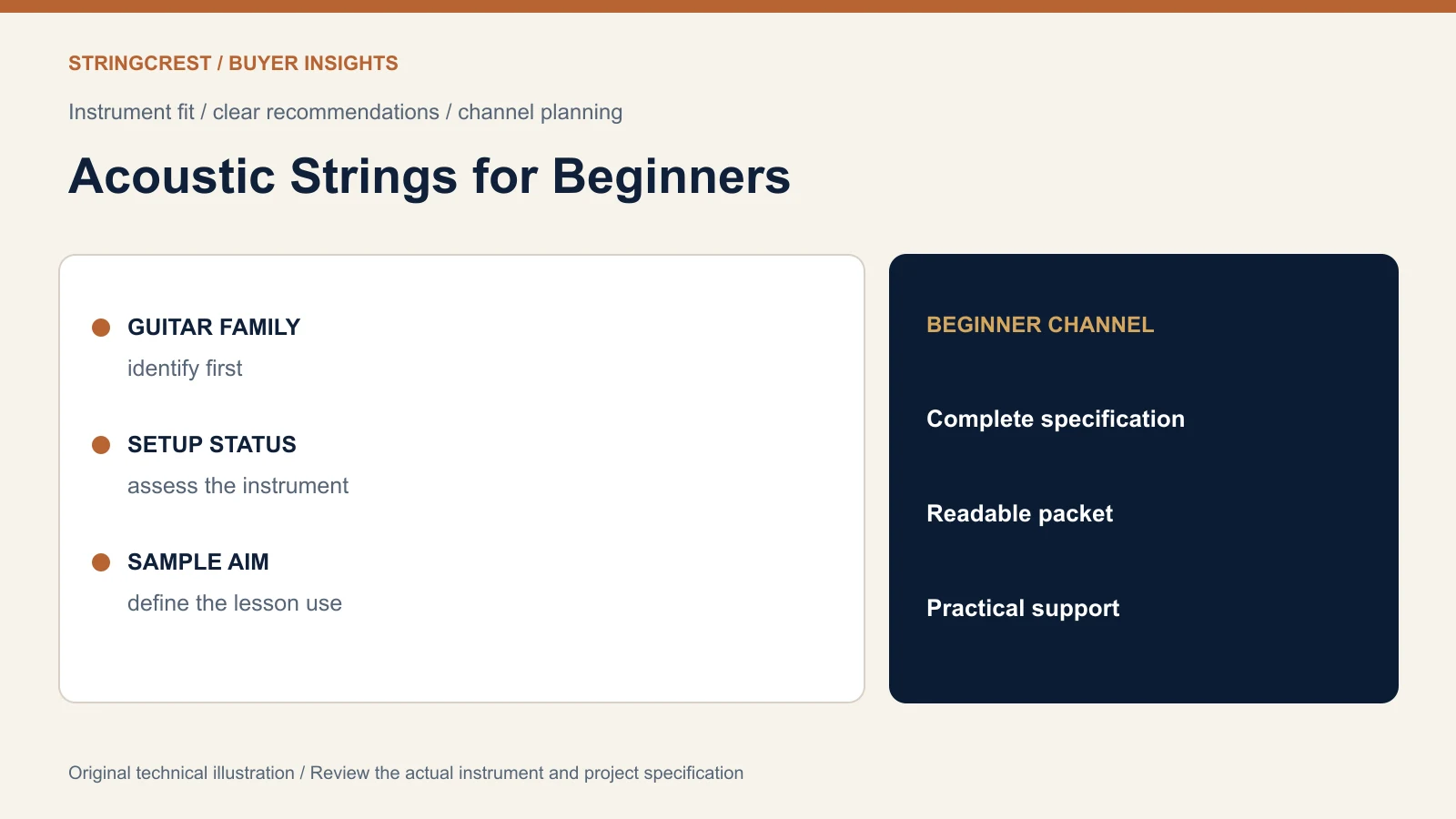
For a beginner with a steel-string acoustic guitar, start with the instrument maker's recommended set and assess whether a lighter complete set is worth trying. Check the guitar's setup before promising easier fretting. For a classical or nylon-string guitar, use the appropriate nylon-family specification instead. These are separate purchasing decisions, even when both customers ask for “acoustic strings.”
A music shop needs a recommendation staff can explain at the counter. An education supplier also needs replacements that teachers can pick correctly from stock. The useful purchasing brief therefore identifies the instrument, the full string set, the learner's difficulty and how the approved replacement will be labeled.
“Beginner” describes the player, not a particular alloy or gauge. Someone struggling to press a chord may need a setup assessment; someone choosing a first replacement packet may mainly need help identifying the correct category. Ask which problem the purchase should solve before adding another SKU.
StringCrest's acoustic guitar range provides a starting point for steel-string projects. Confirm final specifications and available constructions against the order requirements.
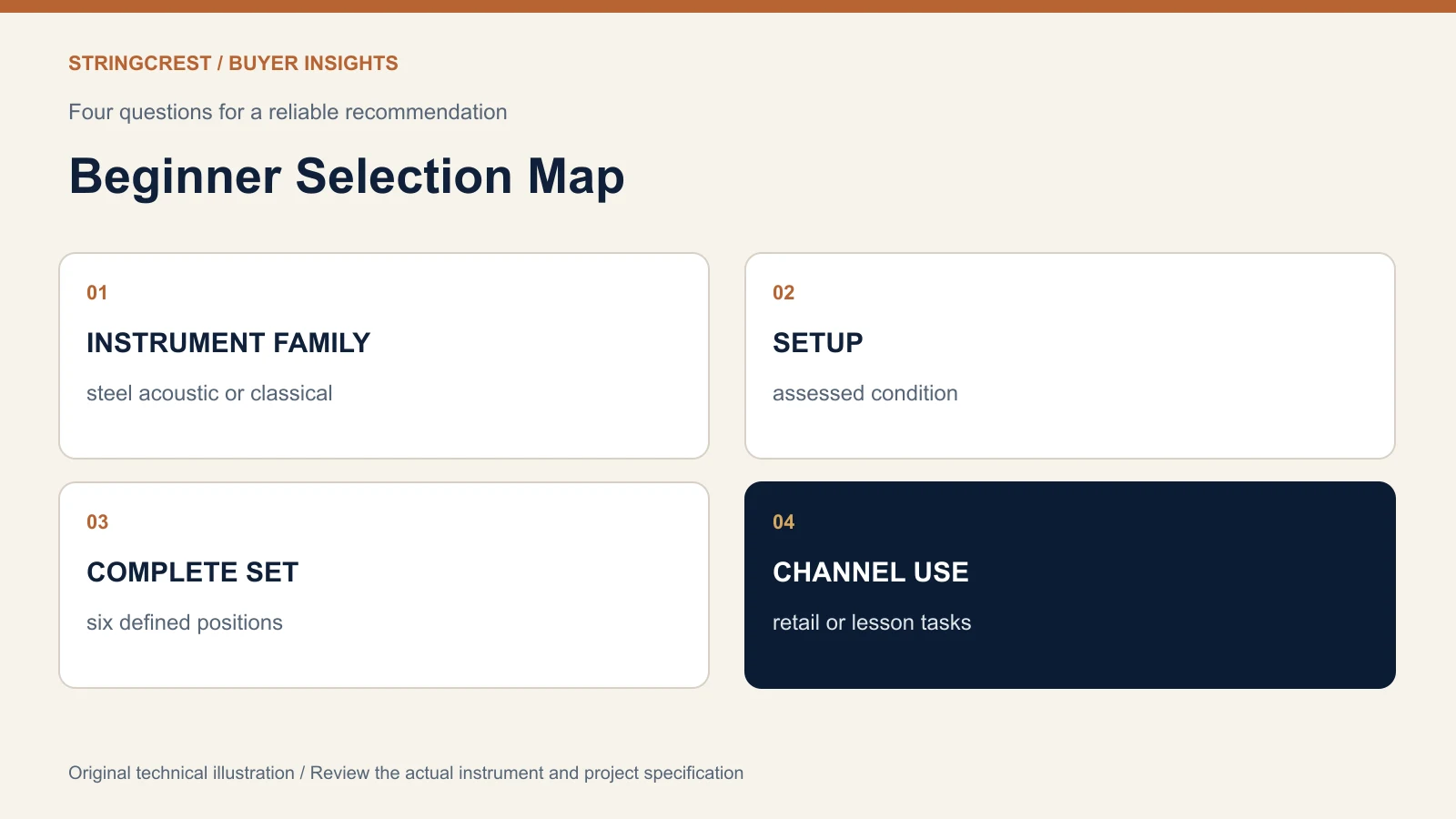
Confirm the instrument family before recommending a packet
Steel-string acoustic guitar
Identify the instrument through its maker's information or a competent assessment. Record its intended string system, size where relevant, tuning and installed set. Do not rely only on the body shape or the word “folk” in a customer's description.
Classical or nylon-string guitar
Treat a classical nylon-family set as a separate category. Do not recommend steel-string acoustic components merely because a customer asks for more brightness or a different feel. Our nylon versus steel compatibility guide provides a fuller discussion of those distinct systems.
Uncertain or unusual instruments
When the category is unclear, obtain the model reference and appropriate advice before selling a replacement. The uncertainty should be visible in the recommendation process. A beginner's limited product knowledge is a reason for better identification, not a reason to guess.
For a school or rental fleet, maintain an instrument list that resolves these fields. A single generic purchase description can conceal several incompatible replacement needs across apparently similar guitars.
Define the beginning player's application
Ask where the strings will be used and who will handle replacements. A retail starter purchase calls for clear counter advice. A supervised rental fleet needs an instrument list, accessible replacement stock and a defined route for instruments needing service. The same approved set can serve both settings while the support process differs.
Consider an illustrative classroom purchase, not a StringCrest customer case. A teacher asks for easier chord changes on the school's steel-string guitars. Purchasing first separates those guitars from the nylon-string instruments in the same cupboard. The teacher and technician then choose an appropriate reference guitar and assess its condition before comparing suitable steel-string sets.
The review question is specific: can students use the proposed configuration for the lesson's fretted notes, chord changes and strumming tasks on that assessed guitar? Packet readability and correct picking are separate questions. A sample that a teacher likes should not be approved for every instrument in the cupboard.
Keep age or hand-size assumptions out of the product promise. Describe the actual lesson or retail use and who reviewed it. A recommendation for adult evening classes need not imply an identical outcome for children or a guaranteed improvement in learning speed.
Compare gauges as complete configurations
Use the maker's recommended configuration as the reference, then decide whether a lighter candidate addresses the reported playing resistance. Check the whole set, intended tuning and fit before ordering samples. Selecting the smallest printed gauge alone leaves the remaining positions unspecified.
D’Addario's acoustic gauge guide describes lighter sets as easier to bend or strum and discusses beginner selection. Its examples explain a gauge direction; they do not establish a suitable set for every learner or confirm a StringCrest specification.
Request the individual string gauges and identify which positions are plain or wound. Also confirm any length or end requirements relevant to the guitar. Packets using the same shorthand can still differ in intermediate gauges or construction, so retain the full approved specification behind the shelf label.
If the reference instrument needs attention after a gauge change, have it assessed before judging the candidate. Compare the strings under suitable installed conditions. When the technician also changes the setup, note that intervention so the resulting playing experience is attributed to the combination actually reviewed.
Review setup before promising an easier experience
String selection and instrument setup are related purchasing questions. Action, contact conditions and fret condition can affect the experience a reviewer attributes to a string. Dealers should have a route to appropriate instrument advice when the setup is uncertain.
Fender's explanation of action describes the relationship between string height, playing effort and the possibility of fret contact. Its model-specific dimensions are not adopted here as universal settings for acoustic guitars.
Avoid selling a gauge change as a guaranteed cure for discomfort or learning frustration. Ask what the customer is experiencing and whether the instrument needs assessment. A recommendation can aim for a more manageable response without claiming medical benefits or an identical result for everyone.
Record the setup status in the sample sheet. If a technician makes an adjustment, note it. That prevents an improved instrument setup from being misreported as a result caused solely by a new alloy or gauge.
Choose material descriptions that staff can explain
For a steel-string acoustic project, the supplier may propose bronze material directions such as phosphor bronze or 80/20 bronze. Clarify the complete construction and compare the actual candidates. The material label should not carry unsupported claims about ease of playing or beginner suitability.
Keep the recommendation's main purpose clear. If the channel needs accurate category selection and a comfortable reference configuration, an elaborate alloy comparison may be less important than a correct packet and useful setup guidance. Staff can explain sound direction after the instrument boundary is settled.
Use the acoustic alloy guide for a broader material discussion. The present article addresses the beginner channel's recommendation and support process, rather than presenting another general bronze comparison.
Prepare a short and representative sample review
Choose a reference instrument appropriate to the intended range and establish its condition. Identify the sample codes and the installed tuning. If several instrument types are included, record each combination instead of assuming one successful review covers the fleet.
Agree simple musical tasks with the teacher or competent reviewer. These could include basic fretted notes, common chord changes and a short strummed passage. They should represent the channel's use rather than a professional solo chosen to make the demonstration impressive.
Keep the reference conditions comparable. A fresh sample and a heavily worn existing set do not form a clean material or gauge comparison. Describe that limitation if those are the only available references.
Ask what the sample review is meant to establish: fit, a preferred response, packet clarity or a range role. Different questions need different observations. A positive comment from one reviewer can support a development decision without predicting results for every student.
Keep the evaluation record specific
Instrument and component identity
Identify the reference guitar, installed tuning and complete set by sample code. Keep its packet with the review sheet. If an individual component is substituted, list it so purchasing can distinguish the modified set from the original candidate.
Application observations
Ask the reviewer to play the agreed tasks and describe the result in ordinary terms. For example, “The teacher preferred this candidate for the chord-change task on the assessed reference guitar” is an illustrative wording pattern, not a claimed test result. It names the preference and its scope without assigning a numerical quality score.
Recommendation and limitations
Finish the sheet with an action purchasing can take. Approve the identified configuration for the reviewed instrument group, request another suitable candidate, or send the instrument for assessment before deciding. Record any unanswered question beside that action so it does not disappear during artwork approval.
When a fleet contains a different guitar family, evaluate that group separately. A staff member should be able to read the sheet and identify both the packet to pick and the instruments for which the recommendation was made. Keep unrelated comments about color, price presentation or envelope design in the packaging review.
Build an assortment around distinguishable needs
A retailer may need a confirmed standard direction and another configuration for a different instrument or customer preference. That is a planning possibility, not a prescribed SKU count. The assortment should follow confirmed product differences and channel evidence.
When several customer requests lead to the same instrument category and approved complete set, they can share one clearly identified SKU. Keep separate products for differences that affect the purchase, such as another string system or an approved alternative configuration. Staff should be able to explain the difference without relying on decorative packet names.
| Range-planning question | Evidence to collect | Purchasing action |
|---|---|---|
| Which instruments are served? | Dealer or fleet model list | Separate incompatible string systems |
| Which configurations are meaningful? | Complete specifications and sample notes | Define clear range roles |
| What confuses new buyers? | Staff questions and packet review | Improve written category and position labels |
| How are strings replaced? | Set and single-string workflow | Plan traceable replenishment |
| What happens after a complaint? | Support and instrument-assessment route | Give staff a practical next step |
Use the approved recommendation to connect those answers. If staff cannot tell which instrument a packet serves, resolve the identity and labeling before making it the default beginner recommendation.
Make packaging readable before adding persuasive claims
Use a clear instrument category, complete set identification and the information needed to select the intended product. A beginner should not need to infer steel versus nylon from a decorative photograph or an unexplained color code.
Where a short gauge label is used, retain the full sequence in an accessible specification record. Check that inner envelopes and outer packet identity agree. Position labeling also helps staff identify a missing or damaged component during support.
Prefer a qualified application description to a promise such as “no finger pain” or “learn twice as fast.” A packet can say which confirmed instrument category and specification it serves. Benefits beyond that need appropriate product and audience evidence.
StringCrest packaging specifications can be customized to customer requirements. Confirm the artwork, product identity and final format together so the printed recommendation refers to the product actually approved for the order.
Support education fleets with controlled replenishment
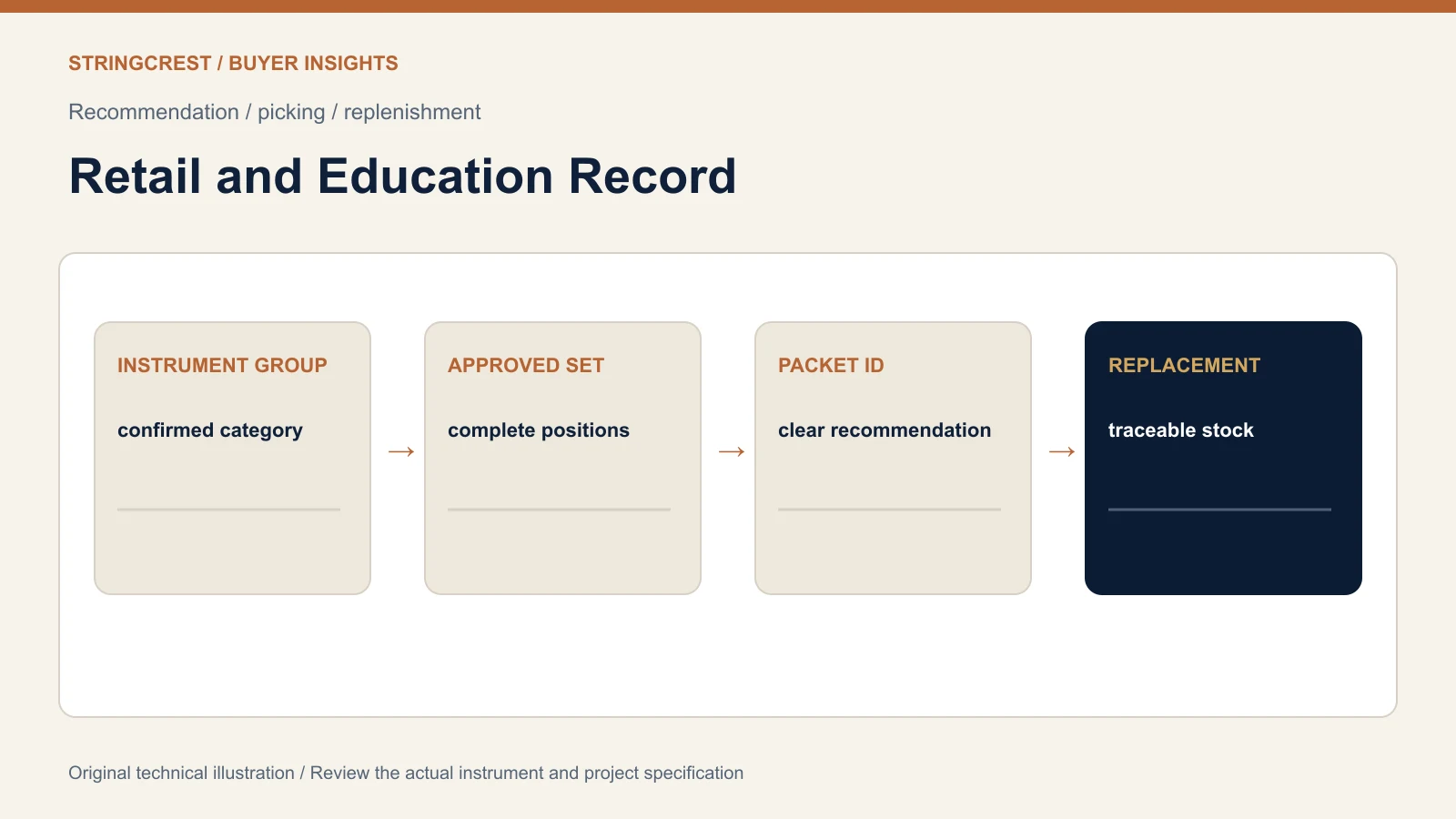
For a fleet, record the approved replacement specification by instrument group. Avoid purchasing a bulk selection solely because every packet carries the same brand. The staff member retrieving a replacement needs the correct category and configuration.
Decide whether the channel mainly replaces complete sets or also needs singles. Keep single components traceable to the relevant set specification. A loosely labeled box of leftovers can create installation errors that appear to be inconsistent product quality.
Record replacement reasons in useful categories: ordinary wear, a lost component, installation damage, an uncertain product or an instrument-service issue. This is a suggested record structure, not a claim about actual failure rates in classrooms.
For order planning, confirm quantities and packaging against the agreed requirements. The site states order lead time within two months of confirmation; MOQ and availability are confirmed for the product and packaging brief. Do not convert that lead time into a promise of classroom delivery by a particular date without an agreed schedule.
Give dealers a concise recommendation script
Start with the guitar, the installed set and the customer's reason for changing it. A counter conversation could read: “Which guitar will these go on? Do you have the old packet or the instrument's string recommendation? Are you replacing worn strings, or trying to change how it feels?” This is a suggested script, not a recorded customer conversation.
If the buyer wants easier fretting, explain the two decisions: whether the guitar needs assessment and whether a suitable lighter configuration should be compared. Staff can offer a candidate for review without promising that the packet will solve every difficulty. If the buyer simply needs an ordinary replacement, use the confirmed specification and explain how to identify it next time.
For an uncertain instrument, ask for the model reference before selecting the string family. For a complaint after installation, preserve the packet and describe the symptom. This keeps staff from treating category identification, preference and service as the same request.
Provide a stable link to product information and appropriate installation guidance. Check a proposed QR destination before printing it and after an artwork revision. It should show the relevant category and instructions, so a teacher or buyer reaching it later can act on the same recommendation.
Treat a return as evidence for review
Preserve the packet, position identity and customer account where available. Identify whether the component was unused, installed or worn. An opened packet may have an uncertain history and should not automatically return to verified stock.
If the complaint concerns buzzing after a gauge change, review the instrument and installed conditions. The string-buzz guide provides a dedicated intake process. It should not be replaced by an automatic recommendation to buy a heavier set.
Use dealer feedback to improve the recommendation or labeling when the evidence supports that action. Keep a customer preference separate from a discrepancy against the approved specification. Both matter, but they do not require the same response.
FAQ
What is the best acoustic guitar string gauge for a beginner?
There is no universal choice. Identify the instrument and compare suitable complete configurations on an assessed setup. A lighter direction may be worth evaluating, but the recommendation should state the conditions and limits.
Does “acoustic” always mean a steel-string set?
No. Customers may use the word for classical or nylon-string instruments too. Confirm the maker's intended string system before selecting a packet and keep those categories distinct.
Can lighter strings fix a difficult-playing guitar?
Not automatically. Setup and instrument condition can affect the experience. A competent assessment may be needed before attributing the problem to gauge or selecting a replacement.
Should beginner packaging contain a comfort guarantee?
Only when an appropriate claim is supported. A clear category and specification description is safer and more useful than an unverified promise about pain, learning speed or identical results for everyone.
Should a school purchase sets or singles?
Choose based on the verified fleet and replenishment process. If singles are used, preserve their position and specification identity. This guide does not prescribe stock quantities without channel evidence.
What should a wholesale sample request include?
Provide guitar categories, reference instruments, intended tuning, complete set directions, lesson or retail application and packet requirements. Identify which observations will determine approval.
Conclusion
Beginner-oriented acoustic strings should be selected through instrument identification, appropriate setup review and a complete sample specification. The strongest wholesale recommendation is one that staff can explain and purchasing can reproduce.
Use channel questions to refine the range, packet and replenishment process. Avoid promising that one gauge or alloy solves every new player's experience. A practical recommendation remains connected to its instrument scope and approved sample.
Explore acoustic guitar strings and Send Your Requirements with your retail or education-channel brief. Include the intended guitars and labeling needs so the project begins with accurate category information.
Sources and interpretation limits
- D’Addario acoustic gauge guidance provides manufacturer context for gauge directions; its proprietary sets and popularity claims are not assigned to StringCrest.
- Fender's explanation of action supports the distinction between string selection and setup. Its model-specific measurements are not universal acoustic settings.
The channel plan and review records are proposed buyer practices. No student outcome, medical benefit, sales result or company classroom case is asserted.
FROM GUIDE TO PRODUCT
Connect this guide to Acoustic Guitar Strings.
Review the relevant range, then bring the instrument, complete specification and open questions into one project brief.
YOUR PRODUCT · YOUR BRAND
Discuss your next string project with Frank.
Share your instrument category, target market, gauge or material direction and private-label packaging requirements.

ABOUT THE AUTHOR
Frank Zou
Frank works directly with musical-instrument brands, importers and distributors on string specifications, product selection and private-label project requirements.
Meet Frank