
Buying Guides
Buying Guides
Guitar String Trees: A Dealer Guide to String-Path Complaints
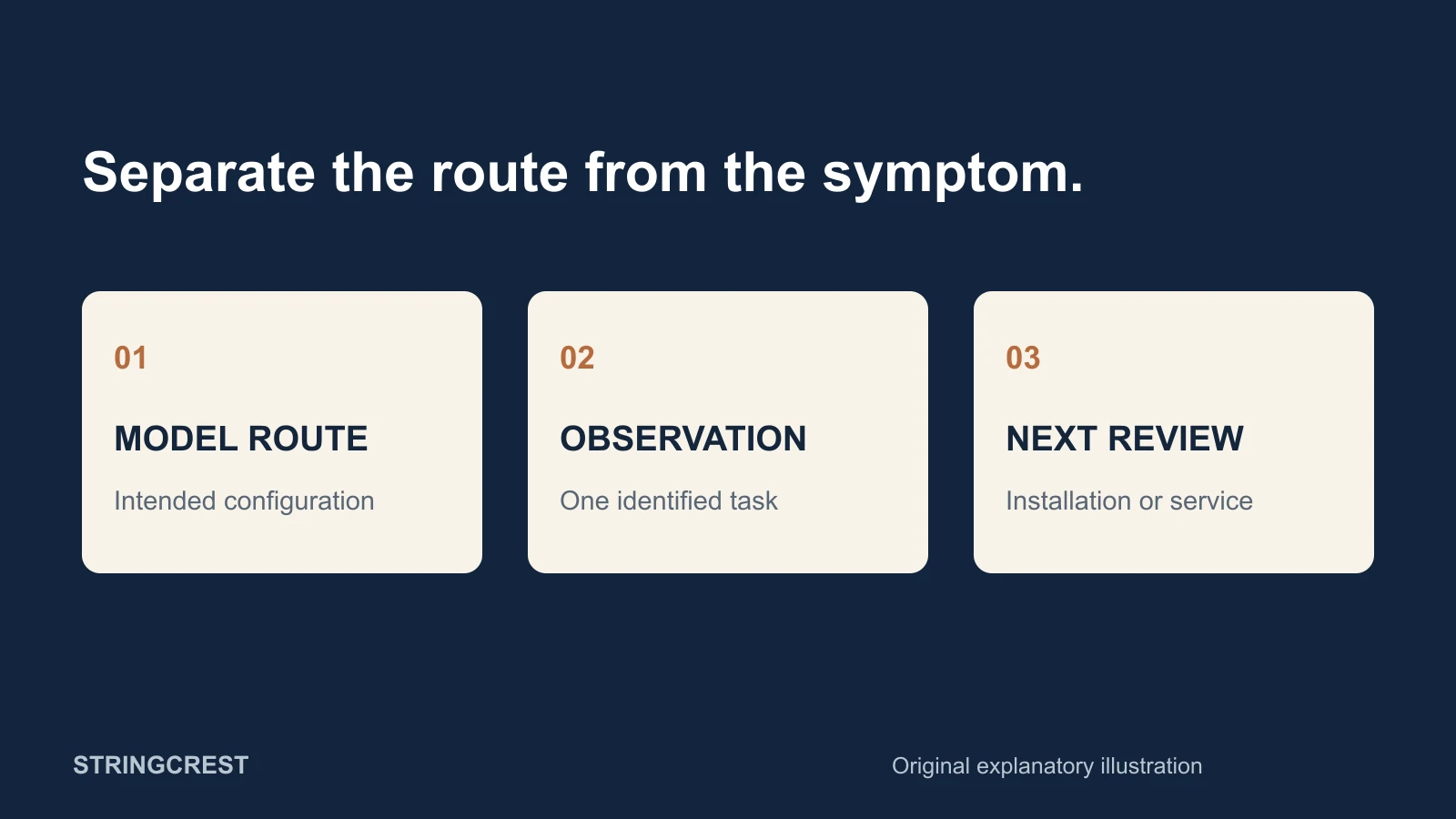
Separate the intended headstock route, string identity and observed symptom before recommending a product change or setup referral.
Introduction
A guitar string tree guides selected strings between the nut and the tuning posts. For a dealer handling noise or tuning complaints after a string change, the first task is to confirm the intended route and instrument configuration. The presence or absence of a tree does not, by itself, prove a string defect or the need for a hardware modification.
This guide concerns conventional electric-guitar headstocks that may use string retainers. It gives retail and distributor staff a way to separate a routing question from a product-identity question and a setup referral. It is not an installation template for drilling or repositioning hardware.
Know which part of the path is being discussed
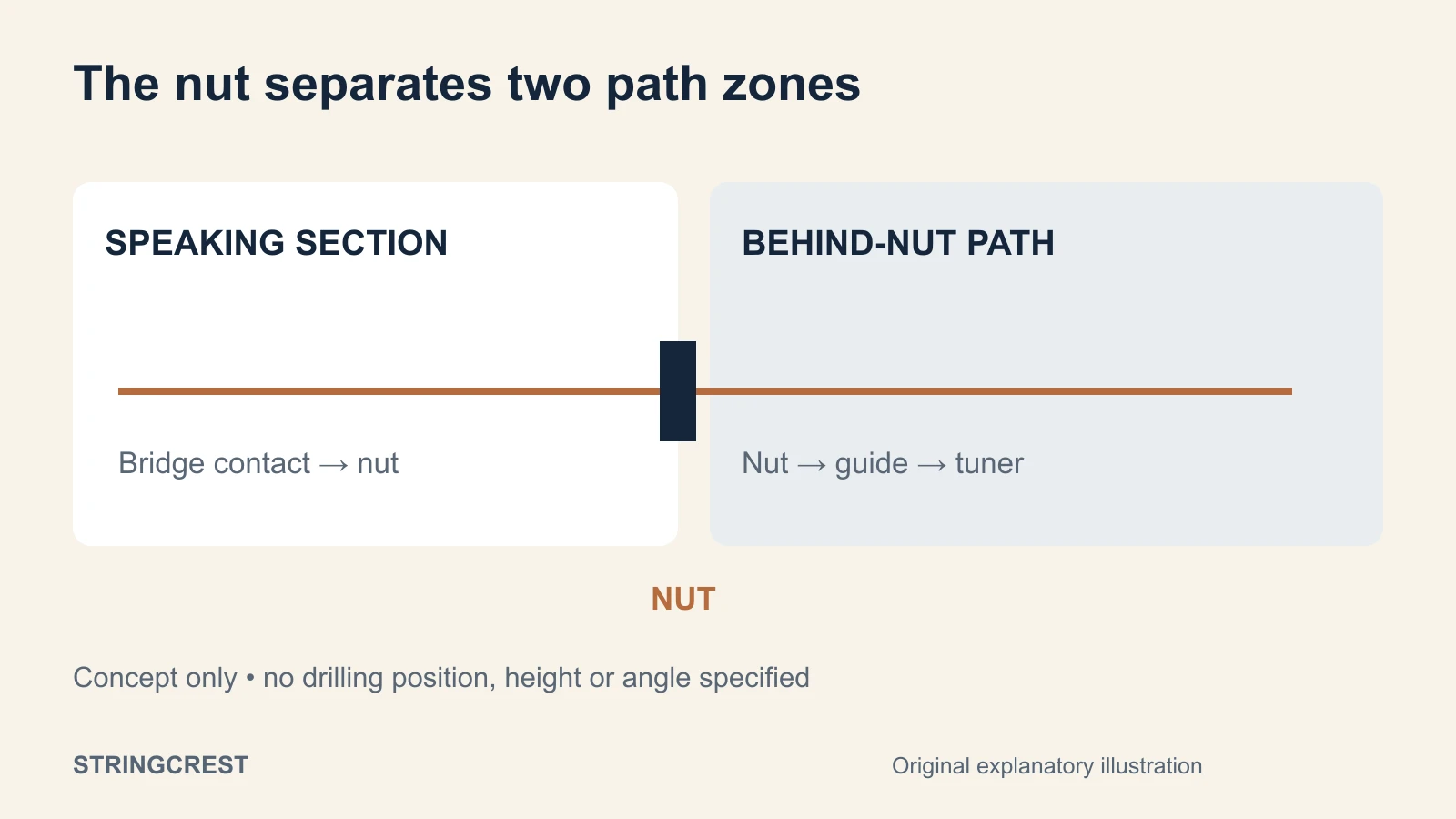
Follow one string from the bridge contact to the nut, then along the headstock toward its tuning post. The speaking length and the behind-nut path are separate parts of that route. A retainer on the headstock changes the path after the nut; do not confuse it with a bridge component or a locking nut.
Fender's string-tree explanation describes the guide's role in increasing the break angle toward the tuners on its traditional flat-headstock designs. The relevant observation is how the selected strings are routed and seated. The article is not a universal specification for every headstock.
Record which strings actually pass through each guide on the model being examined. Do not assume that a tree always covers the same pair, or that adding another guide is appropriate because another guitar has two. A model photograph or service instruction is more useful than a generic diagram when the instrument has been modified.
Check the guitar's intended configuration
Not every guitar needs a string tree. Headstock geometry, tuning-post design and the maker's specified routing can differ. A missing tree is only a finding after the intended configuration has been established.
Fender's tuning-peg guide discusses staggered posts as one way some instruments establish their string path. That is a reason to identify the installed tuners, not a promise that every staggered replacement eliminates a retainer.
Ask whether the tuners, nut, retainer or string set changed recently. A new hardware combination may need its own assessment even when each part is genuine. Preserve the previous configuration if it is documented, and distinguish a factory arrangement from a later modification.
Do not adopt a universal tree height, screw location or break angle from an unrelated model. Those dimensions need applicable instrument information. Staff can collect a useful account of the complaint without adjusting an uncertain part.
Observe when the symptom occurs
Ask the customer to demonstrate the sound or tuning behavior under the conditions where it was noticed. Identify the affected string and whether it occurs on open notes, fretted notes, after a bend or after vibrato use. Use a consistent listening path rather than comparing an acoustic observation with a processed recording.
| Reported situation | Information to collect | Next question |
|---|---|---|
| Open-note noise noticed after restringing | String position, installed route and current set identity | Does the route match the model's instructions? |
| Tuning return changes after new tuners were fitted | Old and new tuner references, installation record | Has the complete headstock setup been assessed? |
| A string was left outside an existing guide | Intended route and installation photographs | Does installation need correction under the maker's method? |
| Several strings changed behavior after a gauge change | Full old and new set information | Is product identity, installation or broader setup unresolved? |
These are intake questions, not diagnoses. The same customer description can leave several causes open. If the report is primarily fret buzz, use the post-change buzz guide for the wider observation sequence.
A visible mark at a contact point deserves a clear photograph and qualified assessment. It does not establish when the mark formed or prove that a particular material caused it. Retain the string and packet if a supplier review may be needed.
Send your electric-string application and installation question to StringCrest, including the instrument model, complete set identity and photographs of the headstock route. Hardware work should follow the relevant maker's guidance.
Keep a fit problem separate from a length problem
A string may reach its tuning post while still following the wrong route. Conversely, a correctly identified route may reveal that the proposed string lacks the required usable length. Record which question the evidence actually answers.
The locking-tuner and string-length guide distinguishes speaking scale, installed path, supplied length and installation allowance. A headstock guide belongs in the installed route when the model uses it. It does not turn the nut-to-saddle dimension into the complete supplied-length requirement.
Preserve the product's cutting and attachment instructions. Conventional, split-post and locking tuners can require different preparation. Do not shorten a replacement using a previous guitar's allowance and then classify the resulting reach failure as evidence about the original supplied string.
Keep a behind-nut routing observation separate from a string's published tension specification. If a proposed product change is meant to alter feel or response, evaluate the complete set and intended tuning. A retainer is not a substitute for that string-selection decision.
Prepare a service handoff that another person can use
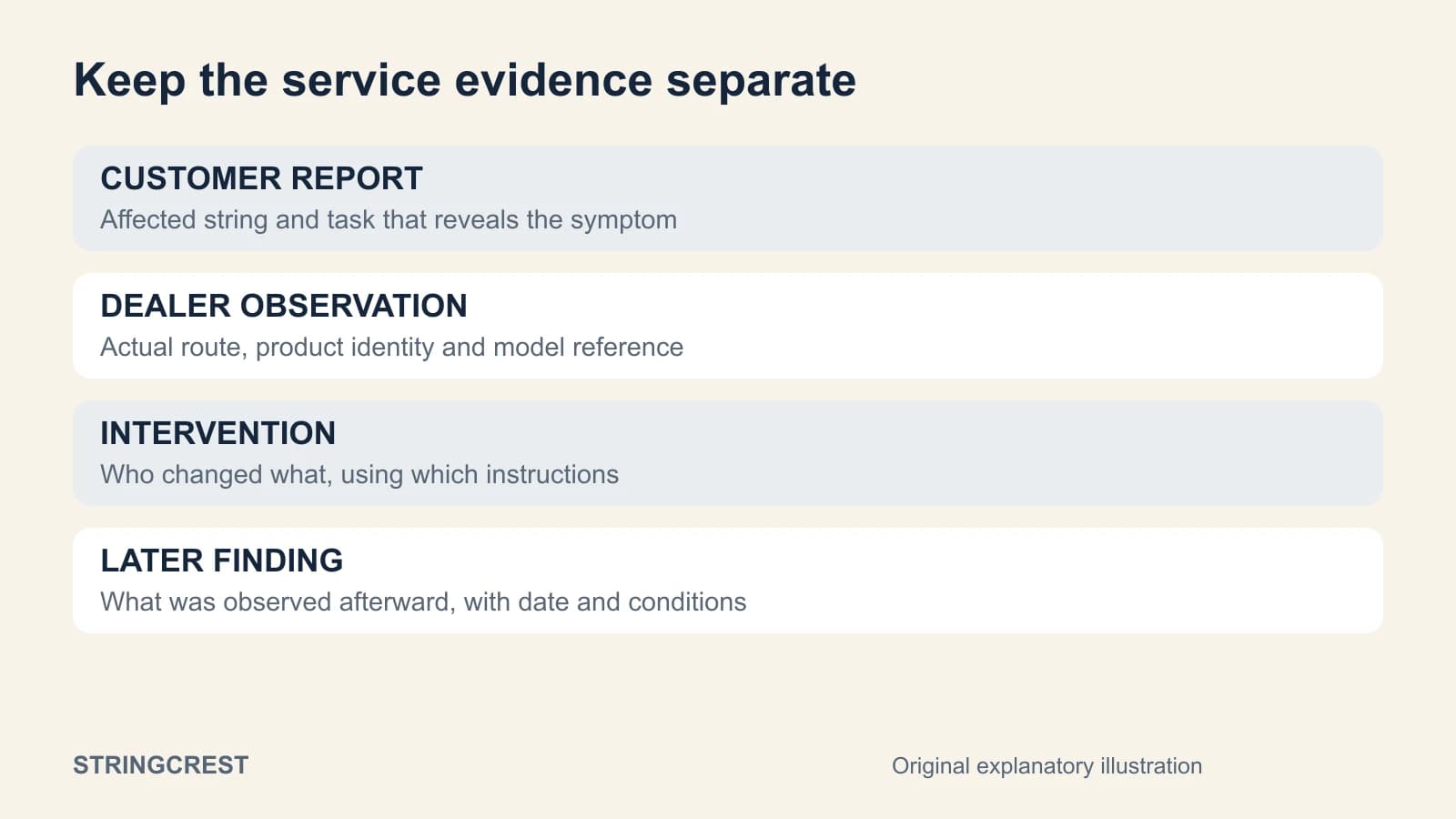
A useful handoff describes one instrument and one observed symptom. Include the model, any known modifications, tuner and retainer identity, current string code, affected position and the task that reproduces the report. Attach a photograph showing the whole route before adding a close-up.
If staff corrected an installation under the applicable instructions, record what changed and what was observed afterward. If a technician performed work, retain that finding as a separate dated entry. A later successful result should not erase the customer's initial report or imply the instrument was untouched.
For a distributor investigating several complaints, keep instrument configuration visible when grouping reports. Shared set codes matter for a product investigation, but different hardware modifications can prevent a simple like-for-like comparison. Forward what is documented instead of claiming that every report has the same cause.
FAQ
Should we recommend removing a tree to improve tuning?
Not from the complaint alone. Establish the model's intended configuration and obtain a qualified assessment of any proposed hardware change. A recommendation for one modified instrument is not a general instruction for the dealer network.
Does a tree make an unsuitable string set compatible?
No. Complete set identity, tuning, usable length and hardware fit still require confirmation. Guiding the behind-nut section cannot supply missing string length or establish the suitability of an unidentified set.
What is the minimum useful evidence for a remote review?
Start with the exact model, set code, affected position, recent changes and a photograph of the complete headstock route. Add a description or recording of the symptom under identified conditions. If that evidence remains incomplete, state what still needs examination.
Conclusion
A string-tree question becomes manageable when the intended configuration, actual routing and observed symptom are identified separately. That helps a dealer choose an installation check, a string-specification discussion or a competent setup referral.
Discuss your electric-guitar string requirements with StringCrest using the documented application. Use the electric string category for string-project context. For retainer parts or modifications, consult the instrument or hardware maker.
FROM GUIDE TO PRODUCT
Connect this guide to StringCrest product ranges.
Review the relevant range, then bring the instrument, complete specification and open questions into one project brief.
YOUR PRODUCT · YOUR BRAND
Discuss your next string project with Frank.
Share your instrument category, target market, gauge or material direction and private-label packaging requirements.

ABOUT THE AUTHOR
Frank Zou
Frank works directly with musical-instrument brands, importers and distributors on string specifications, product selection and private-label project requirements.
Meet Frank