
String Care
String Care
How to Clean Guitar Strings: A Retailer’s Care and After-Sales Guide
A practical guide to permitted care methods, replacement decisions, dealer care cards and after-sales records.
Introduction
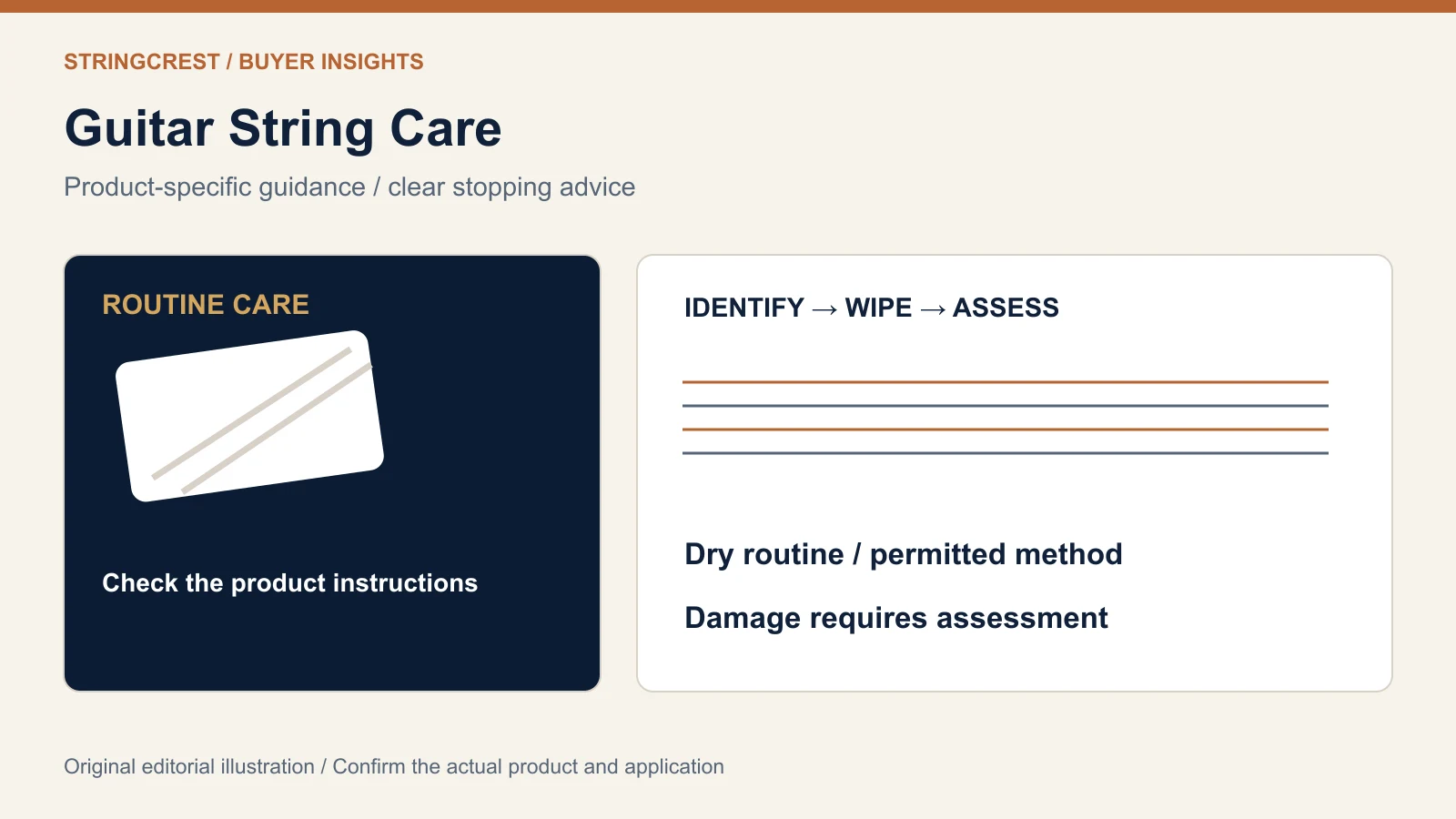
For routine guitar string care, begin with the string maker’s instructions and a clean, dry cloth. Gently remove accessible moisture and loose residue after playing. Before recommending any cleaner or lubricant, check its suitability for the specific string and the instrument surfaces it could touch. Cleaning cannot make a damaged string safe or establish why a guitar sounds different.
For a music shop, that answer needs to become a consistent customer instruction. A person buying an acoustic replacement set, a player trying coated electric strings and a technician preparing a demonstration guitar may need different advice. The useful retail outcome is a clear care card, a sensible replacement decision and an accurate record when a concern reaches the supplier.
This guide explains how to build that process. The examples are proposed shop procedures, not reports of StringCrest customer projects or measured improvements in string life.
Identify the strings before recommending a treatment
A cleaning product should have a defined application. Record the installed set’s name, construction and any available care instructions before pairing it with an accessory. “Metal strings” is too broad a description for approving a liquid or treated pad.
Coated and uncoated products can have different instructions. Nylon or other synthetic trebles also need their own guidance; a steel-string cleaning recommendation does not automatically apply to them. When the packet is missing, ask the customer about the installation and examine the available purchase record. Appearance alone may not settle the identity.
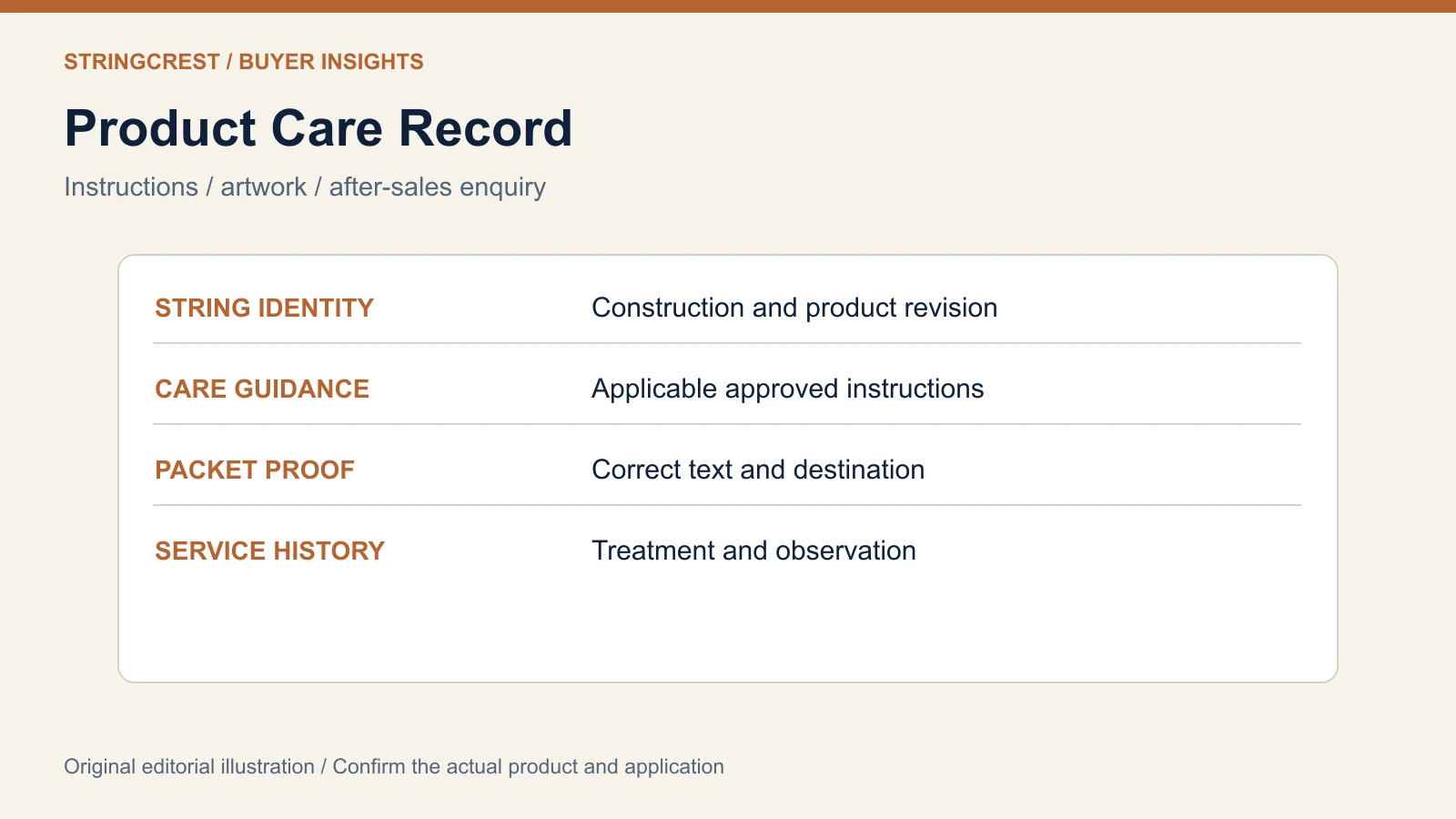
For a shop display guitar, put the installed set in the instrument’s service record. Staff should be able to find the relevant instructions without opening another packet or guessing from the color of the strings. Update that record when the guitar is restrung.
The coated and uncoated string selection guide addresses range planning. For daily care, the practical question is narrower: what does the maker permit for this installed product?
Start with a gentle dry wipe
Routine wiping is a useful starting point because it avoids introducing an unidentified cleaning chemical. Use a clean, soft cloth that is appropriate for the instrument and does not leave loose fibers. Follow the maker’s instructions for reaching the string surface.
A shop demonstration can show the customer how to hold the cloth gently around an accessible section of a string and move along it without pulling the string away from its installed path. Avoid aggressive scrubbing, forcing a cloth into tight hardware or catching it on sharp ends. Stop if a winding catches the cloth or the attachment appears insecure.
Keep the used area of the cloth away from clean instrument surfaces. A cloth carrying residue from the strings should not become the shop’s universal polishing cloth. The staff instruction should name where clean cloths are kept and where used ones go.
This is routine care, not a restoration method. If gentle wiping does not remove a mark, reassess the condition and product instructions before recommending a stronger treatment. A cleaner-looking surface does not establish that the string remains suitable for use.
Follow product-specific instructions for cleaners
Published advice differs between manufacturers. D’Addario’s string-cleaning guide discusses purpose-designed cleaning products and drying afterward. The Elixir FAQ recommends a dry wipe for its electric strings and advises against cleaners or lubricants for those products.
Those instructions should remain attached to the products they describe. Neither source establishes a universal rule for every coated string or gives permission to apply a competitor’s accessory to an unknown set. A retailer can carry a cleaner while still advising some customers to use only the dry method specified by their string maker.
Before suggesting a product, check both sides of the pairing: the string’s care guidance and the cleaner’s application instructions. Also account for the instrument finish, fingerboard and nearby components. If the instructions do not establish compatibility, ask the relevant manufacturer or refer the customer to a qualified technician.
What to do when the instructions disagree
Keep the recommendation on hold. Give the supplier the exact string and cleaner identities, along with the proposed application. A general statement that an accessory is “for guitars” does not resolve a narrower restriction from the string maker.
Keep cleaning separate from disinfection
Removing visible residue is not evidence of disinfection. Do not advertise a routine string wipe as sanitizing an instrument or making it safe for shared use. A shared-instrument hygiene policy requires appropriate guidance for the instrument, surfaces and actual setting.
Distinguish removable residue from a condition concern
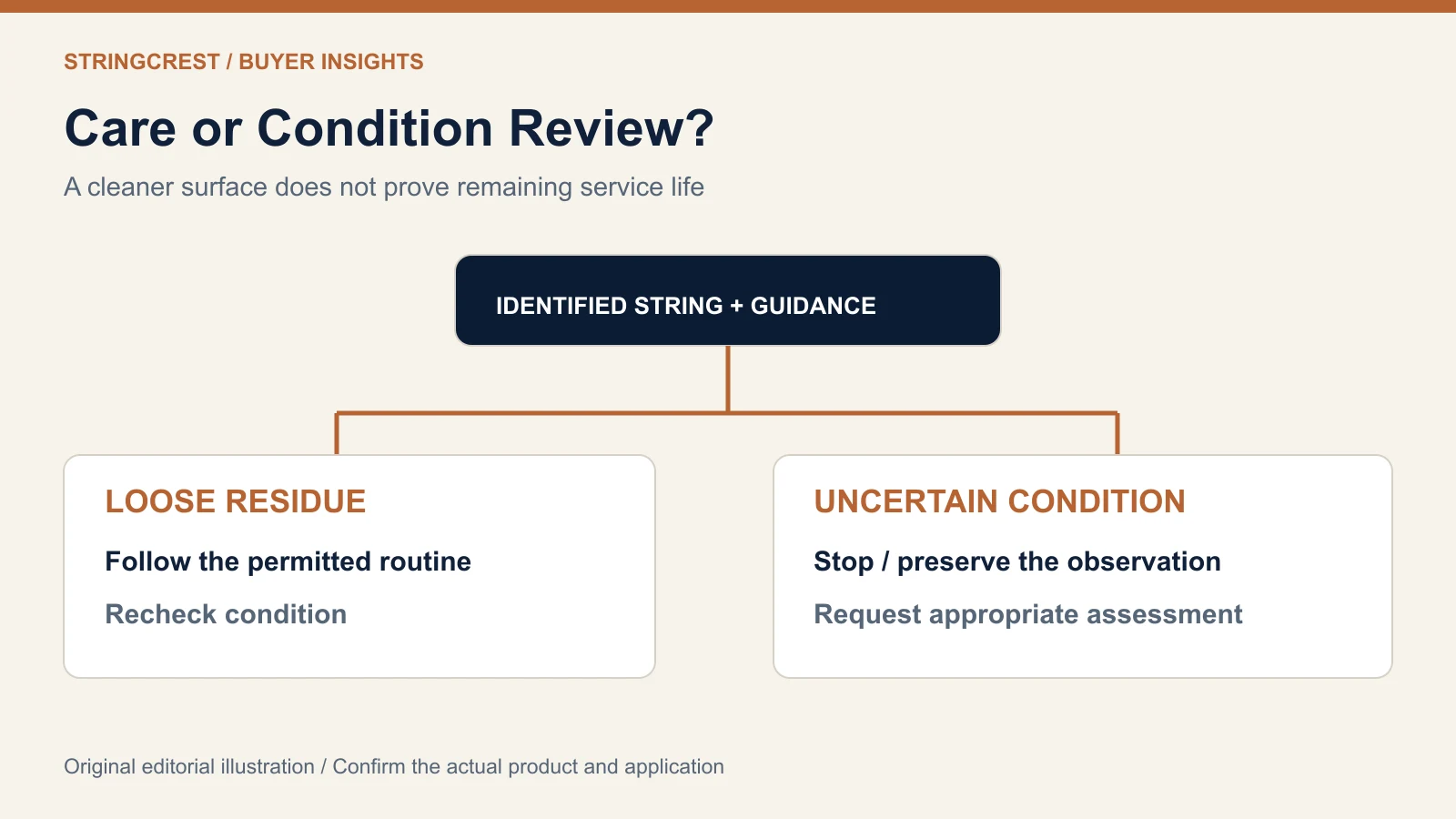
Staff need a stopping rule. Loose residue that comes away during permitted routine care is a different observation from roughness, a loose winding, an attachment problem or a damaged component. The latter observations deserve assessment before further playing or treatment.
A useful intake description names what staff can see or feel without diagnosing its cause. For example, “rough area on the wound string near the playing position” is more informative than “bad strings.” Record the position, installation history and any treatment already used.
| Observation | Shop response | Limit of the conclusion |
|---|---|---|
| Accessible loose residue | Follow the permitted routine care method | The wipe does not predict remaining service life |
| An unexplained surface mark | Preserve its appearance and check instructions | Color alone does not establish corrosion or cause |
| A catching or loose winding | Stop the care demonstration and seek assessment | Further polishing does not establish safe condition |
| A questionable attachment | Refer for competent installation review | Cleaning does not correct the attachment |
For receiving concerns on unopened stock, use the rust and tarnish inspection guide. Keep a new-stock investigation separate from wear on a guitar that has been played and treated.
Decide when cleaning should give way to replacement
Replacement decisions should consider the installed product’s condition and the player’s task. Cleaning cannot rebuild a separated winding, recover lost material or verify an uncertain end attachment. A customer expecting a damaged set to return to its original condition needs a different conversation from someone asking how to wipe down after practice.
For tone or tuning concerns, establish what changed. A playing observation can involve the instrument, installation or listening arrangement as well as the strings. Record the customer’s description and route setup questions appropriately. Avoid promising that a cleaning accessory will cure every dull-sounding or unstable guitar.
A retailer can explain a practical choice: continue permitted routine care when the set is sound and suitable, arrange an assessment when condition is uncertain, or replace the set when the relevant review supports that action. See the replacement decision guide for a fuller discussion of use and service conditions.
Do not publish a fixed extension-of-life promise
A statement such as “cleaning doubles string life” needs evidence for the actual product, method and use conditions. Without that evidence, describe the care process and its purpose. Do not convert a manufacturer’s broader marketing claim into a StringCrest guarantee.
Build a short care card customers can follow
A care card should help someone act without interpreting a long technical document. Lead with the permitted routine method and identify the string family or exact product to which the card applies. Give the customer a route to the current instructions when the printed space is limited.
An illustrative card could say: “After playing, follow this set’s care instructions and gently wipe accessible residue with a clean, dry cloth. Check with the string and instrument makers before using a cleaning product. Stop and seek advice if a winding or attachment appears damaged.” Review the final wording against the selected product before printing it.
Avoid placing a cleaner recommendation on every packet simply because the brand sells that accessory. If different product families require different guidance, keep separate approved care text. The design can be consistent while the instructions remain specific.
A customer may keep the card while replacing the installed set with another construction. Give the card a recognizable product identity so staff can explain when its instructions need to be checked again. A general brand logo alone is insufficient for that conversation. Keep the product code or family wording readable beside the care advice.
For an online order, make the same guidance available before an accessory is added to the basket. If the cleaner's suitability is unresolved, the buyer should see a request to check compatibility rather than an automatic pairing. This is an information-design recommendation; it does not require selling or recommending a particular care accessory.
Ask a staff member unfamiliar with the draft to explain it back. Check whether they can identify the permitted routine, the condition that stops the procedure and where to ask a product-specific question. That simple review can reveal ambiguity before printing, without being presented as a consumer study or a verified improvement in customer satisfaction.
A QR link should reach the intended care page on a phone. Keep essential stopping advice visible on the card itself so the customer does not need an internet connection to recognize when to stop.
Make demonstration-guitar care repeatable
A display guitar can pass between staff and visitors, which makes its history harder to interpret. Assign responsibility for checking it and recording restringing or permitted cleaning. The record can be brief; it needs to distinguish the installed set, the action and the person who performed it.
Use separate clean cloths for the planned task and follow the instrument’s instructions. Keep cleaning accessories clearly identified rather than leaving several unmarked bottles at the demonstration bench. A staff member should be able to find the approved method before doing anything to the strings.
If a visitor reports a changed feel, preserve that description. Check whether the guitar was restrung, cleaned or adjusted since the previous demonstration. That history can explain which comparison remains meaningful. It prevents an undocumented shop intervention from being presented as a string performance result.
An illustrative shop decision
A shop introduces a coated electric set on one display guitar while keeping an uncoated set on another. Instead of using a shared accessory recommendation, staff check each product’s instructions and attach the correct care card to its service record. If either instruction is unclear, the liquid treatment remains unapproved. This is an example of a workable process, not a report of a completed customer installation.
Ask a supplier for the right care information
A wholesale order can include a request for the written care guidance that will accompany the finished strings. Ask which constructions the instructions cover, how customers should identify them and whether the guidance changes when a coating or surface treatment changes.
For a private-label project, have the supplier review the actual proposed text. A draft describing an intended product is not proof that the construction, instructions or claim have been approved. Keep the accepted wording with the product revision and packaging artwork.
StringCrest makes strings to the customer specifications agreed for the order, and packaging specifications can be customized to customer requirements. These confirmed statements provide a starting point for a private-label discussion; they do not establish compatibility with a particular cleaner or certify a proposed care claim.
Factory testing may be relevant when a project raises a defined treatment question. Agree the method, sample identity and acceptance criteria before requesting such work. This guide does not claim that StringCrest has performed chemical compatibility testing or achieved a measured lifespan result.
Record treatment history in after-sales enquiries
A useful service enquiry includes the string identity, installation timing, instrument category and reported observation. Add the names of any cleaners or lubricants used, how they were applied and the order of events. Unknown details should remain recorded as unknown.
Ask for photographs of the relevant area and the packet when available. Give the customer a reason for each request: the packet helps identify the product; the photograph documents the visible condition. Photographs alone may not establish chemical exposure, internal damage or the original installation.
If a sample is retained for review, agree how it should be handled before asking the customer to clean or remove it. Additional treatment can change the evidence. Keep the supplier’s review request separate from the customer’s immediate replacement or service needs.
A response can acknowledge the concern without assigning blame: “Please share the set identity, the affected position and the care product used. We can then identify whether the next question concerns the instructions, installation or product condition.” This is suggested wording for an intake process, not a statement that every concern can be diagnosed remotely.
Check the printed instructions during shipment inspection
At receiving, compare the packet’s care text with the approved artwork and product revision. Check that any QR link works and identifies the correct product family. A carton containing several constructions needs a method for selecting the right instructions at the packing or picking stage.
Shipment inspection can establish whether the agreed text and identity are present. It does not independently prove the effectiveness of a cleaner or the lifespan of the strings. Keep the scope of the receiving record clear.
When a supplier changes the coating, material direction or recommended treatment, review the customer instructions before reprinting. Retained artwork from an older range may look professional while describing a different product. A written revision decision is useful even when the visual design remains unchanged.
FAQ
How often should customers clean guitar strings?
Follow the maker’s guidance for the installed set. A gentle dry wipe after playing is a practical routine where recommended. Assess condition and use separately; a calendar interval cannot establish that a string remains suitable.
Is a guitar string cleaner safe for every coated set?
Do not assume that it is. Some product instructions permit specific accessories, while others advise against cleaners or lubricants. Identify both products and obtain applicable guidance before recommending the pairing.
Can cleaning remove rust and restore a string?
Routine care is not a method for approving a corroded or damaged string. Preserve the observation and seek an appropriate condition assessment. An improved appearance does not establish structural condition or explain the original cause.
Should a retailer recommend alcohol or household cleaner?
This guide does not recommend either. Use the string and instrument makers’ applicable instructions and a purpose-defined compatibility decision. Without adequate guidance, keep the chemical treatment out of the customer care recommendation.
Can a shop clean demonstration guitars between visitors?
It can plan an appropriate care routine for each instrument and installed set. Keep product identity, permitted method and staff responsibility clear. A routine wipe should not be represented as a verified disinfection procedure.
What should a private-label buyer put on the packet?
Use concise, approved instructions tied to the actual construction and revision. Include a route to fuller guidance and clear stopping advice. Ask the supplier to review the wording before artwork approval; do not invent durability or chemical compatibility claims.
Conclusion
A useful string-care recommendation begins with an identified product and a permitted method. A retailer should be able to demonstrate routine care, recognize when condition needs assessment and explain the next step without promising that cleaning repairs damage.
For wholesale and private-label buyers, carry that same distinction into the product record, care card and shipment checks. Clear instructions help staff give consistent advice and preserve the information a supplier needs when an after-sales concern arises.
Sources and interpretation limits
D’Addario: How to Clean Guitar Strings and Elixir Strings FAQ were checked on 11 October 2026. Their recommendations apply to the products and context each maker describes. They do not verify StringCrest cleaner compatibility, lifespan or test results. Shop records and care-card examples in this guide are suggested procedures.
FROM GUIDE TO PRODUCT
Connect this guide to StringCrest product ranges.
Review the relevant range, then bring the instrument, complete specification and open questions into one project brief.
YOUR PRODUCT · YOUR BRAND
Discuss your next string project with Frank.
Share your instrument category, target market, gauge or material direction and private-label packaging requirements.

ABOUT THE AUTHOR
Frank Zou
Frank works directly with musical-instrument brands, importers and distributors on string specifications, product selection and private-label project requirements.
Meet Frank