
Product Selection
Product Selection
Coated vs Uncoated Guitar Strings: A Wholesale Buyer’s Range Planning Guide
A buyer’s framework for comparing coating architecture, feel, durability questions, claim evidence, range economics and inspection.
Introduction
Wholesale buyers should treat coated versus uncoated guitar strings as a product-positioning and verification decision, not a shortcut to “long life” or “better tone.” A coating can change surface feel, contamination resistance, appearance, production controls and price. The base string still needs a complete specification for instrument, material, gauges, core, winding, ends and packaging. An uncoated set may suit a value-led or traditional-feel position, while a coated option may address customers who prioritize consistency over a longer use period. Neither direction is automatically right for every dealer network.
The buyer’s task is to define the application, compare identifiable samples and approve only claims that the offered product can support. Published brands use different coating technologies and describe different feel or tone directions. Elixir, for example, distinguishes several proprietary coated families and says its protection includes the wound-string surface and spaces between windings. Those statements describe Elixir products, not a generic industry standard and not a StringCrest specification. A private-label buyer must request applicable evidence for the proposed construction.
This guide shows how to build a coated and uncoated sample matrix, evaluate the business case, prepare packaging language and define inspection. It avoids unsupported lifespan numbers because service life depends on the string, player, climate, storage, installation and evaluation method.
Start with the customer problem and channel
Ask why the range needs a coated option. Dealers may report that some customers change strings because of feel, visible contamination, tonal change, corrosion, breakage or routine maintenance. These are different problems. A coating may be relevant to some of them, but the product story should not imply that it prevents every failure mode.
Write a one-sentence role for each candidate SKU. An uncoated nickel-plated steel electric set might be the familiar reference in a price-accessible line. A coated set might occupy a premium position for players who value reduced maintenance frequency or a particular surface feel. An acoustic coated set needs its own alloy, gauge and construction decision. These examples organize research; they do not prove customer demand.
Collect evidence from the actual channel. Review sales by material and gauge where available, dealer questions, returns, replacement intervals reported voluntarily and price objections. Separate observed data from sales opinions. If the channel has no history, run a limited test with clear success criteria instead of launching many coated variants at once.
Define what the product must prove
Turn the customer problem into measurable or observable requirements. If the goal is resistance to visible corrosion during a controlled exposure, define the environment, duration, handling and acceptance rule. If the goal is a smoother surface, define a blind or coded feel comparison. If the goal is longer useful tone, specify instruments, players, playing time, storage, the baseline set and how “useful” will be judged.
Do not select a favorable result after testing and then invent the protocol. Agree the question first. Small user trials can guide range decisions, but they do not support universal lifetime claims. State limitations in the approval record.
Specify the base string before the coating
Coated and uncoated samples should be comparable at the base-string level. Record instrument, string count, tuning, full gauge sequence, core shape and material, wrap material, winding method, end construction and finish. For acoustic strings, distinguish phosphor bronze and 80/20 bronze or another confirmed wrap. For electric strings, identify nickel-plated steel, stainless steel or another offered construction.
| Specification layer | Questions for the buyer and supplier | Control point |
|---|---|---|
| Application | Acoustic, electric or bass; tuning; scale; target player | One defined use case per comparison |
| Base string | Gauges, core, wrap, winding, ends | Keep constant where the coating is the test variable |
| Coating | Location, type, color, surface and stated purpose | Use supplier-supported terminology |
| Plain strings | Coated, plated, treated or unchanged | Do not assume the wound-string process applies |
| Packaging | Inner protection, retail pack, storage instructions | Separate package protection from string coating |
| Claims | Exact wording and evidence source | Approve only what the offered revision supports |
If the coated sample changes gauge, wrap alloy and core-to-wrap relationship at the same time, the test cannot attribute a difference to coating alone. Such a sample may still be a viable complete product, but describe it as a set comparison rather than a coating experiment.

Understand what “coated” can mean
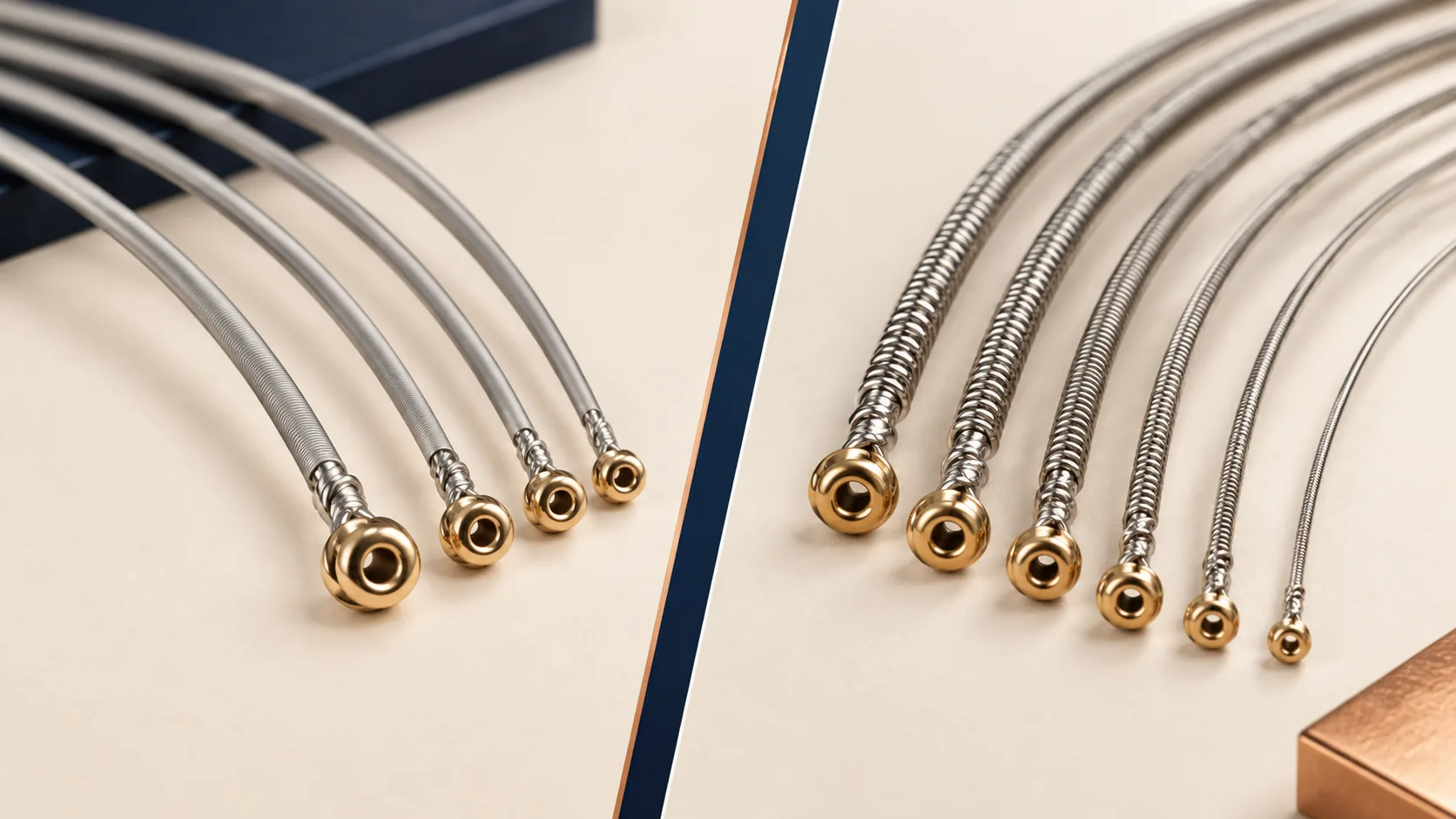
The term can refer to different product architectures. Some systems apply protection to a wound string, some emphasize the outer surface or spaces around windings, and some plain strings use plating or another treatment. Proprietary names belong to their owners. A private-label specification should use accurate generic language and the supplier’s confirmed process description rather than borrowing a trademarked technology name.
Ask where the protective layer is applied, which strings in the set receive it, whether the plain strings use a separate treatment, and whether the process changes color or surface. Request the supplier’s handling and storage guidance. If the exact chemistry or process is confidential, the supplier can still state the functional description and quality controls it is prepared to document.
Packaging protection and string coating are separate. A sealed inner pack may reduce environmental exposure before opening; it does not prove how the string performs after installation. Conversely, a coated product still needs packaging that preserves identity and condition through transport and storage.
Compare feel and response without generic claims
Surface feel can be noticed immediately, but language varies by player and product. Terms such as slick, smooth, natural or textured are useful only when tied to a coded sample and instrument. Elixir publicly differentiates its proprietary families by tone and feel direction; that illustrates why “coated” is not one uniform experience. It does not establish how another supplier’s sample will feel.
Use a short evaluation form. Ask participants to rate or describe fretting and bending resistance, finger noise, pick response, string-to-string consistency and comfort. Keep setup, tuning and gauge sequence consistent. Let evaluators write observations before seeing the proposed marketing position when practical.
Record disagreement. One player may prefer a smoother surface while another prefers a more direct contact sensation. The product decision should reflect the target segment, not erase the difference. Avoid declaring that all coated strings feel slippery or all uncoated strings feel natural.
Treat tone descriptions as application observations
Test clean and driven electric settings or relevant acoustic playing tasks without changing the entire signal chain between samples. Note attack, sustain, perceived brightness, balance and noise as observations. Use the same instrument, setup and recording method where practical, and keep audio files linked to the sample code.
A recording is useful for internal comparison, but it does not reproduce every player’s room, pickup, amplifier or technique. Marketing copy should stay proportionate: “evaluators described Sample C as having a smoother feel in our defined test” is more credible than “the coating improves tone.”
Design a credible durability comparison
Durability is not one metric. Buyers may be interested in visible corrosion, tonal change, surface wear, tuning behavior, breakage, coating damage or customer replacement frequency. Define which outcome matters. Then control what can reasonably be controlled: instrument, player or task, daily playing time, wiping routine, storage, climate and comparison baseline.
Use multiple sets if the decision is commercially important. One player and one guitar can reveal an obvious issue, but they cannot establish a general lifetime ratio. Record installation date, playing sessions, observations and removal reason. If samples are returned for examination, preserve their identity and handling history.
Do not claim “lasts three times longer” unless the exact offered product has evidence supporting that statement under a stated method and the legal review is appropriate for the destination. Manufacturer surveys or tests for another branded technology cannot be transferred to a private-label product.
Check coating condition and failure modes
Inspect high-contact areas, winding transitions and picking zones under consistent lighting. Note flaking, discoloration, roughness, exposed winding, debris and any change in feel. Also record unrelated failures such as damaged nut slots, poor installation or sharp bridge contact. The investigation should distinguish product condition from instrument causes.
If a sample shows a problem, ask whether it is isolated, application-related or systematic. Request a controlled replacement and preserve the failed sample. Do not rewrite the acceptance criteria after seeing the result.
Calculate the business case beyond unit price
A coated set often enters a different price tier, so compare gross margin, retail price, expected turnover, education needs and return risk. Do not assume a higher unit cost automatically creates a higher-value range. Dealers need a clear customer reason and a price ladder that makes sense next to the uncoated reference.
Build scenarios rather than one optimistic forecast. Estimate initial order quantity, channel sell-through, replenishment interval, packaging cost and working capital. Mark unknowns. A small launch can test whether buyers understand the difference and whether repeat purchase supports the position.
Consider range complexity. Duplicating every gauge in coated and uncoated versions can double artwork, barcodes, inventory and forecasting. A better first structure may use a small number of high-confidence coated gauges alongside the established uncoated range. The correct set count depends on channel evidence.
Plan an assortment that is easy to explain
Give each family a distinct role and naming rule. The pack and product page should identify instrument, material, gauges, coating status and any confirmed treatment of plain strings. Avoid a vague premium name that hides the actual specification.
Use a decision table for launch:
| Decision | Uncoated reference | Coated candidate | Evidence needed |
|---|---|---|---|
| Customer role | Familiar feel or accessible price | Protection or feel-led premium option | Dealer and sample feedback |
| Gauge coverage | Existing core gauges | Selected gauges only at launch | Sales and inquiry history |
| Claims | Material and construction facts | Coating function with support | Supplier evidence and tests |
| Packaging | Standard identification | Clear coated-family distinction | Artwork and shelf review |
| Reorder | Existing pattern | Monitor first replenishment | SKU-level sales data |
Review the line after an agreed period. Track questions, returns, repeat orders and reasons for choosing each family. Do not infer preference from a small number of enthusiastic comments.
Write accurate packaging and product-page copy
The package should state whether the set is coated and which strings receive the treatment. Identify the base material and gauges. If plain strings use a different plating or treatment, describe it separately. Avoid claims that imply immunity from corrosion, dirt, breakage or tonal change.
Explain the intended benefit in conditional, evidence-based language. “Designed to reduce contamination reaching the wound-string surface” is more controlled than “never loses tone,” provided the supplier supports the design description. Any comparative or duration claim needs evidence for the offered product and market-appropriate review.
On the product page, answer buyer questions directly: What is coated? What remains uncoated? Which instruments and gauges are offered? What sample data can be reviewed? How should the set be stored before sale? What must a private-label buyer provide? Structured answers help search engines and AI systems understand the product without keyword repetition.
Control samples, production and shipment
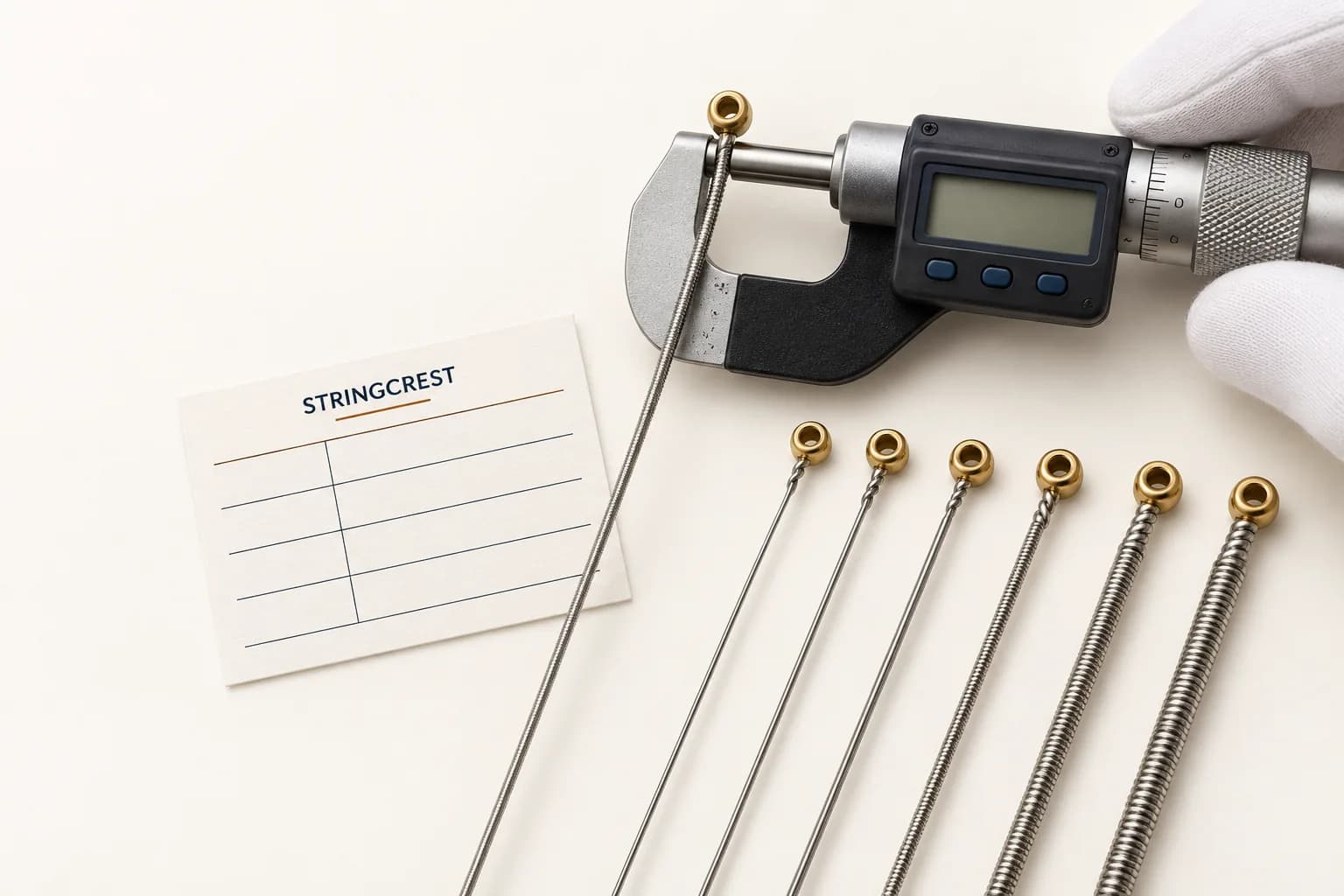
Assign a revision to each sample and preserve the exact base string and coating description. The approval record should include sample code, gauges, materials, coating location, appearance, evaluation conditions, pack concept and approved claims. Do not approve a coated family using only an unlabeled loose set.
Before production, define checks that can be performed consistently. Product identity, gauge sequence, visible surface, winding, end construction, string count and packaging are common starting points. If coating thickness, adhesion, corrosion resistance or another technical property will be inspected, agree on the method, sampling, tolerance and record. Do not list a laboratory term merely to sound technical.
Shipment inspection should confirm the approved item and artwork revision, quantities, pack integrity, label accuracy and carton separation. Photographs support the record but do not replace measurements or sampling. Connect the report to a lot or shipment identifier if traceability is part of the requirement.
Compare supplier proposals fairly
Send the same base-string and coating brief to each qualified supplier. Ask them to identify what they can confirm, what they propose as an alternative and what remains confidential. Compare the price on the same packaging, quantity, currency and trade basis.
Request evidence for claims the supplier expects the buyer to print. This may include a controlled test report, process description or applicable material documentation. Assess whether it actually covers the offered revision. A document for a different coating, instrument or gauge family is not automatic proof.
MOQ, sample fees and lead time may differ between coated and uncoated products because the process, variant count and packaging differ. Ask for terms by SKU matrix. Keep early estimates labeled as assumptions until samples, artwork and quantity mix are confirmed.
Prepare an RFQ that prevents ambiguity
Include company and market, sales channel, product role, instrument, tuning, scale, gauge sequence, core and wrap, coating location and purpose, plain-string treatment, finish, ends, packaging, languages, quantity scenarios, sample protocol, requested evidence and inspection questions. Provide a comparison baseline when relevant.
Ask the supplier to return the brief with each field marked confirmed, proposed, unavailable or buyer decision required. This creates a much stronger record than a quotation that says only “coated strings, good quality.”
FAQ
Are coated guitar strings always better than uncoated strings?
No. The best direction depends on the customer, instrument, feel preference, price position and required evidence. Compare complete, identifiable sets. A coating can address selected protection or feel goals, but it does not make every construction superior.
Do coated guitar strings always last longer?
Do not make a universal promise. Some proprietary products publish claims for their own technologies, but usable life varies with product, player, climate, installation, storage and evaluation method. Test the offered revision and approve only supported wording.
What should stay constant in a coated versus uncoated test?
Where practical, keep instrument, tuning, scale, gauge sequence, core, wrap, setup, playing tasks and storage consistent. If several construction variables change, report the work as a complete-set comparison rather than attributing the result only to coating.
Are the plain strings coated too?
That depends on the product. Ask whether plain strings are coated, plated, treated or unchanged and record the answer by position. Do not assume the wound-string process applies to the entire set.
What claims can a private-label buyer print?
Use accurate construction facts and functional wording supported by the supplier and applicable evidence. Comparative, corrosion or lifespan claims need stronger product-specific support and appropriate market review. Do not reuse another brand’s proprietary claims.
How many coated gauges should a distributor launch?
There is no universal number. Start with channel evidence and a manageable range. A limited set of high-confidence gauges can test positioning and replenishment before the business duplicates the full uncoated assortment.
What should shipment inspection cover?
Confirm product and revision, complete gauge sequence, visible coating or finish, string count, ends, labels, pack integrity, quantities and carton separation. Add technical coating checks only when the method, sampling and acceptance criteria are defined.
Conclusion
A sound coated versus uncoated wholesale decision begins with the customer problem and a complete base-string specification. Identify what the coating actually covers, compare coded samples, define durability questions before testing and keep claims proportional to evidence. Then build a small, clear assortment whose price and product story dealers can explain.
The same controlled revision should move through artwork, quotation, production and shipment inspection. That discipline protects the buyer from vague “long-life” promises and gives customers a more understandable choice.
FROM GUIDE TO PRODUCT
Connect this guide to StringCrest product ranges.
Review the relevant range, then bring the instrument, complete specification and open questions into one project brief.
YOUR PRODUCT · YOUR BRAND
Discuss your next string project with Frank.
Share your instrument category, target market, gauge or material direction and private-label packaging requirements.

ABOUT THE AUTHOR
Frank Zou
Frank works directly with musical-instrument brands, importers and distributors on string specifications, product selection and private-label project requirements.
Meet Frank