
Product Selection
Buying Guides
Upright Bass Gut Strings: Plain and Wound Set Selection
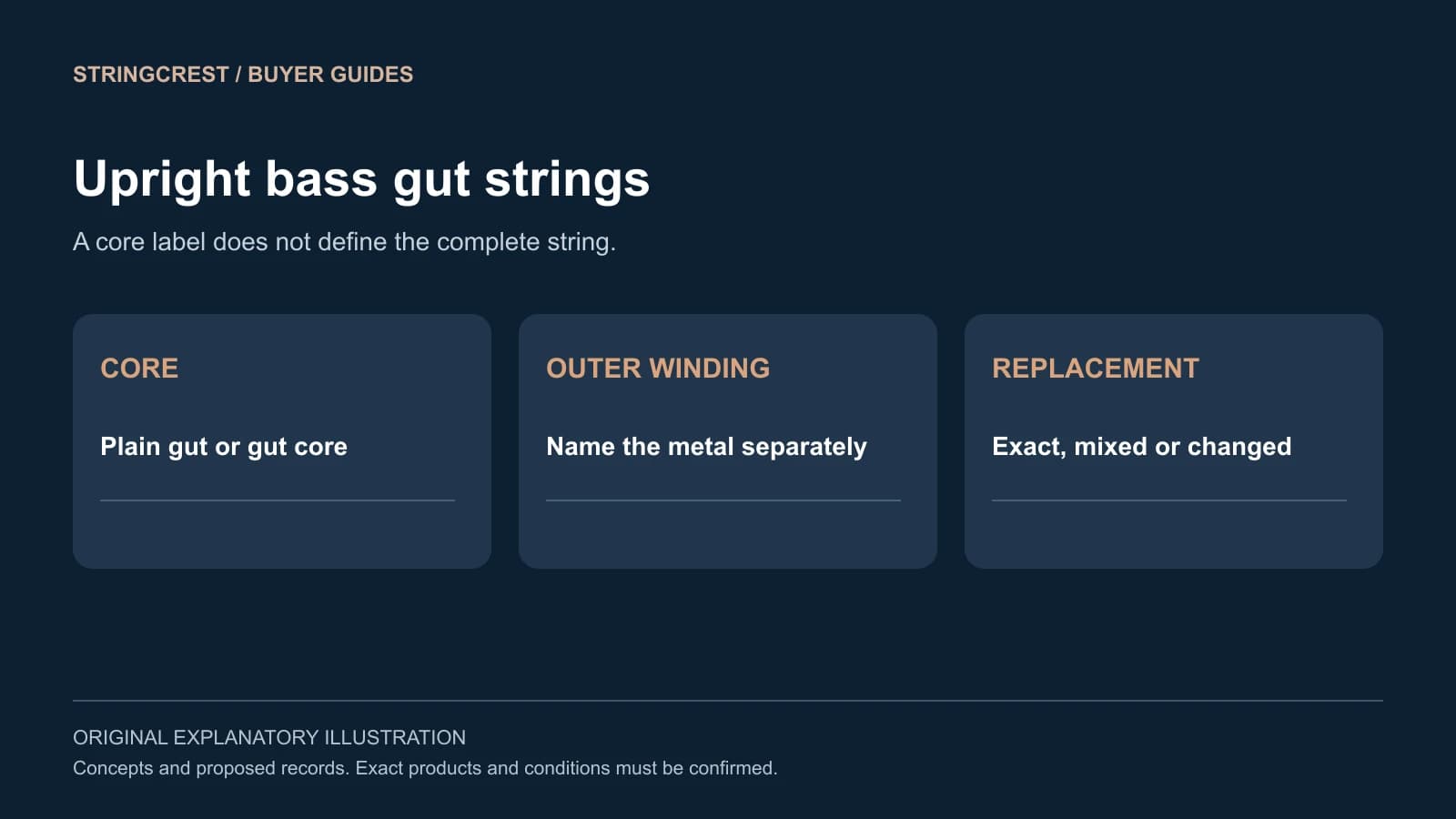
Gut identifies the core, not every outer surface or end fitting. Record each bass position before planning a replacement or construction change.
Introduction
Upright bass gut strings may be plain gut or metal-wound strings with a gut core. A gut-family set does not necessarily use the same construction in all four positions. A useful replacement decision starts with the exact string being replaced, the current set and the instrument's intended tuning and application.
This guide is for dealers and buyers handling a gut-string enquiry rather than choosing a generic double-bass range. The central question is whether the customer needs an exact replacement, a mixed configuration or a change from another construction. Appearance and the word “gut” cannot settle that choice.
Read core, winding and position separately
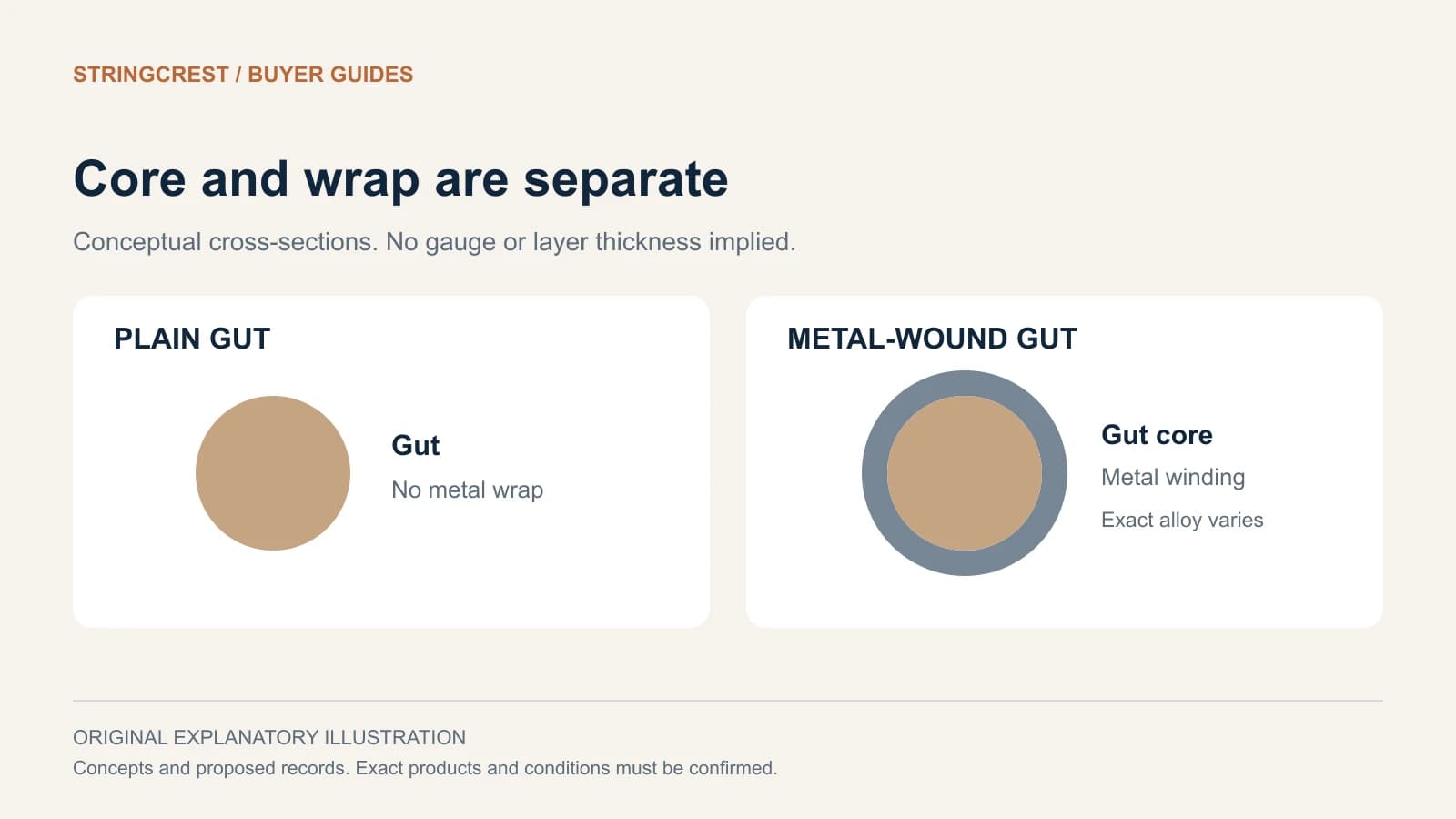
Plain gut describes a string without a metal outer winding. Wound gut describes a gut core with another material wrapped around it. The core and the outer metal are separate specification fields. “Silver,” for example, needs clarification when it could refer to a winding, plating or an imprecise sales description.
Two official examples make the distinction concrete:
- Pirastro Chorda double-bass strings use plain sheep gut for G and D, with silver-plated copper winding on the gut-core A and E.
- Pirastro Oliv double-bass strings are described as sheep-gut-core strings wound with chrome steel.
These are different constructions within gut families. Silver-plated copper is not a claim of solid-silver wire, and metal on the outside does not establish a steel core. The examples also do not define a StringCrest stock item or a recommended substitution between those families.
Choose the replacement route before comparing tone
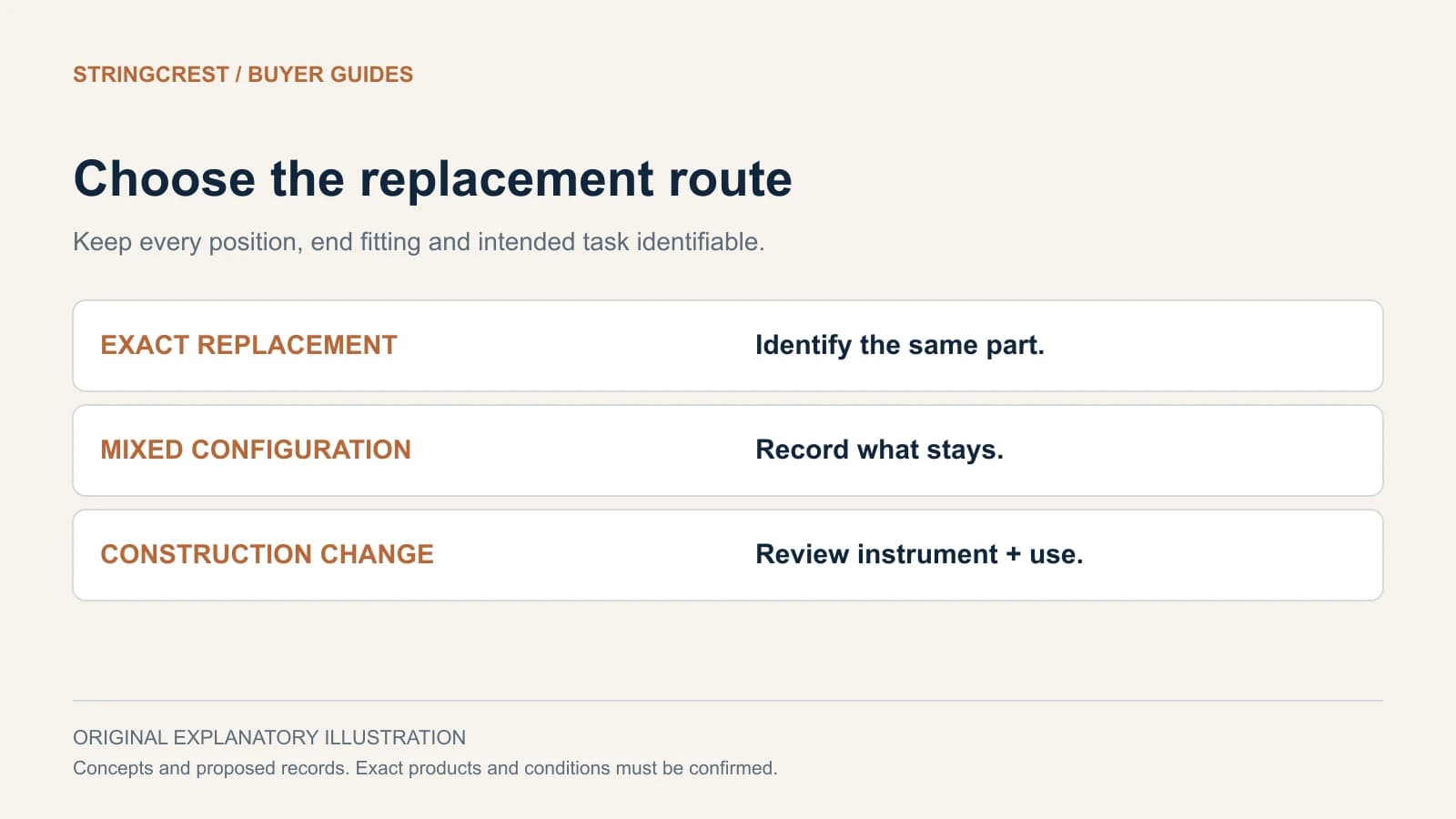
Exact replacement
If the player wants to retain the current setup, establish the exact family, position, gauge or tension designation, size and end construction. A packet, invoice or reliable installation record is more useful than a general request for “a gut D.” Confirm whether the other positions will remain in place.
Do not assume the apparent age or color identifies the string. When identity remains uncertain, seek the maker's assistance or a qualified assessment rather than selling a visually similar wire as an exact match.
A mixed configuration
If the customer wants to change only selected positions, document what remains and what changes. The phrase “hybrid set” does not say which positions are gut, synthetic or steel, or whether the gut strings are plain or wound.
A change in one part of the set needs to be assessed alongside the remaining strings. Record the player's intended balance and playing task, rather than promising that two families will blend because both are described as warm.
A change from steel or synthetic strings
Treat this as an instrument-and-application review. The current setup is a reference, not proof that a different construction will fit unchanged. Ask who will assess the instrument and install the proposed strings. Avoid prescribing nut, bridge or tailpiece alterations through a product enquiry.
The double-bass size and playing-style guide covers the broader fit and application record. This article focuses on preserving plain and wound identities within that record.
Build a four-position construction record
For a conventional four-string enquiry, write the positions explicitly. If the instrument has an extension, a fifth string or a different tuning, use a separate record rather than squeezing it into this table.
| Position | Current string identity | Proposed construction | Information to confirm |
|---|---|---|---|
| G | Exact family and designation | Plain gut, wound gut or unchanged | Declared material, dimensions, ends and intended use |
| D | Exact family and designation | Plain gut, wound gut or unchanged | Whether it is an exact replacement or a construction change |
| A | Exact family and designation | Plain gut, wound gut or unchanged | Core and winding named separately |
| E | Exact family and designation | Plain gut, wound gut or unchanged | Application, installation length and any extension requirement |
This is a blank selection record, not a proposed gauge schedule. Enter the actual tuning, speaking length and instrument details with it. A trade size alone does not describe the complete installation path. If dimensional data are unavailable, mark the field unknown and obtain them before approving fit.
Keep string ends independent of core material. In the cited Pirastro examples, the Chorda table shows knot ends, while the Oliv G and D entries show ball ends. A gut core therefore does not identify the tailpiece end. Check the exact part and intended hardware instead of relying on a material label.
Discuss your upright-bass string requirement. Send the four-position record, the current set and the intended tuning so the enquiry can address the actual change.
Translate playing style into a specific comparison
“Jazz,” “classical” and “vintage” do not specify a complete string requirement. Ask whether the priority is bowed response, pizzicato attack, a particular passage or another defined task. If more than one matters, record which result takes precedence.
Do not promise a tonal outcome from core material alone. The complete string, instrument, setup and player's technique remain part of the comparison. A maker's description of its own family is a starting point for selection, not evidence that a different proposed string will produce the same response.
For a mixed configuration, listen across the changed and unchanged positions using the intended task. Keep the instrument and relevant recording conditions consistent where practical. Write the player's observations with the exact configuration. This produces a useful comparison record without inventing a universal ranking of gut against steel.
Keep installation and care advice product-specific
A string enquiry should not become an instruction to reshape slots or improvise an end fitting. Provide the installer with the identified strings and instrument details. Where a change requires setup work, have it assessed before promising an unchanged fit or playing feel.
Likewise, do not transfer an oiling or cleaning routine between plain gut, metal-wound gut and other constructions without applicable maker guidance. Ask for the current care instructions for the exact family. Leave chemistry, frequency and application amount unspecified when they have not been confirmed.
For a dealer handover, retain the packet or part reference for each installed position, any approved setup changes and the applicable care document. This helps the next replacement enquiry start with an identifiable configuration rather than the ambiguous phrase “the gut set fitted last time.” It is a proposed record, not a claim that an installation or factory test has been performed.
FAQ
Is every gut-family upright-bass set entirely plain gut?
No. The cited Chorda example combines plain upper positions with metal-wound lower positions, while Oliv is described as metal-wound gut-core construction. Read the exact position list.
Can a metal-looking string still have a gut core?
Yes. An outer winding can cover the core. Use the manufacturer's construction description to establish the core rather than inferring it from a photograph.
Does a gut core establish the end fitting or an automatic fit?
No. Core material, end construction and instrument compatibility are different questions. Confirm each for the exact part and instrument before treating it as a direct replacement.
Conclusion
A gut-string selection becomes clearer when every position has a separate core, winding and replacement purpose. Decide whether you are maintaining a known setup or changing it, then review the intended playing task and physical fit. The folk and orchestral string category is a starting point for broader string projects.
Send your plain or wound gut-string application for discussion, including the existing configuration, instrument and intended use. Availability and a suitable construction need confirmation for the specific project.
Sources and interpretation limits
Pirastro's official Chorda and Oliv double-bass descriptions and position tables were checked on 25 October 2026. Examples belong to those product families. The blank record, decision routes and diagrams are original explanatory aids, not a StringCrest specification, completed installation, test result or guarantee of compatibility.
FROM GUIDE TO PRODUCT
Connect this guide to Bass Guitar Strings.
Review the relevant range, then bring the instrument, complete specification and open questions into one project brief.
YOUR PRODUCT · YOUR BRAND
Discuss your next string project with Frank.
Share your instrument category, target market, gauge or material direction and private-label packaging requirements.

ABOUT THE AUTHOR
Frank Zou
Frank works directly with musical-instrument brands, importers and distributors on string specifications, product selection and private-label project requirements.
Meet Frank