
Product Selection
Specifications & Fit
Resonator Guitar Strings: A Round-Neck and Square-Neck Buying Guide
A specialist buying decision for instrument identity, tuning scope and a supplier brief that can be reviewed.
Introduction
Choose resonator guitar strings by the actual instrument model, neck and playing configuration, complete target tuning and approved string specification. “Resonator” alone does not define a safe replacement set. Confirm the guitar maker’s requirements before adopting a different gauge, tuning or raised playing setup.
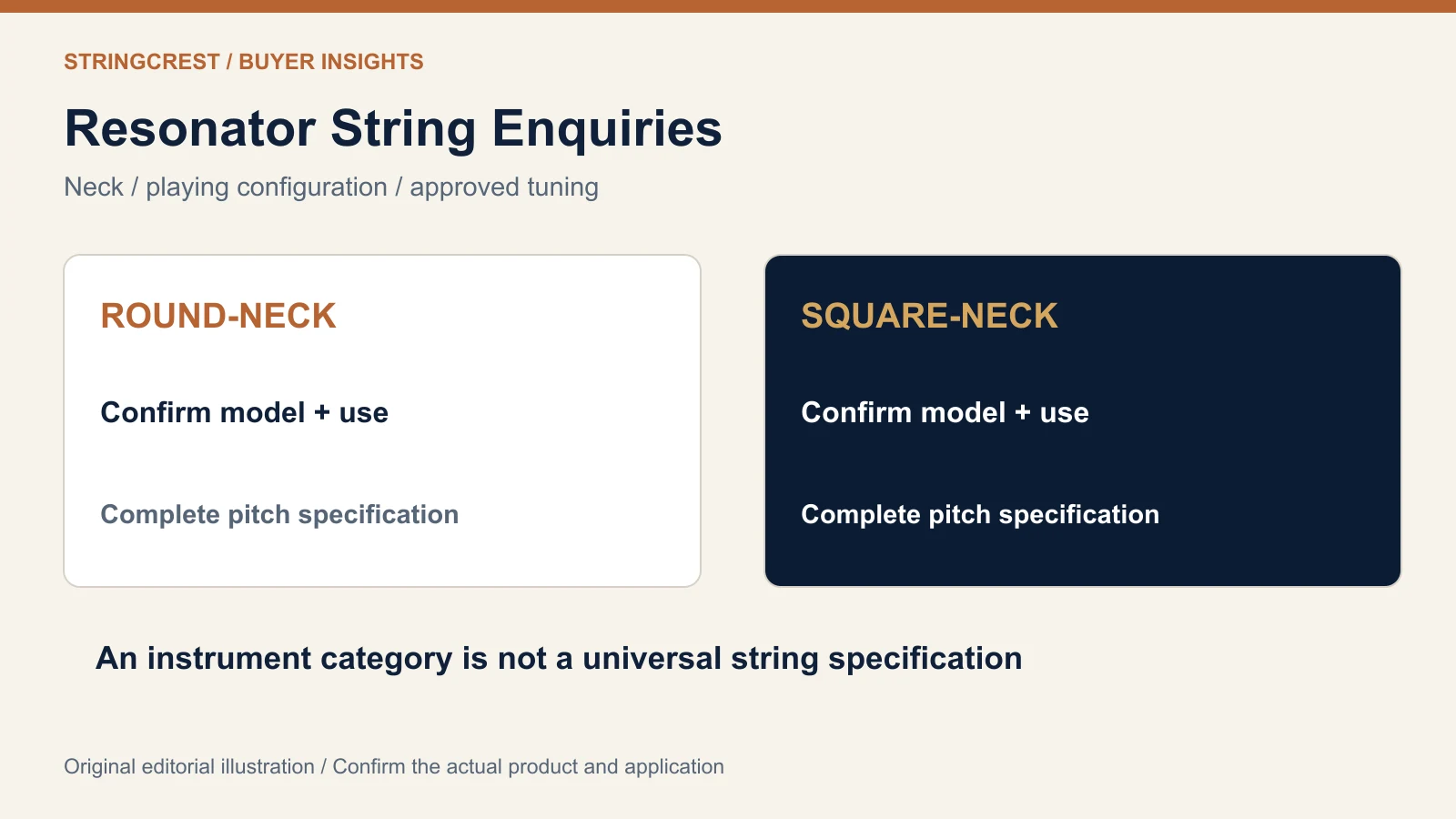
For a dealer, the first decision is which instrument the customer means. A fretted round-neck guitar and a square-neck instrument used in a raised playing configuration need their own references. A customer asking for an “open G” set has also supplied an incomplete tuning description until each string’s target pitch is identified.
This guide helps retailers and private-label buyers turn that enquiry into a clear application brief. It explains industry examples without transferring their specifications to StringCrest. Feasibility and availability of a proposed resonator-string project must be confirmed separately; this article does not announce a new stocked range.
Identify the guitar before looking at a packet
Ask for the maker and model, then establish how the instrument is played. Record the neck configuration and whether the customer is fretting normally, using a slide or playing in a raised setup. A photograph can help identify the request, but it may not reveal the permitted tuning or previous alterations.
If an adapter or other modification is involved, record it and consult the instrument maker or a qualified technician. Do not treat the customer's intended style as authorization to change the instrument's loading or geometry. Keep that application approval with the enquiry when choosing the replacement.
National’s technical FAQ distinguishes its instrument-specific setup and raises a concern about raised-nut adapters on round-neck instruments. Its square-neck string product is separately identified. These examples support asking the neck and application questions; they do not establish a universal gauge for every resonator.
For an older or modified instrument, the current condition may need assessment even when its original specification can be found. Preserve what the maker originally recommended and what is presently installed as separate fields.
Make the tuning request unambiguous
Write the target notes in a declared direction, such as lowest to highest pitch, and include octave identification where it matters. A tuning nickname is convenient in conversation, but purchasing needs a position-by-position target. That prevents a set intended for one register from being treated as another merely because both requests use “open G.”
D’Addario’s resophonic product example publishes the notes G2, B2, D3, G3, B3 and D4 from low to high. That is a named product example, not a recommendation to tune every round-neck or square-neck guitar to those pitches. The intended instrument still needs its own requirements.
Ask the customer which tuning is used regularly and which alternatives they want to use. Evaluate proposed alternatives as separate application questions. Do not approve a new tuning simply because the existing strings can be tightened to the requested notes.
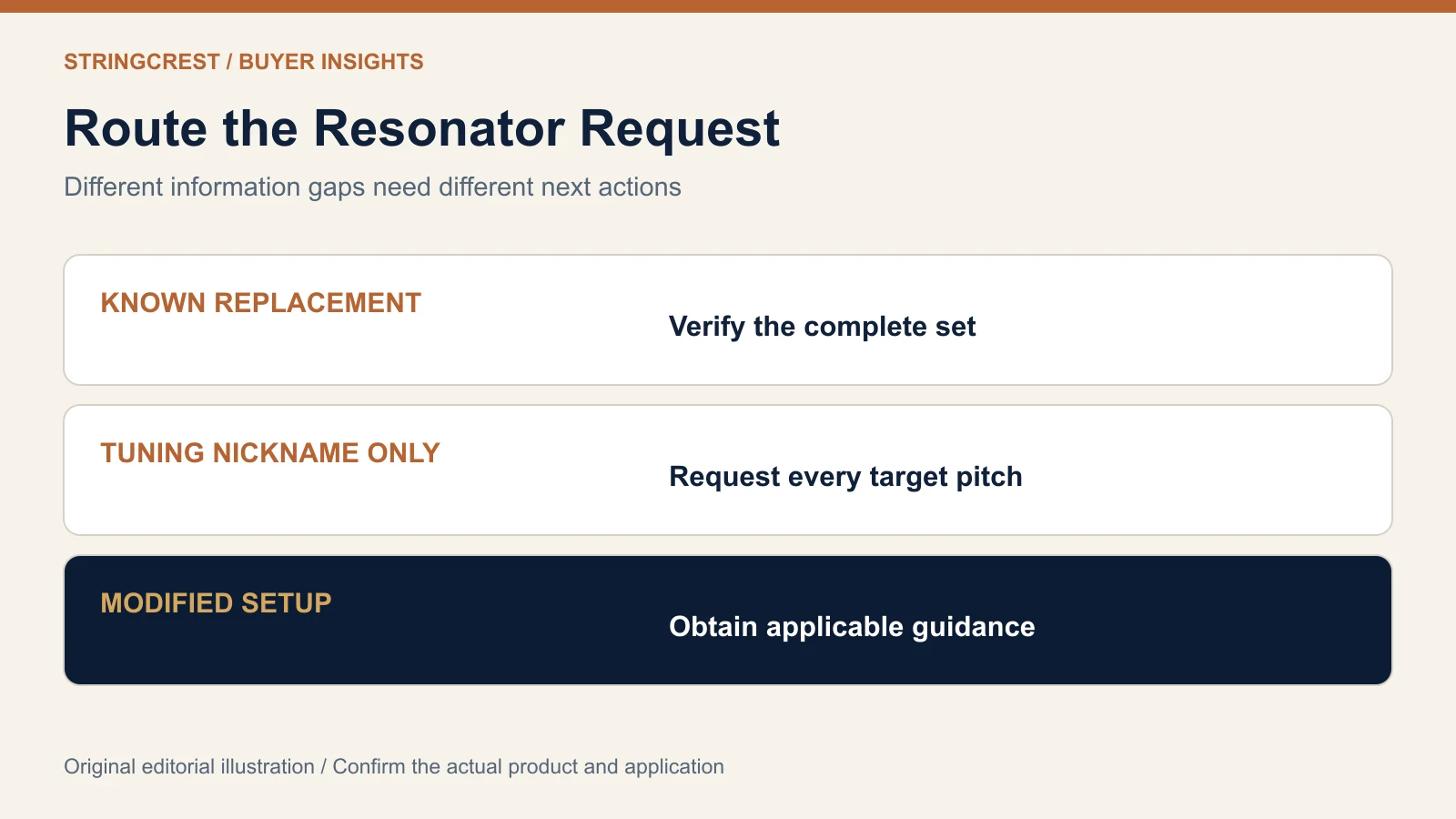
A proposed intake decision separates three requests. An identified replacement backed by the maker's requirements can proceed to complete-set verification. A request containing only “open G” needs the actual position pitches and instrument identity before selection. A raised or modified setup needs appropriate maker or technician guidance before a different set is approved. These are purchasing decisions, not claims that one neck type is universally compatible with a given packet.
An importer can use the same distinction when comparing quotations. Send every supplier the accepted application and tuning, then compare what each actually proposes. If a quotation changes a position or leaves the intended instrument unclear, ask for clarification before treating its price as comparable. The missing information is part of the offer, even when its endpoint gauge label resembles the reference.
Keep the direction on every worksheet
If one document reads from the highest string downward and another reads from the lowest upward, label both directions. The same six notes in an unexplained order can create a picking or sample error even when the numbers are otherwise correct.
Preserve the actual reference
Use the instrument maker’s requirements, the customer's identified current set and the proposed supplier specification. A remembered packet nickname or an online discussion of a different guitar is not an adequate reference for a purchase decision.
Specify every string rather than a familiar gauge name
A complete buying brief includes each string's target note, gauge, plain or wound construction, material direction, end type and relevant installed length. Leave unknown fields unresolved in the internal enquiry rather than assigning convenient values from another product.
A manufacturer’s endpoint gauge description can help identify its product, but it does not replace the intermediate positions. Two sets with matching first and last sizes can still differ in the strings between them. Confirm the actual supplied components before comparing prices or samples.
If the buyer wants an alternative material direction, establish which positions change. A shared marketing word such as “bronze” should not imply that all strings contain the same complete construction. Plain and wound positions need accurate descriptions.
| Purchase field | What must be identified | Where to verify it |
|---|---|---|
| Instrument | Maker, model, neck and current configuration | Instrument record and maker guidance |
| Tuning | Every target pitch in a declared order | Approved application brief |
| Complete set | Position gauges and construction | Supplier specification and identified sample |
| Installed fit | Attachment and relevant lengths | Instrument and component requirements |
| Application | Actual playing and listening task | Agreed sample review |
For general alloy selection, the acoustic material guide discusses comparison questions. It does not convert a standard acoustic set into an approved resonator set.
Separate a neck decision from a tone preference
A customer may begin by asking for a warmer or brighter response. Those words can help select a candidate only after the instrument and tuning requirements are established. A preferred sound on another resonator does not establish an appropriate loading or installed fit for this one.
Give the technician the relevant model and proposed complete set when an application change is considered. Preserve any setup work in the comparison record. If the new configuration requires an intervention, its result should be described as the reviewed installed system rather than an isolated alloy effect.
A dealer can explain the sequence plainly: identify the instrument, confirm the permitted application, then compare appropriate candidates for the customer's task. This answers the purchase question without offering a universal “resonator medium” recommendation.
Do not infer suitability from the playing style alone. A genre label or the presence of a slide does not describe the maker's full requirements, and it does not establish which material or gauge the customer will prefer.
Review end construction and the actual installation path
Confirm the required attachment at the tailpiece and the route across the instrument to each tuner. Ask the supplier to define overall usable length and any relevant winding transition. Speaking scale is only one part of that route.
Where the attachment design is unfamiliar, obtain clear instrument information and competent installation guidance before selecting a sample. A fitting demonstration should not require forcing a string or improvising a new end connection. Preserve a fit concern as a fit concern, rather than describing it as a disappointing tone result.
For a six-position project, check the complete installed set. A single component that reaches its tuner does not establish that the other positions have adequate length or suitable construction at their contact points. The actual instrument configuration remains the reference.
Installation preparation should establish the guitar's condition and the approved procedure. This guide does not instruct the buyer to adjust a cone, saddle or neck to make an unsuitable set work.
Design a sample task for the actual playing setup
Define what the sample review should answer. A replacement matching the accepted specification presents a different question from a proposed construction change. State which candidate is the reference and which differences are under consideration.
Use the intended instrument and relevant playing task. For a raised playing configuration, that may differ from a fretted comparison. Keep the actual procedure and listening arrangement in the record so a later reviewer understands what was observed.
Ask about fit and application preference separately. A sample can install correctly while leaving the customer's desired response unresolved. A preferred result on one instrument may justify a narrow recommendation without supporting a universal claim for all resonator players.
If several variables change, say so. The review may identify a useful complete set but leave the contribution of gauge, construction or setup uncertain. A buyer should not convert that result into a material superiority statement.
A useful sample outcome
Record the accepted application, complete component identity, relevant interventions and the next decision. If the instrument information is incomplete, the next decision can be to obtain it rather than approve the set. A clear unresolved question is more useful than a sample score with no defined task.
Handle a familiar counter enquiry carefully
An illustrative customer asks for the same resonator strings a friend uses, naming only a packet and “open G.” The dealer first identifies the customer's guitar, neck and actual target notes. The friend’s product can then be treated as a proposed candidate rather than an automatic replacement.
If the customer's instrument has an altered playing configuration, the dealer requests the relevant maker or technician guidance before approving the change. If the exact original set is simply being replenished, staff verify its current identity and specification. These enquiries may arrive with similar wording while needing different next steps.
This is a suggested counter process, not a StringCrest customer case. It requires no invented injury, failure or repair story to explain why the information matters.
Keep the packet's application statement narrow
A packet should name the confirmed instrument application, complete set identity and any relevant tuning scope. If the approved product serves a specific neck or playing configuration, make that distinction readable where the customer selects it.
Avoid a “fits all resonators” statement based on one installed sample. A broad class contains instruments with different requirements, and a common packet format does not establish those requirements. The product page should preserve the same scope as the approved sample record.
For online merchandising, do not rely on the word “acoustic” to explain the whole application. The buyer should be able to distinguish a standard acoustic set from the specific resonator brief. Links can lead to fuller guidance while essential identity remains visible on the packet.
On a dealer website, show the accepted neck and tuning scope beside the product identity rather than hiding it in an unrelated article. Give customers with an unidentified model a clear route to the application enquiry. A category filter can help them find candidates, while the written scope prevents the filter result from being mistaken for confirmed compatibility.
Check the tuning artwork
Have staff read the position list in the stated direction and match it to the approved component record. If a label omits register information needed to distinguish the intended tuning, revise the explanation before printing. The artwork review tests clarity; it is not evidence of playing performance.
Prepare a supplier enquiry that can be answered
Provide the maker's requirements where available, the instrument model and any modifications. Include the complete target tuning and the customer's reason for considering a different set. Attach useful photographs of the relevant fitting details when the supplier requests them.
Ask the supplier to declare its proposed construction and the differences from your reference. Request an identified sample when a new application comparison is needed. Do not copy a competitor's published gauge or tension data into the enquiry as if it described the proposed product.
StringCrest makes strings to customer specifications agreed for an order and can customize packaging specifications to customer requirements. Product feasibility, availability and minimum order requirements need confirmation against the actual brief. These facts do not establish that a particular resonator construction is already offered or interchangeable with a named competitor set.
A private-label conversation should therefore begin with the application question. Establish whether the requested project is supportable before planning packet variants, replacement singles or a shipment date. A useful enquiry can proceed without an unsupported stock or performance promise.
Plan receiving checks around the accepted identity
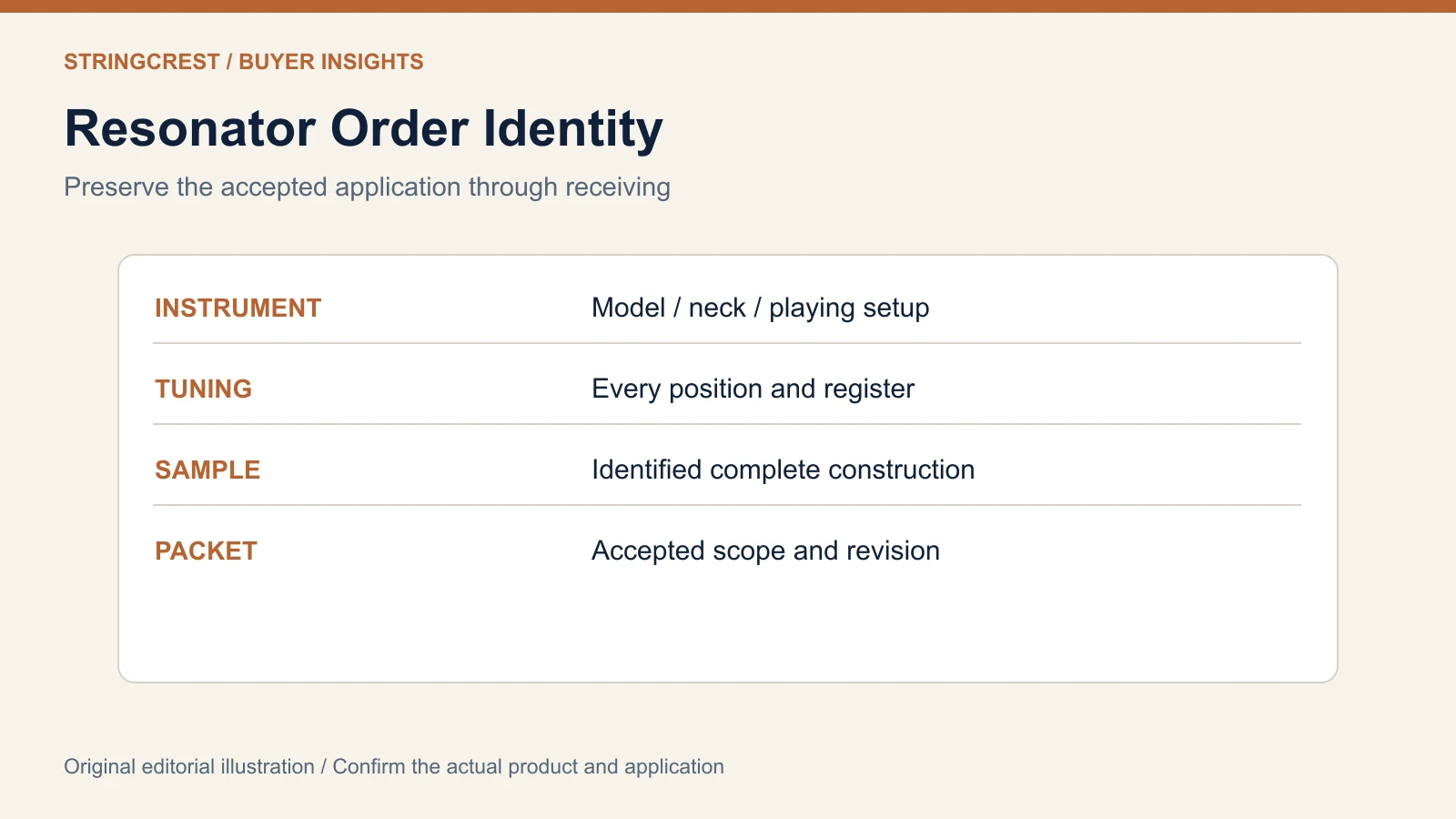
Once a project has an accepted specification, keep it with the approved sample and artwork. Receiving staff need the correct position list, construction identity and application label to compare the shipment with the order.
Shipment inspection can identify a wrong component, mismatched packet or missing required information. It does not independently approve the set for another guitar or tuning. Route a request to expand the application through the appropriate instrument and sample review.
When a supplier proposes a substitute, show the differences explicitly. A changed intermediate string, end construction or supplied length can matter even if the front-panel gauge name stays the same. Keep the accepted revision and proposed revision separate until the decision is made.
If an after-sales concern arises, preserve the actual instrument configuration and the product received. A documented application mismatch is different from an unexplained playing preference or a possible conformance discrepancy. The dealer needs a clear record before asking a supplier to review the question.
FAQ
Can I use any acoustic guitar set on a resonator?
Do not assume a category label establishes compatibility. Check the instrument maker's requirements, complete tuning and the proposed set's construction and fit. An identified replacement is different from an unreviewed substitution.
Are round-neck and square-neck resonator strings always the same?
Use the requirements for the actual instrument and playing configuration. Manufacturers publish separately identified applications, and a neck or raised-setup change needs its own review. A shared body category does not establish an interchangeable set.
Is “open G” enough information for a quote?
Write every target note, register and the order used in the specification. A tuning nickname can leave an important pitch distinction unresolved. The supplier needs the actual position targets and instrument requirements.
Should a buyer adopt another brand's published gauges?
Treat them as information about that named product. Confirm whether they are appropriate to the intended instrument before proposing a comparison. They do not describe a StringCrest sample or establish its tension and availability.
What happens if the instrument has a raised-nut adapter?
Record the modification and consult the relevant instrument maker or qualified technician. National's guidance raises a concern for its round-neck instruments. Do not use an adapter as evidence that the original guitar accepts any square-neck application.
Does StringCrest confirm every resonator construction in this article?
No. This is an educational buying guide. Discuss feasibility and availability against the exact instrument, specification and packaging brief before planning an order. The manufacturer examples remain attributed industry references.
Conclusion
A resonator-string buying decision begins with instrument identity, neck and playing configuration, then a complete tuning and position specification. Tone preference and sample comparison follow that application decision; they do not replace it.
For dealers and private-label buyers, preserve the accepted scope through packet wording, supplier quotations and receiving records. That makes a specialist enquiry answerable while keeping the recommendation tied to the actual guitar.
Sources and interpretation limits
National's technical FAQ, its square-neck string identification and D’Addario's resophonic product example were checked on 12 October 2026. Their recommendations concern their stated instruments and products. No competitor gauge, force, warranty or availability is adopted as a StringCrest specification. Buyer scenarios and receiving procedures here are illustrative recommendations.
FROM GUIDE TO PRODUCT
Connect this guide to StringCrest product ranges.
Review the relevant range, then bring the instrument, complete specification and open questions into one project brief.
YOUR PRODUCT · YOUR BRAND
Discuss your next string project with Frank.
Share your instrument category, target market, gauge or material direction and private-label packaging requirements.

ABOUT THE AUTHOR
Frank Zou
Frank works directly with musical-instrument brands, importers and distributors on string specifications, product selection and private-label project requirements.
Meet Frank