
Product Selection
Product Selection
Classical Guitar String Tie Ends: A B2B Guide to Bridge Compatibility and Sample Approval
A B2B method for specifying tie-end classical strings, bridge fit, six-position samples, package identity and receiving checks.
Introduction
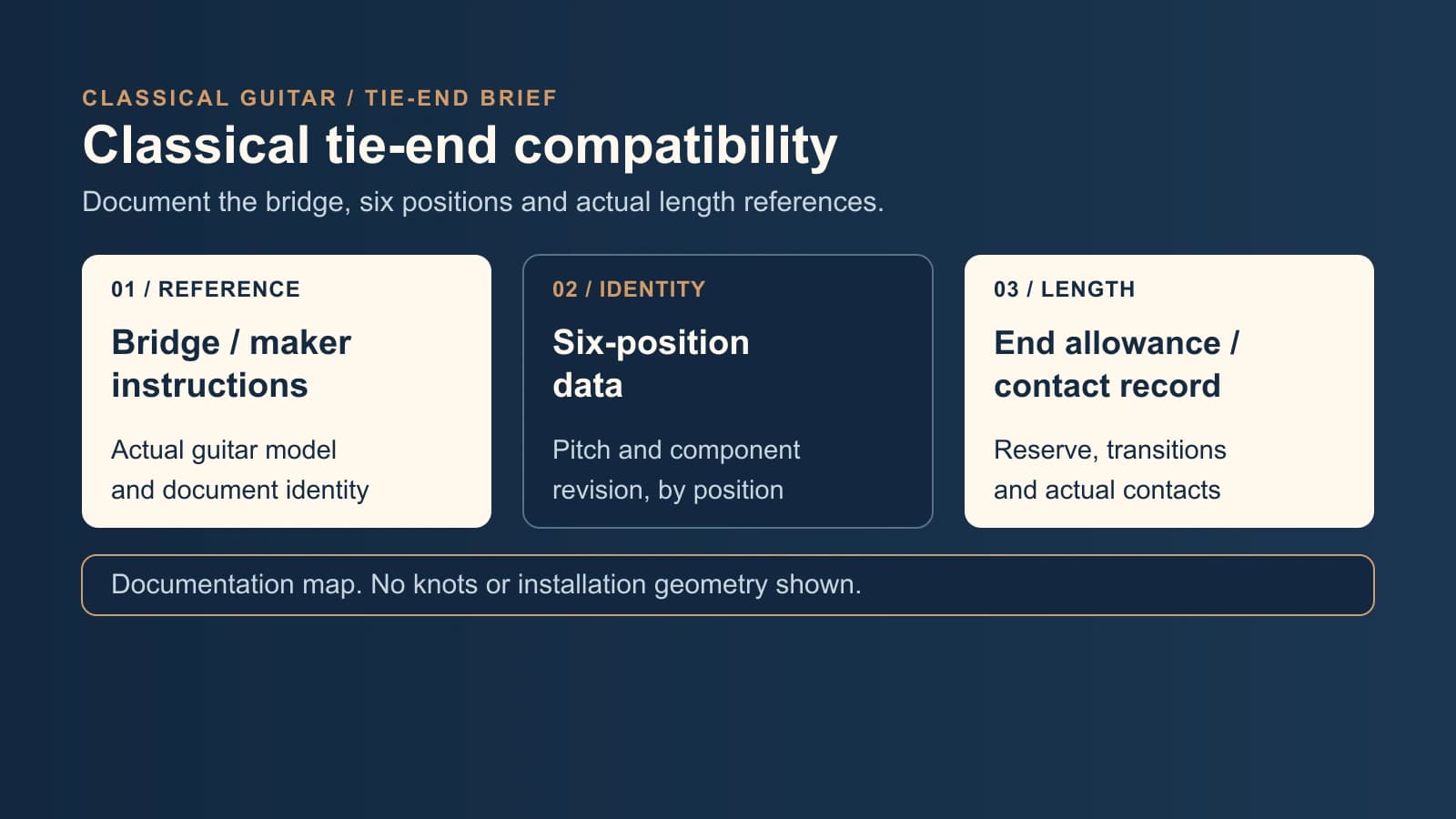
Match a tie-end classical string proposal to the guitar's actual tie block, the maker's installation method and the usable length of each string. Confirm the bridge routing, the reserve needed for that method and the construction that will meet each contact. “Tie-end” alone does not establish the match.
This guide covers a six-string, plain-cut tie-end brief with nylon trebles and wound basses. The nylon treble ends have no attached ball ends or metal beads. It provides a bridge-identification record and blank length fields for a brand, importer or distributor preparing samples. StringCrest's actual component specifications, available constructions and compatibility still require confirmation for the project.
Identify the bridge before selecting a tying method
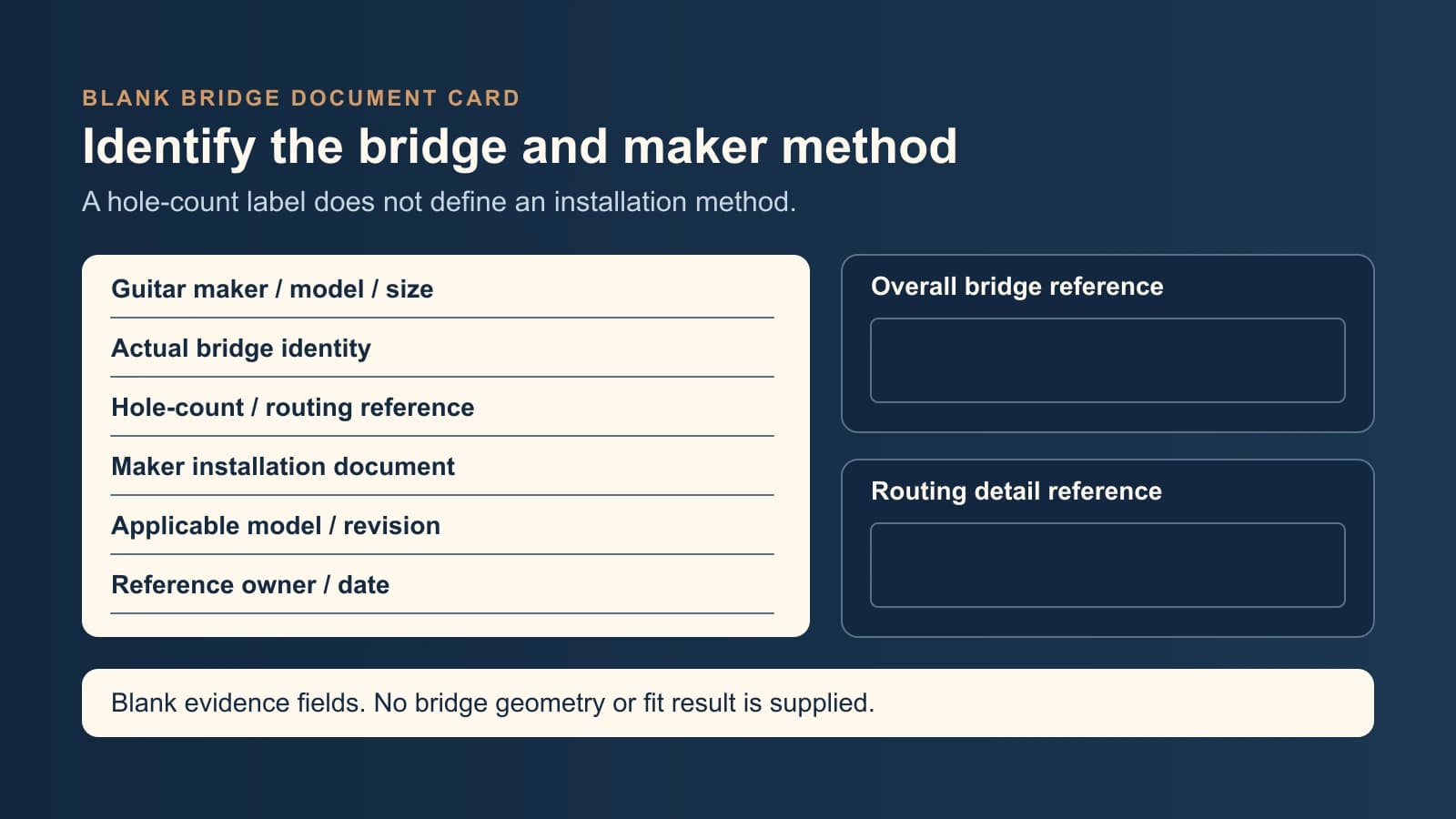
Record the guitar maker, model, size and actual bridge design. Identify the tie block, saddle and string-routing holes from the instrument maker's documentation or a clear view of the actual instrument. Keep an overall bridge reference and a detail that shows the relevant routing. Mark an unidentified bridge as unresolved.
Do not infer the hole count from the six-string count. For a specific example, Admira lists a 12-hole bridge on its Cristina model. This establishes that named design, not its routing on another guitar or a universal tying method. See the official Cristina specification.
If a project sheet describes a six-hole or 12-hole bridge, retain the maker's reference and confirm how the holes are used. Hole count does not by itself identify the required tail reserve, the path over the tie block or the intended string contact. A modified bridge also needs its current configuration documented rather than inheriting the original model's description.
Use safely available photographs or maker drawings; do not dismantle or tension a guitar merely to obtain an inquiry photo. A photograph can identify the bridge and support a discussion, but perspective should not supply an agreed fit dimension. No knot illustration in this guide establishes an installation method.
Map all six positions and their construction
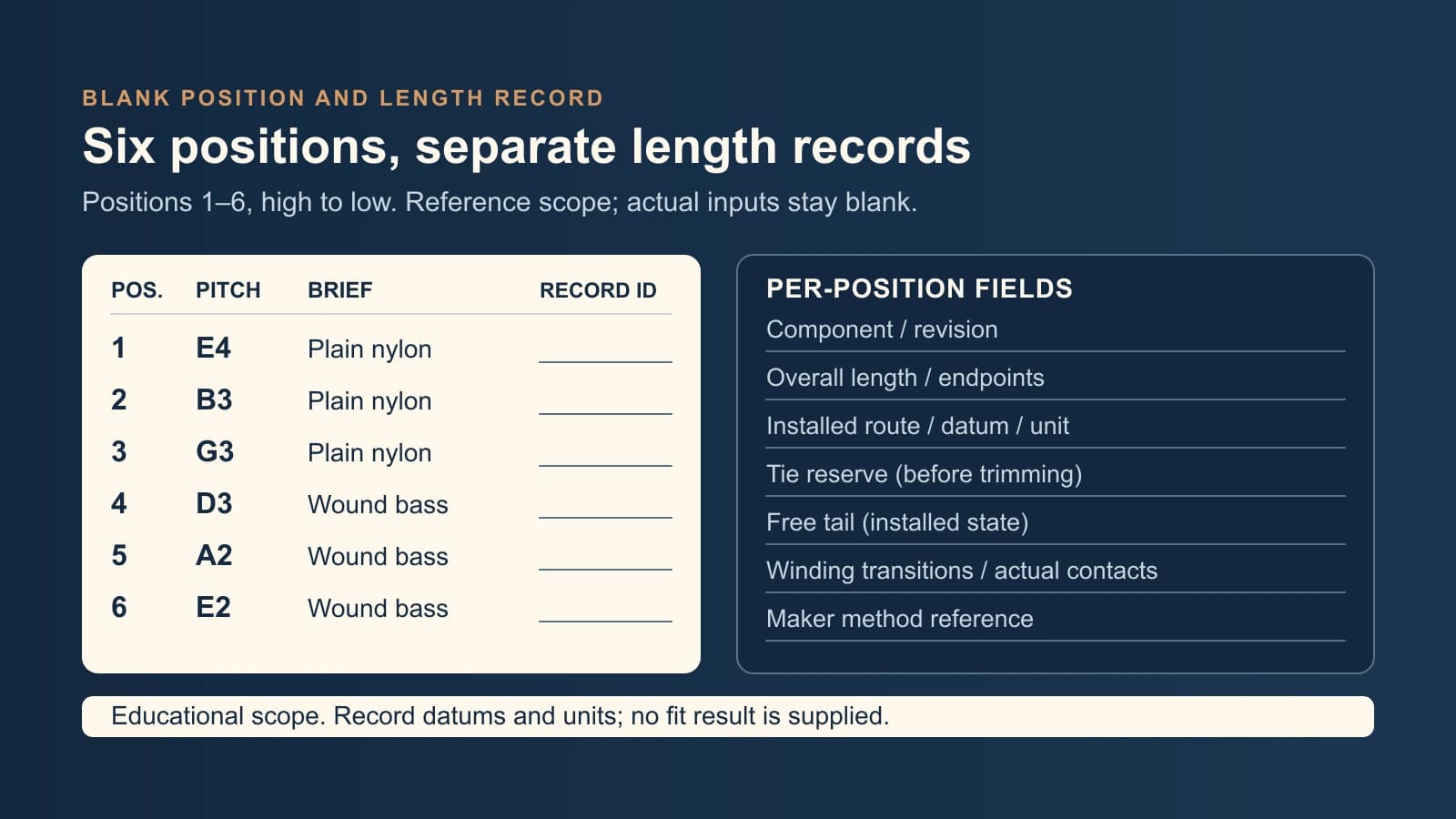
For the standard tuning used here, read positions 1 through 6 from highest to lowest open pitch: E4, B3, G3, D3, A2 and E2. The two E notes are two octaves apart. Keep position numbers and octave numbers together when identifying a sample.
The construction column below defines the nylon-treble/wound-bass scope of this guide. The project entries remain blank and do not announce a StringCrest SKU or material formula.
| Position | Standard open pitch | Construction in this brief | Proposed component / revision | Length-and-contact record ID |
|---|---|---|---|---|
| 1 | E4 | Plain nylon treble | ______ | ______ |
| 2 | B3 | Plain nylon treble | ______ | ______ |
| 3 | G3 | Plain nylon treble | ______ | ______ |
| 4 | D3 | Wound bass | ______ | ______ |
| 5 | A2 | Wound bass | ______ | ______ |
| 6 | E2 | Wound bass | ______ | ______ |
D'Addario's EJ46 is a named tie-end example with clear nylon trebles and multifilament-nylon-core basses wrapped with silver-plated copper. Its note chart lists these six octave pitches. That product page supports the construction distinction and pitch map; it does not establish a guitar's bridge layout or StringCrest's materials. See EJ46's official product details and chart.
Metal wrap on a bass string is a different component from its core and end format. Keep the bass core, wrap, any treatment and end construction separately declared. For the plain nylon trebles, do not add ball-end hardware to an image, sample description or pack diagram for this tie-end brief.
Separate supplied length, tying reserve and contact locations
A string must provide the working length required by the actual installation method. One overall length does not explain how much is available at the bridge, what reaches the tuner or where a bass-string construction changes.
Keep these records distinct:
- Speaking length: the distance between the nut and saddle contacts that define the open vibrating segment on the documented guitar.
- Installed route: the actual path through the bridge arrangement, over the saddle and nut, to the intended tuner attachment. Define its endpoints and units.
- Overall supplied length: the supplier's end-to-end dimension with both reference points identified.
- Bridge-end reserve: the length allocated to the specified tying method before final trimming, measured from a stated routing datum.
- Remaining free tail: a separate installed-state observation, referenced to the completed tie and the maker's method.
- Construction transitions: any change such as a winding start, end or specially prepared portion, located relative to the actual contacts.
For a wound bass with a different end portion, ask the supplier to identify it and confirm its intended orientation. Record which construction is intended to meet the bridge hole, tie-block contact, saddle, nut and tuner. Do not assume both ends are interchangeable, or impose a rule that all winding must finish before every contact. An unintended transition at a contact requires clarification against the supplier's construction drawing and the guitar maker's method.
Use the following blank record for each position, linked to the six-position sheet. No numerical allowance, cut length or fit result has been supplied.
| Position-specific length and bridge record | Project entry, including datum and unit where applicable |
|---|---|
| Guitar / bridge identity; actual hole-count reference | ______ |
| String position, component code, revision and intended bridge end | ______ |
| Maker's installation document and applicable model / revision | ______ |
| Nut and saddle speaking-contact references; measured speaking length | ______ |
| Installed-route endpoints, path reference and measurement | ______ |
| Overall supplied length and its two reference points | ______ |
| Bridge-end tying reserve before trimming; method and datum | ______ |
| Installed free-tail observation; reference point and photo ID | ______ |
| Winding or other transition positions relative to actual contacts | ______ |
| Tuner attachment / working allowance confirmed by the applicable method | ______ |
| Installer, date, unresolved question and disposition | ______ |
Describe the guitar, bridge reference and proposed six-position end-and-length record for a StringCrest project discussion. In the requirements message, identify any available photo or document references and the fields that still need confirmation.
Use the instrument maker's instructions for installation
Keep the applicable instructions beside the sample record. Yamaha's SLG-100N/SLG-120NW owner's manual, page 9, contains illustrated bridge tying and peg attachment instructions for those named nylon-string instruments. It is a useful example of model-specific guidance, not a method to transfer automatically to every classical bridge. See the official Yamaha manual.
For the actual guitar, use its maker's method and the string supplier's relevant end-orientation and working-length instructions. If the instructions do not cover the proposed bridge or construction, resolve that question with the makers or an experienced instrument technician before proceeding. This article does not prescribe a knot count, a number of turns, a tail length or a trimming sequence.
Record the method actually used and any fitting work. A generically labeled “classical installation” is insufficient when the guitar, bridge or string end has changed. The same nominal guitar size also does not establish the same reserve or route for every position.
Stop unexplained movement or damage before judging the sample
If a tie releases, the end visibly moves, a string frays, or the bridge or contact condition appears abnormal, stop the trial and have the cause resolved before continuing to tension or play the sample. Record the affected position, component revision, location, intended pitch, method and what was observed. Do not turn an uncertain fit into an instruction to pull harder or modify the bridge.
A lifting bridge is a repair issue. Yamaha's classical-guitar care guidance says a bridge that has begun separating must be repaired before new strings are installed. This is a specific condition to resolve, not something a different knot can approve.
After the attachment has been checked under the applicable instructions, record any remaining tuning or playing observations separately. A pitch change alone does not identify whether a tie slipped; compare the documented attachment and setup observations rather than assigning a cause without evidence. This guide supplies no tested settling time.
A sample decision should identify the exact guitar, bridge configuration, six component revisions and installation method covered. Note unresolved fields and distinguish a document check from an actual installation observation. Label the sample and pack with that same identity so another plain-cut set does not silently inherit the result. One documented combination does not establish compatibility with every tie-block bridge.
For the wider material, tension and supplier brief, use the classical string specification and sample guide. The bridge record here adds the end, route and contact detail needed for this particular decision.
FAQ
Does a 12-hole bridge automatically need a different string set?
Hole count alone cannot decide that. Confirm the actual routing, installation method, usable lengths and intended end construction for the proposed set. The named 12-hole example above does not establish compatibility with an unspecified product.
How much string should remain at the bridge?
Use the applicable guitar and string instructions, with the reserve and final free-tail reference recorded separately. This guide provides no universal millimeter or inch value. Confirm the required working length before trimming a sample.
Does a falling pitch prove that the tie has slipped?
No. Record the attachment condition, any visible movement, the string position and the setup state. If movement or damage is observed, stop and resolve it. A pitch observation by itself is not a diagnosis or a basis for an unverified adjustment.
Conclusion
A useful tie-end proposal names the actual bridge, maps six string positions and records the length and construction intended at each contact. The installation method and resulting observations must stay attached to that identified combination.
Start with the classical guitar string range and the nylon full-set specification example. The example illustrates a plain-cut brief; it does not supply approved bridge-fit dimensions or a confirmed sample result.
Outline your bridge and tie-end requirements in the requirements message, including the guitar model, bridge or manual reference, six-position construction and open length questions. Actual product details and availability need confirmation for the project.
FROM GUIDE TO PRODUCT
Connect this guide to Classical Guitar Strings.
Review the relevant range, then bring the instrument, complete specification and open questions into one project brief.
YOUR PRODUCT · YOUR BRAND
Discuss your next string project with Frank.
Share your instrument category, target market, gauge or material direction and private-label packaging requirements.

ABOUT THE AUTHOR
Frank Zou
Frank works directly with musical-instrument brands, importers and distributors on string specifications, product selection and private-label project requirements.
Meet Frank