
Product Selection
Product Selection
Classical Guitar String Tension: A Wholesale Guide to Normal and Hard Tension Sets
A wholesale framework for normal and hard tension labels, six-position construction, tie-end samples, packaging and inspection.
Introduction
For a wholesale buyer, “normal tension” and “hard tension” are range labels, not complete specifications. The useful question is not which label is universally better. It is which measurable string construction, at which scale and tuning, creates the response your customers expect—and whether that result can be repeated from the approved sample through production and shipment. Two sets carrying the same tension name may use different diameters, polymer formulations, wound-bass constructions and per-string tension balance.
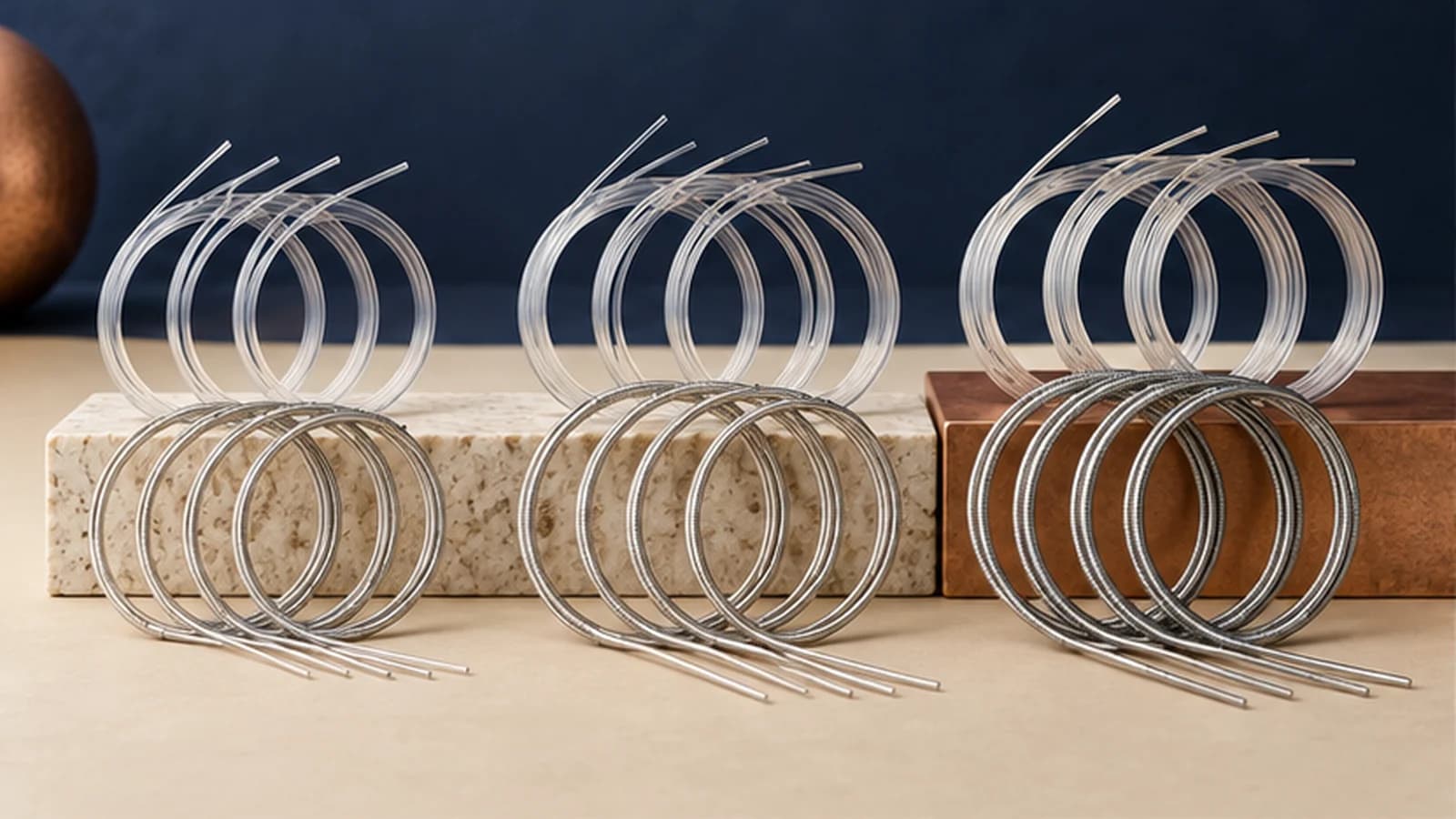
A dependable RFQ therefore needs more than a request for “classical nylon, high tension.” It should identify the instrument scale, tuning, tie-end construction, treble material, bass core and wrap, target response, complete position matrix, packaging and the method used to approve samples. StringCrest’s classical and nylon scope in this guide uses traditional straight-cut, tie-end strings. The product brief, sample photos and packaging artwork should show no ball ends or metal beads.
This guide explains how importers, distributors and private-label brands can compare normal and hard tension directions without turning another brand’s numbers into unsupported StringCrest claims. It also provides a practical sampling, packaging and shipment-inspection framework for a repeatable six-string SKU.
What a tension label tells you—and what it does not
A tension label groups a manufacturer’s own product family. It generally signals a relative feel direction inside that family: a light set may feel more flexible, a normal set may occupy the middle of the range, and a hard set may resist the fingers more and drive the soundboard differently. The label alone does not define a common industry value. It cannot substitute for a six-position specification.
La Bella’s published classical-guitar tension chart is useful because it lists pitch, gauge, construction and calculated tension for each string at a stated 655 mm length and A=440 Hz. The chart also shows that the difference between product families is not always distributed equally across all six positions. Those figures describe La Bella products under the stated conditions. They are reference evidence for the variables a buyer should request, not values to copy into a StringCrest order.
D’Addario’s current classical range likewise separates light, normal, hard and extra-hard options while also varying treble material, bass construction and coating. That range architecture illustrates why “hard tension” does not identify one universal formula.
Separate three different questions
Buyers often combine three decisions that should be reviewed separately:
- Set-level direction: Should the range feel relatively flexible, balanced or firm?
- Position balance: Does each string sit coherently beside the others in perceived resistance, volume and response?
- Instrument suitability: Does the complete set work on the intended scale, setup and construction without creating an unsuitable load or poor fit?
A sample can pass the first question and fail the second. A firm set may feel convincing overall but have a G string that reacts very differently from adjacent trebles. A well-balanced sample can still be wrong for a short-scale student instrument. Approval records should therefore describe the instrument and each position, not only the set label.
Define the instrument application before choosing tension
Start with the instrument population the SKU is intended to serve. Record nominal scale length, full-size or fractional size, standard E–A–D–G–B–E tuning, bridge type, nut and saddle condition, and the main customer use. A full-size concert guitar, a student instrument and a crossover model may not respond identically to the same set.
The relationship between vibrating length, frequency, unit weight and tension means that a gauge choice cannot be separated from scale and material. A buyer does not need to calculate a finished set from a competitor’s chart. The RFQ does need enough information for a supplier to propose and document the offered construction. If several instrument scales are in scope, treat them as separate validation groups and avoid describing one sample as universally suitable.
Instrument condition also affects the result. High nut slots, a rough saddle, an unstable tuner or a bridge issue can create stiffness, noise, tuning problems or breakage that should not automatically be assigned to the string. Before sample installation, photograph the instrument, inspect contact points and record the previous setup. This preparation makes later observations more useful.
Build a six-position specification matrix
Use one line for every string. A minimal control table should include:
| Field | What to record | Why it matters |
|---|---|---|
| Position | 1st through 6th string and target pitch | Prevents sequence errors |
| Material | Treble polymer; bass core and wrap | Defines more than the tension label |
| Nominal diameter | Offered value and tolerance method | Supports repeat-order control |
| Calculated or measured reference | Method, scale, pitch and conditions | Makes comparisons interpretable |
| End construction | Straight-cut tie-end | Prevents incorrect ball-end imagery or packing |
| Overall length | Minimum usable length and measuring method | Confirms bridge-to-tuner fit |
| Appearance | Color, surface and winding direction | Supports inspection and product copy |
| Identification | SKU, position code and revision | Links product, artwork and batch records |
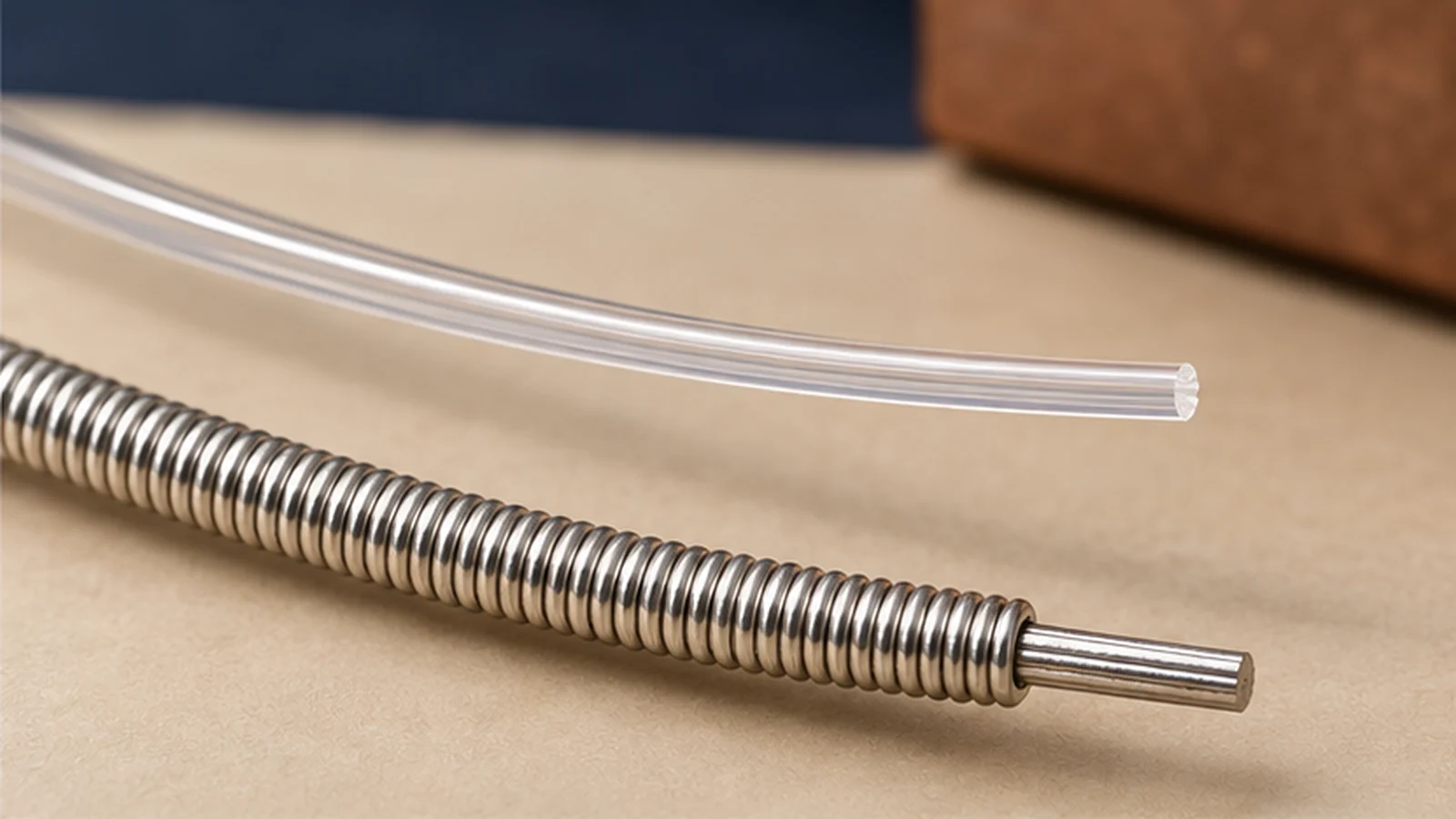
Do not infer tension from diameter alone. Nylon, fluorocarbon and other polymers can reach a target pitch at different diameters because their physical properties differ. Wound bass strings add more variables: core construction, wrap material, wrap dimensions and manufacturing process influence unit weight, flexibility and response.
Normal versus hard tension as a range decision
For many retail ranges, normal tension is the easier reference point because it can represent a familiar middle direction. Hard tension can serve buyers who want a firmer response, a different attack or a second option that is clearly separated from the first. These are range hypotheses. They should be validated with the buyer’s customers and instruments instead of presented as universal player rules.
The choice should consider more than tone adjectives. Review left-hand resistance, right-hand response, tuning process, dynamic control, unwanted noise, intonation behavior and how quickly the set settles under the stated test method. Ask whether the difference is clear enough for customers to understand and for sales staff to explain. If two SKUs feel almost identical in the channel, the extra inventory and artwork may add complexity without creating a useful choice.
| Range question | Normal-tension direction | Hard-tension direction | Evidence to request |
|---|---|---|---|
| Intended role | Core or broad-reference SKU | Firmer alternative or specific application | Written range brief |
| Player expectation | Moderate resistance | Clearly increased resistance | Blind or coded sample notes |
| Instrument coverage | Defined full-size reference group | Same group or a separately stated group | Installation records |
| Marketing language | Measured, familiar wording | Relative comparison within the approved range | Approved product copy |
| Inventory choice | Possible launch base | Add only if differentiation is useful | Channel feedback and reorder data |
Avoid promising “more volume,” “better projection” or “longer life” from the tension label alone. An instrument, room, player and construction all influence the perceived result. If a claim matters commercially, define a test that can support it and retain the result with the product revision.
Compare samples with a controlled protocol
A useful sample review changes one major variable at a time. If the purpose is to compare normal and hard tension, keep the instrument, tuning, installation preparation, test passage and evaluation period consistent. When material and tension both change, record that as a multi-variable comparison and avoid attributing every difference to tension.
Assign neutral sample codes. Record unopened-pack condition, position identity, visible surface, straight-cut ends, length and any measurement data supplied with the revision. Install the strings in the documented order, tie them correctly at the bridge and bring them to pitch gradually. A photograph of the tie block after installation can help identify slippage or inconsistent winding, but it is not a substitute for a technical record.
Use the same short playing tasks on each sample: open-string tuning, first-position chords, scales across registers, repeated notes, soft and firm attack, vibrato where relevant and a tuning check after the chosen interval. Review the complete set and each string. Notes should describe what happened on a named instrument, such as “Sample C felt firmer on the first and sixth positions during the same passage,” rather than declare one sample objectively superior.
Create an approval sheet that survives handover
The sample sheet should contain the project name, supplier sample code, internal buyer code, date, instrument, scale, tuning, installer, installation notes, six-position matrix, observations, open questions and approval status. Attach approved artwork and packaging only after the product revision is frozen. If the gauge, material or construction changes, create a new revision rather than editing the old approval silently.
Keep reference samples in suitable storage with clear identity. A retained sample can help resolve later questions, but only if its age, storage condition and relationship to the production revision are known. Do not treat an unlabelled coil as a control standard.
Translate the approved feel into production controls
Words such as “comfortable” and “firm” help explain a range, but production control needs measurable characteristics. Agree which inputs and outputs identify the approved revision. Depending on the construction, records may include incoming material identity, nominal diameter, winding setup, overall length, surface condition, position sequence and packaging identity. Any tension figure should name the calculation or test method, scale, pitch and relevant conditions.
Sampling frequency and acceptance criteria should be agreed for the project. A buyer may ask for first-article measurements at setup, periodic checks during production and final identity or appearance sampling. The exact plan depends on the order, process and risk. It should not be invented after a complaint. If the supplier proposes a different control method, compare what each method can and cannot demonstrate.
Diameter measurement also deserves care. Soft polymers can deform under contact pressure, and a reading without method information may appear more precise than it is. Record the instrument, contact approach and repeated-reading rule. For wound strings, specify where the diameter is measured and how irregular surface geometry is handled.
Package and label tie-end classical strings correctly
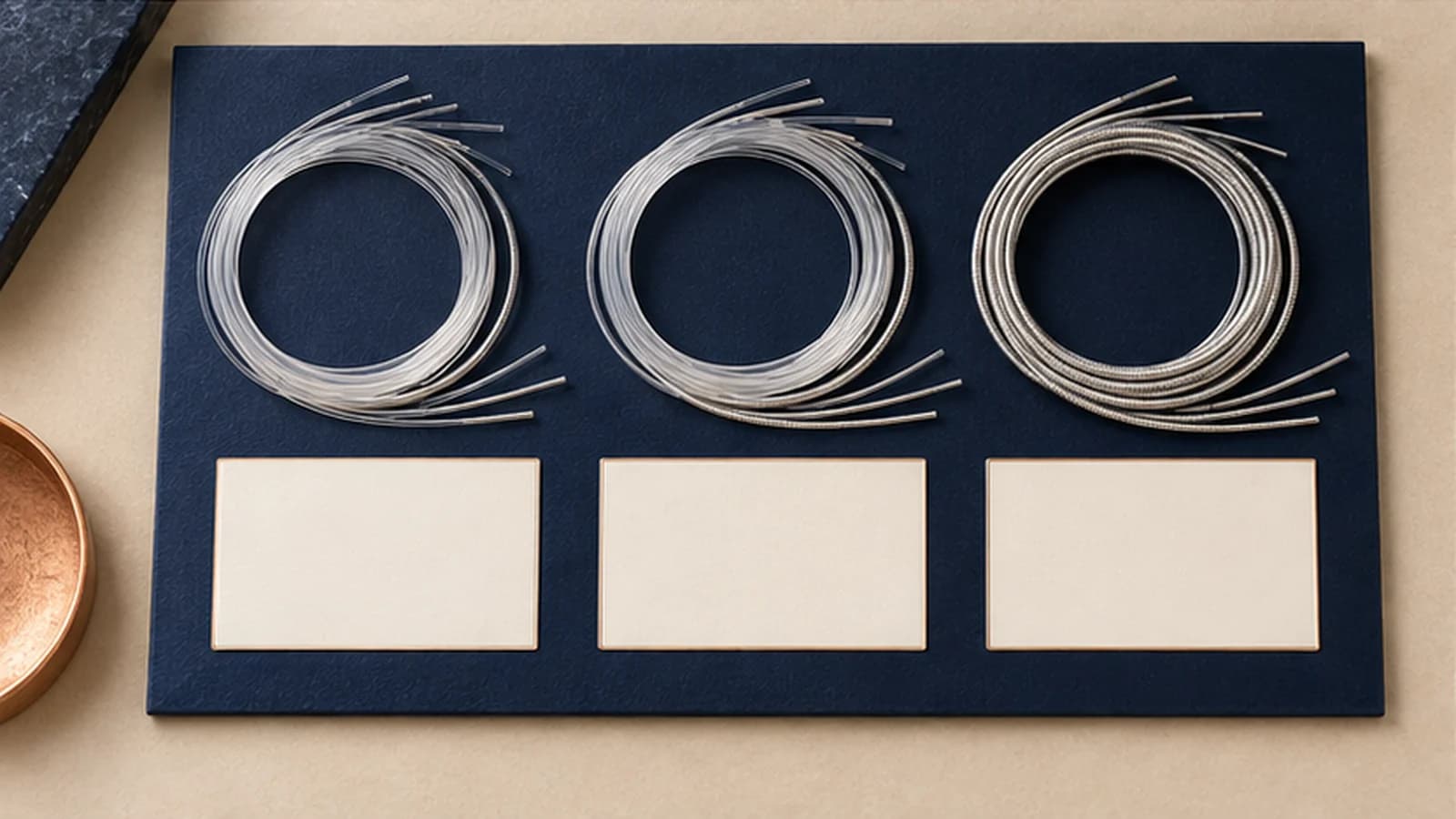
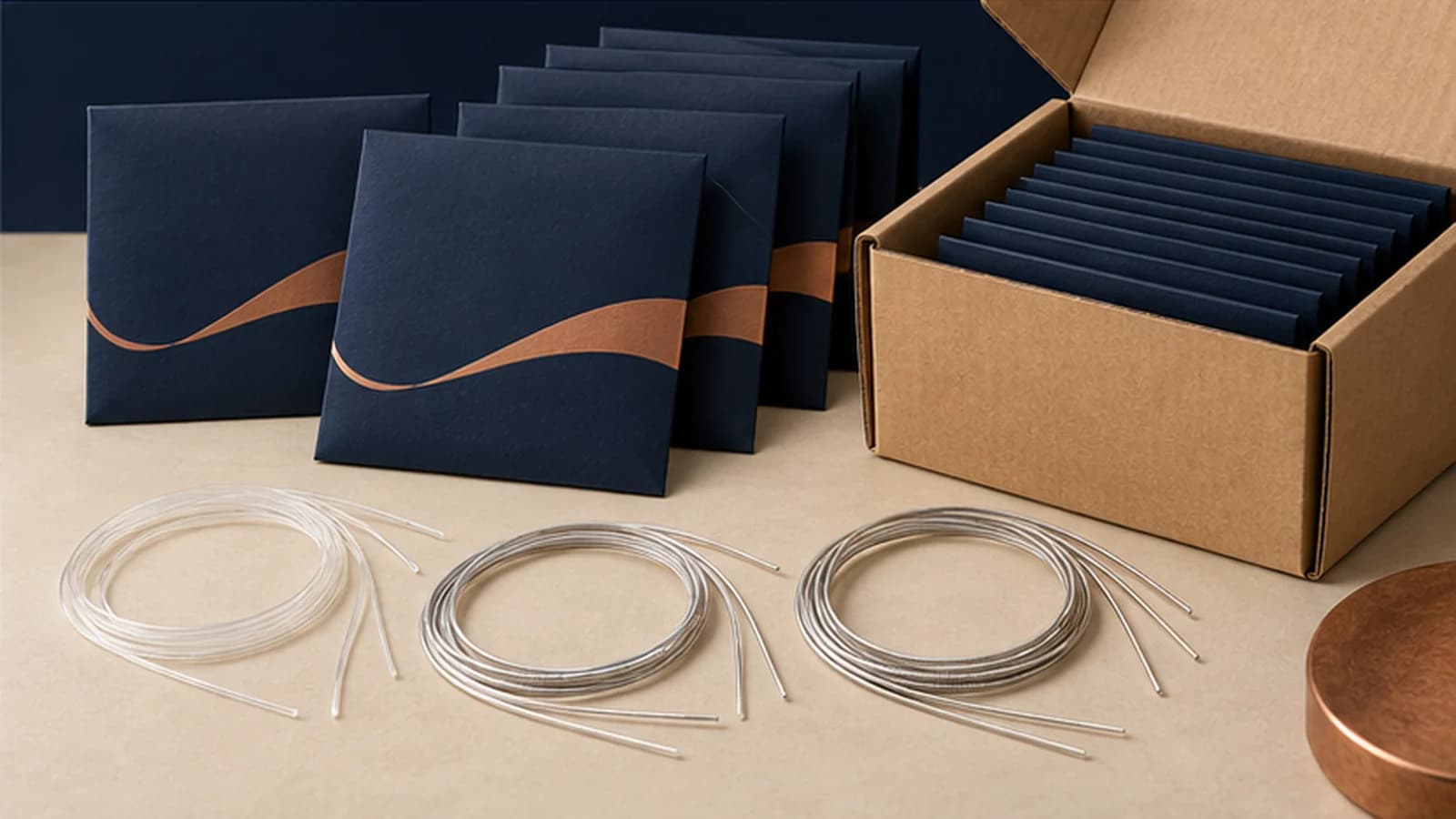
The packaging system should preserve product identity from the individual position through the retail pack and shipping carton. State the string count, tension family, material direction, gauge or specification reference, intended instrument size and tie-end construction. If individual sleeves are used, their position codes must match the installation guide.
For StringCrest classical and nylon projects covered by this guide, artwork and imagery should show straight-cut strings intended to be tied at the bridge. No ball ends, beads or electric-guitar hardware should appear. This visual rule matters because incorrect imagery can create customer confusion even when the physical product is correct.
Keep the protection specification separate from the graphic design. Define the inner sleeve or envelope, sealing method, outer carton, storage instructions and any product-specific validation needed for a protection claim. Do not assume a shiny pouch proves a moisture barrier. Barcode, SKU, language, country-marking and recycling requirements should be checked for the actual destination and buyer program.
Compare quotations on an identical scope
Send every supplier the same revision-controlled RFQ. Separate string construction, set assembly, individual sleeves, printed retail packaging, artwork or tooling, outer cartons, inspection documents and logistics terms. A low quote for loose strings is not comparable with a quote for six position-coded strings in finished private-label packaging.
Commercial fields such as MOQ, sample charge and lead time depend on the selected material, number of tension families, packaging, artwork count and production schedule. Until those inputs are confirmed, request project-specific values and validity dates instead of publishing a permanent promise. Build the schedule around real gates: specification review, sample, installation evaluation, revision, artwork proof, order release, production, packing, inspection and shipment.
Ask how substitutions are controlled. A polymer color, wrap wire or packaging material should not change without review merely because it appears similar. The quotation and approval record should make the approved revision clear.
Inspect the shipment against the approved revision
Final inspection should confirm identity before performance language. Check purchase order, SKU, tension family, string count, position sequence, tie-end construction, packaging revision, barcode and carton marks. Use the agreed sampling plan for visual condition and measurable characteristics. Record lot or batch references that connect the shipment with available production records.
Open-pack checks should verify that every set contains the correct three trebles and three wound basses in the right order. Look for contamination, surface damage, unusual winding gaps, deformation, corrosion on metallic components and packaging-seal defects. Measurements should use the agreed method and tolerances. A carton photo without item-level identity is not sufficient evidence of product conformity.
If a deviation appears, isolate the affected sample and document the exact SKU, lot, position, condition and method. Decide disposition through the agreed process. Avoid broad statements such as “all hard-tension strings are wrong” when the evidence concerns one position or one package.
Shipment record checklist
- Purchase order and approved product revision
- Packaging artwork revision and barcode list
- Lot or batch identity
- Sample size and selection method
- Count and position-sequence result
- Tie-end and visible-condition result
- Agreed measurement results with method
- Carton quantity and marks
- Deviation record and disposition, if applicable
- Inspector, date and retained evidence
FAQ
Is hard tension always louder than normal tension?
No universal result can be promised from the label alone. Construction, instrument, setup, player and room affect perceived loudness and projection. Compare approved samples under stated conditions and make only claims supported by that evidence.
Can I copy another brand’s tension numbers for a private-label set?
No. Published charts explain useful variables, but the numbers belong to a specific construction and test or calculation condition. Define the desired application, then approve the proposed StringCrest revision through its own specification and sample record.
Does a thicker classical string always have higher tension?
Not by itself. Material density, construction, vibrating length and pitch also matter. Diameter is one field in a complete specification, not a standalone tension guarantee.
Should normal and hard tension use the same packaging design?
They can share a brand system, but the SKU, tension label and any identifying color or code must be unmistakable. Approval should cover both graphic consistency and the correct product revision behind each pack.
Do StringCrest nylon classical strings use ball ends?
The classical and nylon project scope described here uses traditional straight-cut, tie-end construction. Product imagery, samples and packaging should not show ball ends or metal beads.
What should I send for a useful quotation?
Send instrument type and scale, tuning, six-position material and diameter direction, normal or hard tension role, tie-end requirement, packaging format, artwork scope, quantity scenarios, destination and desired sample process. Mark unknown fields so they can be reviewed rather than guessed.
Conclusion
Normal and hard tension are useful range labels only when they sit on top of a controlled product definition. A wholesale buyer should connect the label to the instrument application, six-position construction, sample protocol, tie-end packaging, production controls and shipment record. That approach creates a repeatable SKU and gives sales teams language they can explain without exaggeration.
Use external tension charts to understand variables and methods, never as borrowed proof for a new product. Approve the actual offered revision on representative instruments, preserve the decision record and inspect shipments against the same identity.
If you are building or refining a classical-guitar string range, review the StringCrest classical guitar string category and send your normal or hard tension brief. Include scale, tuning, six-position construction, tie-end requirement and packaging scope so the next step can focus on the real open decisions.
FROM GUIDE TO PRODUCT
Connect this guide to Classical Guitar Strings.
Review the relevant range, then bring the instrument, complete specification and open questions into one project brief.
YOUR PRODUCT · YOUR BRAND
Discuss your next string project with Frank.
Share your instrument category, target market, gauge or material direction and private-label packaging requirements.

ABOUT THE AUTHOR
Frank Zou
Frank works directly with musical-instrument brands, importers and distributors on string specifications, product selection and private-label project requirements.
Meet Frank