
Wholesale Planning
Wholesale Planning
Violin String OEM Sample Approval: A Four-Position Evaluation Record for Wholesale Buyers
Turn a four-string violin trial into a traceable wholesale production reference.
Introduction
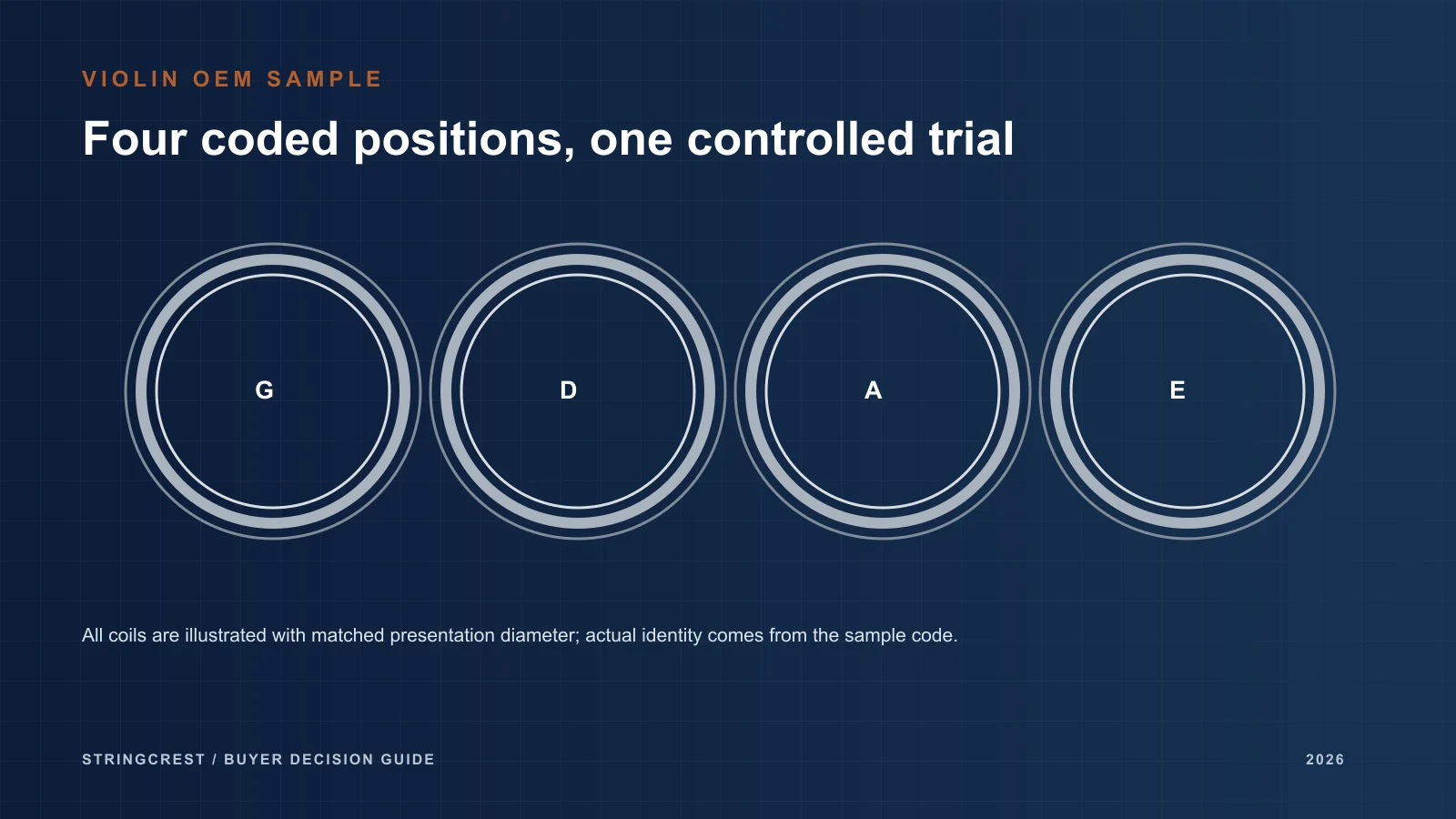
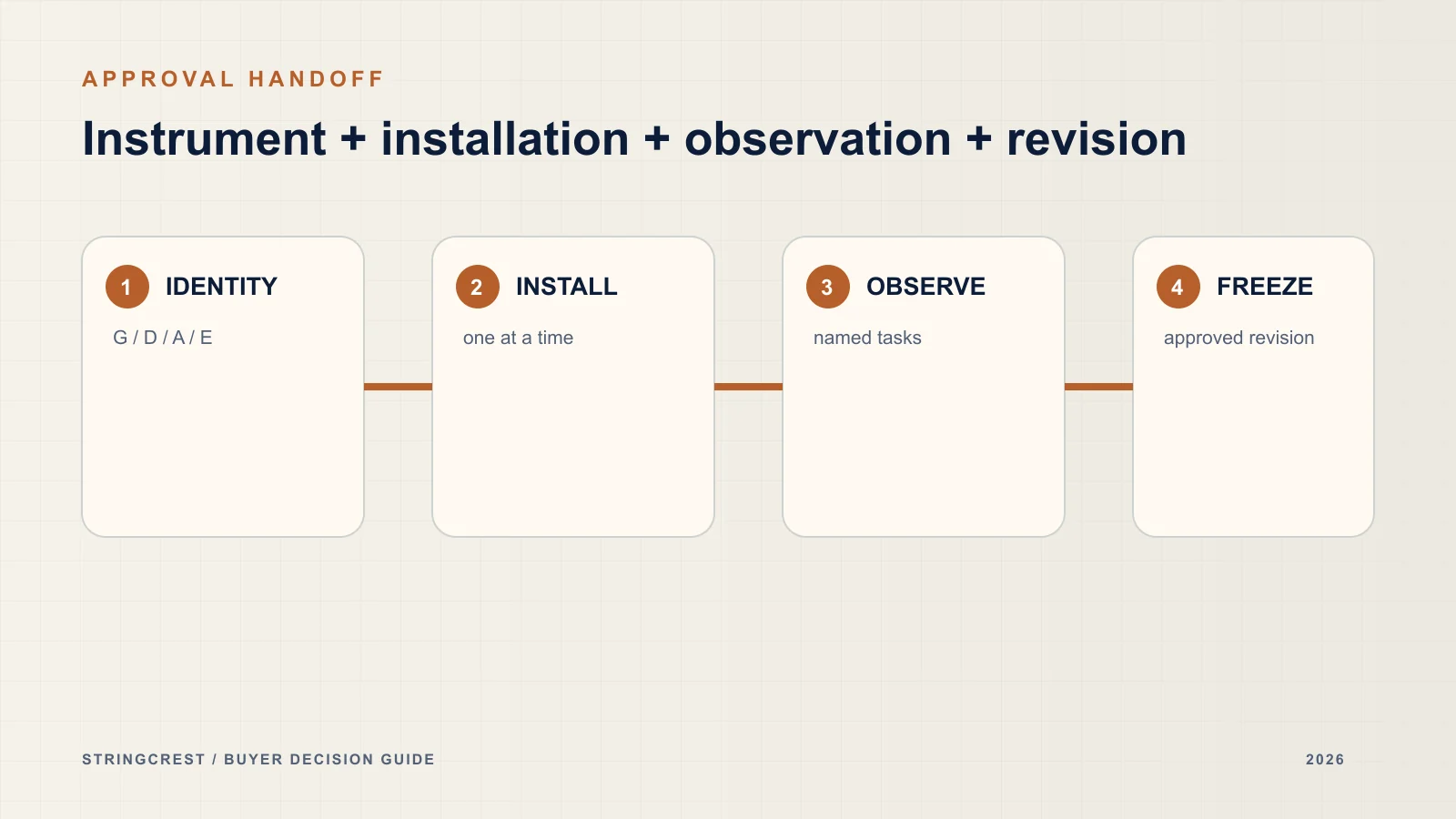
A violin string sample should not be approved as one anonymous bundle. It is a four-position system: G, D, A and E, each with its own identity, end construction, installation path and playing role. A useful OEM approval record connects the coded sample to a documented reference violin, controlled installation, repeatable observations and a frozen production revision.
This workflow is intended for wholesalers, distributors, education suppliers and private-label buyers. It does not prescribe a universal tonal target, replacement interval, tension or material. Those choices depend on the intended product, instrument and buyer brief. It also does not replace work by a qualified violin technician when the bridge, pegs, nut, tailpiece or soundpost needs attention.
Build the four-position identity matrix
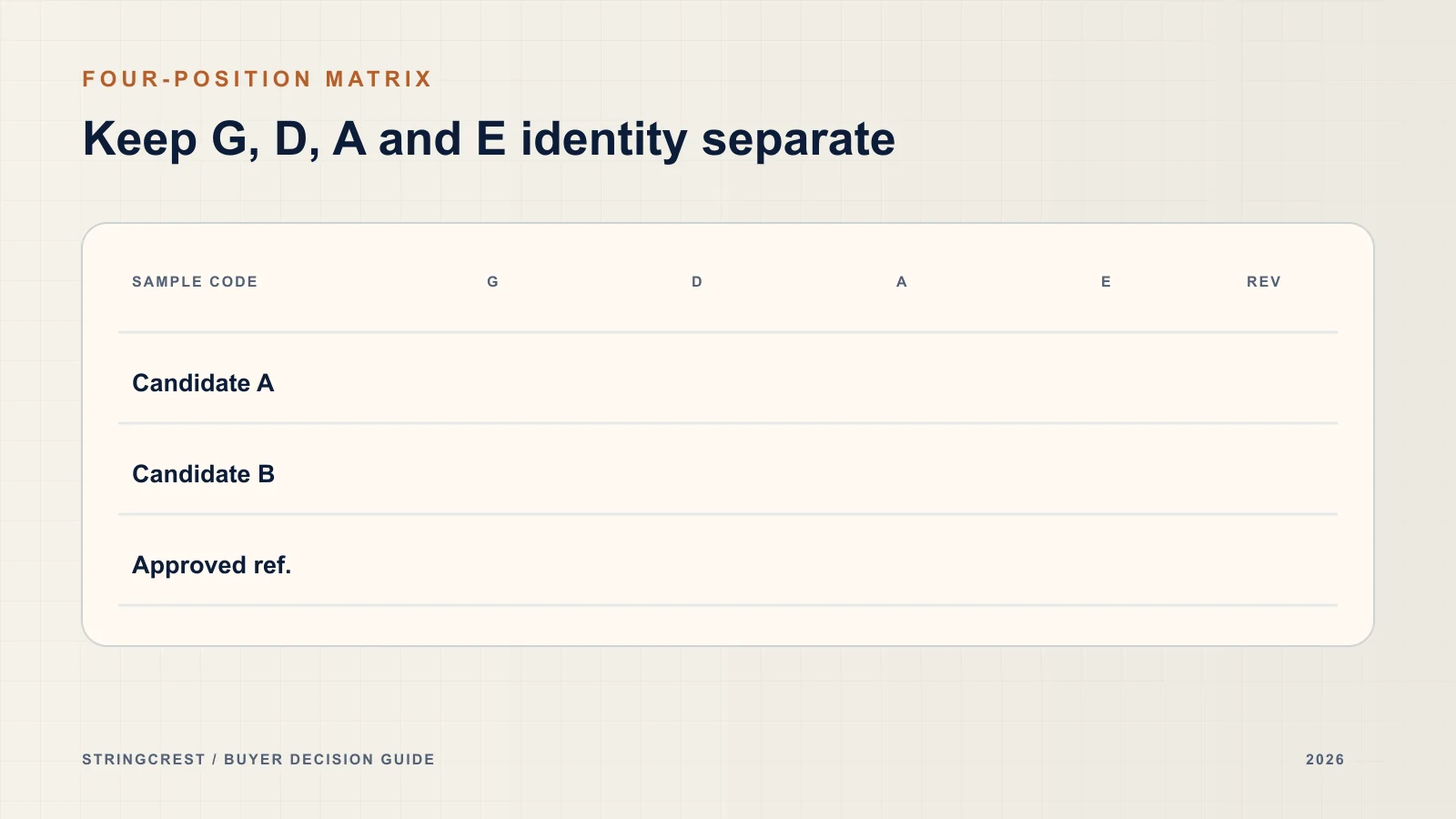
Record G, D, A and E separately
Give every candidate a code and revision. For each position record intended pitch, including octave, size, core construction and material, winding material if wound, gauge or other agreed dimensional field, ball or loop end where applicable, silk or sleeve identification, usable length and packaging code. Mark any unconfirmed field instead of copying a competitor specification. For E-string attachment questions, use the ball-end and loop-end fit guide before recording a confirmed match.
Keep the four strings together with their original sleeves. Check the packing method against the approved packaging revision and the agreed requirements for avoiding string damage. Record the actual condition, including any kink, winding damage or loss of identity. A preferred coil shape or presentation diameter is not a rejection criterion unless the project specification makes it one; appearance does not replace a measured length record.
Define the reference violin and setup
Record instrument identifier, nominal size, relevant setup condition, bridge and nut condition, tailpiece and fine-tuner arrangement, peg condition, tuning reference, room conditions if relevant, player or evaluator and date. Use more than one instrument only when the approval scope requires it, and identify each result separately.
Inspect before removing a string
Look for a leaning bridge, damaged groove, slipping peg, loose fine tuner or other condition that could distort the sample result. Photograph or record the initial condition. If the instrument requires repair, stop and obtain technical review rather than using the sample to diagnose an uncontrolled instrument.
Install one position at a time
Both Yamaha's restringing guidance and D'Addario's installation guidance advise changing one string at a time to help maintain bridge and soundpost position. Follow the actual instrument and string makers' instructions. Protect the instrument and keep the released string identified. If a bridge or soundpost falls, stop the trial and consult a qualified string-instrument specialist.
Seat the tailpiece or fine-tuner end correctly, route the string through the bridge and nut grooves, and wind it on the intended peg using the approved method. Bring tension up gradually. Check that the bridge remains in its expected position and stop if an instrument-safety concern appears.
Stabilize before comparison
Define a practical settling and retuning sequence rather than comparing one string immediately and another after a different period. Record installation time, initial tuning observations, number or timing of retunes and the point when the playing comparison begins. Do not claim a universal stabilization time from one trial.
If the sample is meant for a school, rental fleet or professional channel, state that intended use in the brief. The evaluator can then use tasks relevant to that channel without pretending the result applies to every player.
Use repeatable playing and handling tasks
Create a short, named task list for each position: open-string response, controlled bow start, first-position scale, selected string crossings, dynamic change and tuning check after the task set. Use the same bow, rosin condition, evaluator or documented evaluator method, instrument and sequence for each candidate where practical.
Separate observation from preference
Record observable events such as delayed speech, unstable tuning during the defined period, interference at a groove, unusual winding contact or visible damage. Record subjective preference separately, with the evaluator named. A phrase such as “Evaluator A preferred Candidate B on Reference Violin 1” is more defensible than “Candidate B has the best tone.”
Check balance as a set
Evaluate each string individually, then review transitions across G-D, D-A and A-E. Note whether a concern belongs to one position, the installation, the instrument or the relationship between positions. Do not solve a four-string balance question by approving only the favored E string.
Where mixed sets are part of the intended commercial offer, define that matrix explicitly. A mixed reference is a different product decision from approving one matched four-string set.
Copy a four-position trial record
Copy this blank worksheet for each candidate revision and reference violin. Use the same trial ID, position and check ID in both tables, and duplicate a position row when it has several checks or tasks. The blanks contain no completed results. For specification approval and production controls beyond this violin trial, use the general sample-evaluation and quality-control guide.
Trial identity: trial ID _____; candidate code / revision _____; four-position identity-matrix reference _____; reference violin / setup record _____; evaluator / date _____; task-list revision _____; packaging revision, if in scope _____.
Define the check before recording a result
Enter the requirement and its source separately from the method and conditions. A source may be the agreed specification revision, a maker's applicable instruction or the buyer's documented task brief. Do not invent a tolerance for a descriptive playing task. If no acceptance criterion has been agreed, record the observation without claiming conformance.
| Position / check ID | Agreed criterion | Source / revision | Method / task | Conditions / record reference |
|---|---|---|---|---|
| G / _____ | _____ | _____ | _____ | _____ |
| D / _____ | _____ | _____ | _____ | _____ |
| A / _____ | _____ | _____ | _____ | _____ |
| E / _____ | _____ | _____ | _____ | _____ |
Conditions should identify the relevant setup, tuning reference, bow and rosin, task sequence and settling or observation period. Refer to the shared setup record where those conditions are identical; record any change instead of silently treating the trials as equivalent.
Record what happened, then the authorized decision
Record measured results with their units. Describe qualitative events without inventing numerical results.
| Position / check ID | Actual observation or result | Evidence reference / observation date | Unknown or not checked / action needed | Authorized decision / name, role and date |
|---|---|---|---|---|
| G / _____ | _____ | _____ | _____ | _____ |
| D / _____ | _____ | _____ | _____ | _____ |
| A / _____ | _____ | _____ | _____ | _____ |
| E / _____ | _____ | _____ | _____ | _____ |
Use Unconfirmed for missing information and Not checked for work not performed. Use Not applicable only with a reason. A blank is not a pass, zero or confirmation that a feature is absent. Record any required action with its responsible person or role and the evidence needed to close it.
Keep listening preference in a separate note: evaluator _____; candidate / violin / task _____; preference and reason _____. It can inform the buyer's choice, but it does not release an identity, fit or packaging concern. Only the authorized reviewer enters a decision against the agreed criterion and evidence.
Set-level decision: decision status (review open / approved / approved with documented limitation / revised sample required / not approved) _____; exact four-position combination / revision _____; scope and intended use, if approved / reference instrument _____; exclusions / open-item references _____; authorized name / role / date _____. Position-level decisions do not release the complete set while a required check or unresolved fit issue remains open.
Review removal, condition and retained sample
After the defined trial, remove one string at a time according to the instrument guidance. Record end security, visible winding condition, silk or sleeve identity and any mark that needs supplier review. Do not reuse a damaged string as the sole retained reference.
Retain the approved coded set where practical, plus the signed matrix, instrument record, task sheet, photographs and decision. Define storage conditions and access. A reference that loses its label or four-position relationship is weak evidence.
Freeze the production handoff
The approval should name the accepted sample code and revision, all four position fields, size, end construction, packaging revision, tested reference instruments, approved scope and unresolved exclusions. Connect that record to the quotation, purchase order and artwork. If a controlled field changes, decide whether a new sample or partial retest is required before using the same SKU.
Keep the review open while required information or checks are incomplete. When the defined scope is ready for an authorized decision, use clear outcomes: approved, approved with documented limitation, revised sample required or not approved. Name the scope and exclusions of any limited approval; it must not conceal an unresolved fit or instrument-safety concern. A chat message saying “sounds good” is not a sufficient production reference.
FAQ
Can all four violin strings be removed together during the test?
The cited instrument guidance advises changing strings one at a time to help maintain the bridge and soundpost system. Follow the actual instrument maker's instructions and use a technician when needed.
Does a sample need testing on several violins?
Only if the approval scope requires it. One instrument gives evidence for that reference and setup. A broad channel may justify additional named instruments, but results must not be merged anonymously.
Can tone be approved without documenting the player and bow?
It can be discussed, but the evidence is weaker. Naming the evaluator, bow and task sequence makes a subjective comparison more interpretable and repeatable.
Is a stable tuning result a durability claim?
No. It applies only to the defined trial and observation period. Long-term stability, wear or service life requires a separate method and adequate duration.
What if one position fails but the others are acceptable?
Record the position-specific result and request a targeted revision or clarification. Do not silently combine approved positions from different revisions without a new four-position matrix.
Conclusion
A defensible violin OEM approval keeps G, D, A and E identifiable from sleeve to retained reference. Use a documented violin, change one string at a time, stabilize the comparison, repeat the same tasks and separate observation from preference. Then freeze one revision that purchasing and production can both understand.
To discuss the requirements for your trial, start a violin string sample inquiry and describe the intended size, four-position identity, end requirements, packaging revision and reference-instrument plan. Keep unconfirmed fields visible before a wholesale order.
Sources
FROM GUIDE TO PRODUCT
Connect this guide to Folk & Orchestral Strings.
Review the relevant range, then bring the instrument, complete specification and open questions into one project brief.
YOUR PRODUCT · YOUR BRAND
Discuss your next string project with Frank.
Share your instrument category, target market, gauge or material direction and private-label packaging requirements.

ABOUT THE AUTHOR
Frank Zou
Frank works directly with musical-instrument brands, importers and distributors on string specifications, product selection and private-label project requirements.
Meet Frank