
Product Selection
Product Selection
Fluorocarbon vs Nylon Ukulele Strings: A Wholesale Range Planning Guide
A wholesale range guide to material, diameter, size, tuning, four-position balance, straight tie ends, packaging and inspection.
Introduction
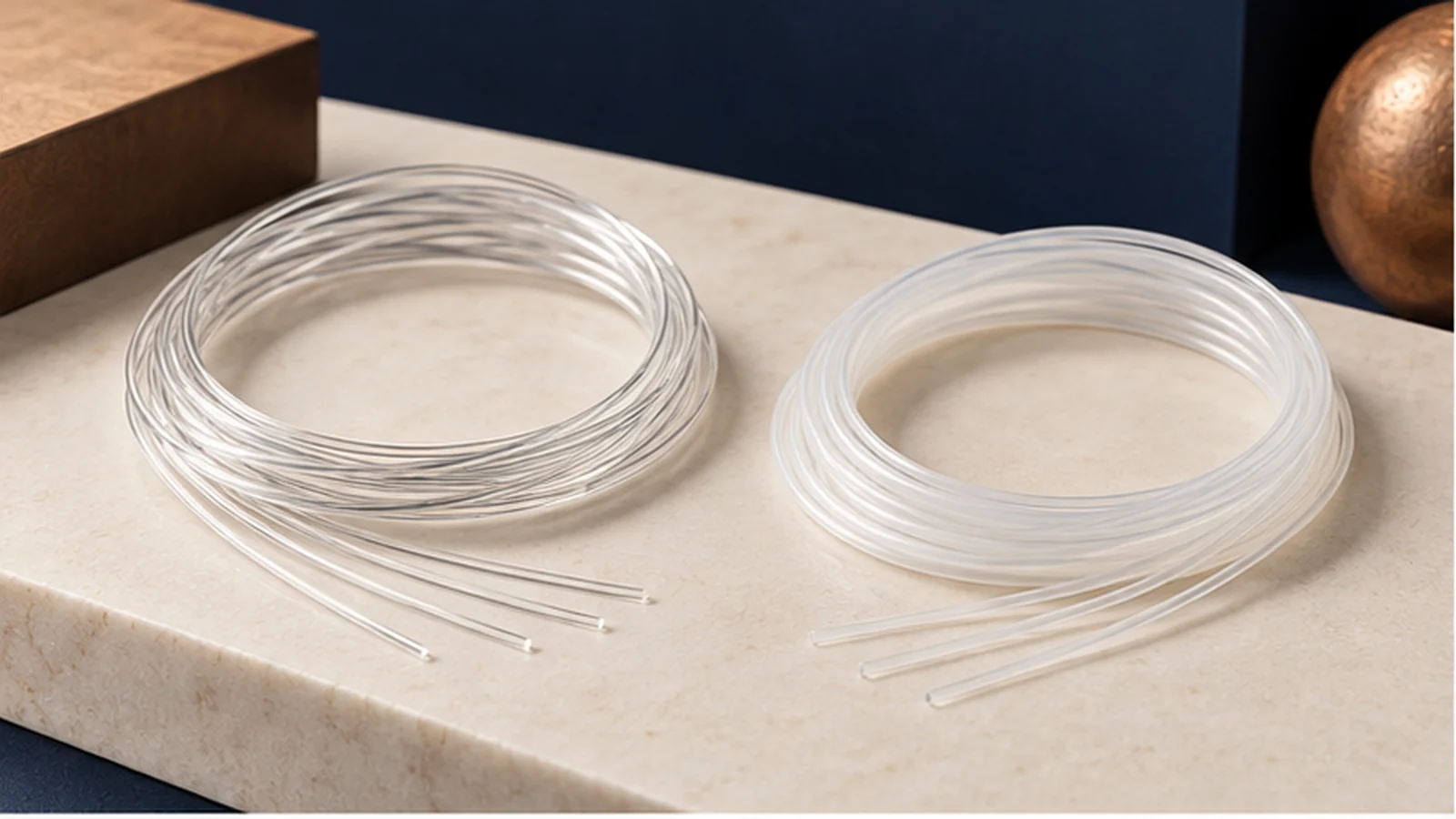
Fluorocarbon and nylon are both established directions for ukulele strings, but a wholesale buyer cannot choose between them from the material name alone. The polymers differ in density, typical diameter, surface feel and response. A complete set must still be designed for a stated instrument size, scale, tuning and high-G or low-G configuration. If a quotation says only “clear ukulele strings,” the buyer cannot confirm material, gauges, tension balance, end construction or product identity.
The practical question is which material direction gives your retailer, distributor or private-label range a clear customer role. Nylon can support a familiar, warmer and often fuller-feeling direction. Fluorocarbon is commonly used for a clearer, brighter and often slimmer-diameter direction. Those are category tendencies, not guaranteed outcomes. Extrusion quality, diameter, formulation, instrument, setup and player all affect the result.
This guide explains how to build a controlled comparison, select an opening assortment, evaluate samples, specify straight-cut tie-end construction, prepare packaging and inspect shipments. It uses public manufacturer information to explain variables without transferring another brand’s claims or specifications to StringCrest.
Material name is only the beginning
D’Addario’s current ukulele collection includes nylon, carbon, titanium and Nyltech families across soprano, concert, tenor and baritone applications. Its product pages show that material is considered together with instrument type, tuning, gauge and set construction. Martin’s ukulele information describes clear fluorocarbon sets for soprano/concert and tenor applications, while baritone sets use a different combination. These references illustrate market architecture; they do not define StringCrest product performance.
“Carbon” is commonly used in musical-instrument retail language for fluorocarbon string material. A buyer should decide which terminology the destination market understands and ensure the technical specification identifies the actual offered polymer. Do not use “carbon fiber” unless that is literally the construction; monofilament fluorocarbon is not a woven carbon-fiber string.
Density changes the diameter conversation
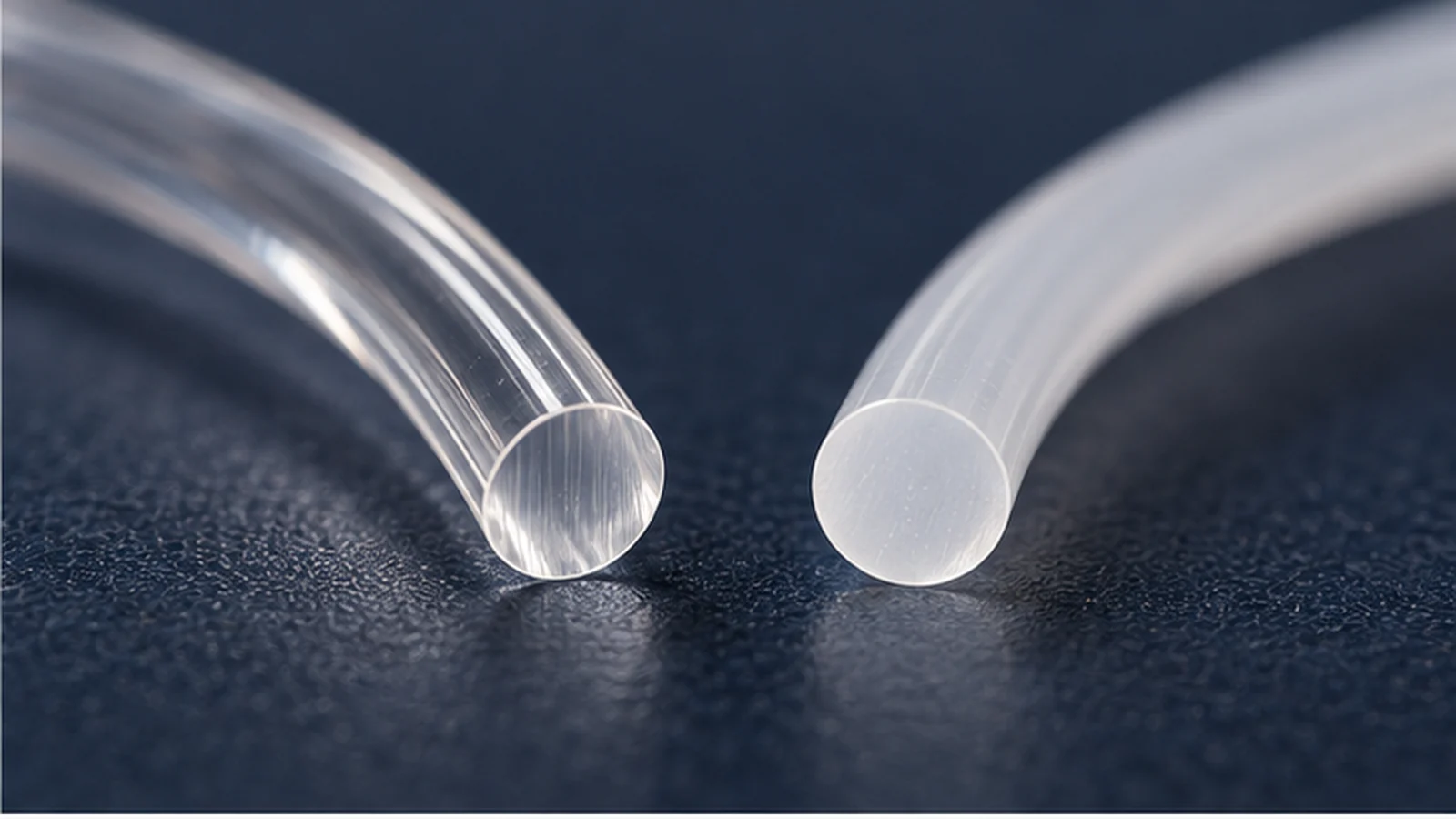
A higher-density material can reach a target pitch and tension direction at a different diameter from a lower-density material. That means a fluorocarbon gauge should not be copied directly into a nylon brief. Aquila’s published gauge conversion tables place nylon and carbon gauges in separate columns for equivalent design work. The table is evidence that material and diameter must be considered together, not a formula for copying an unrelated product.
Diameter also affects how a string sits in the nut slot and feels under the fingers. When material changes, confirm fit and playing response on the intended instrument. A thinner-looking string is not automatically lower tension, and a thicker-looking string is not automatically harder to play.
Start with instrument size and tuning
A useful RFQ identifies soprano, concert, tenor or baritone application and states the scale rather than relying only on the size word. It also records tuning. Standard high-G G–C–E–A is common for soprano, concert and tenor, but low-G alternatives require a different fourth-string decision. Baritone commonly uses D–G–B–E and should be treated as a separate family.
Do not ask one SKU to cover every ukulele size unless a measured and tested specification supports the claim. A string can be long enough to install yet still create an unsuitable tension or feel on another scale. Record bridge-to-nut and nut-to-tuner paths, along with the required overall length. If the product may be used on slotted headstocks or unusual bridges, include photographs and measurements.
StringCrest ukulele and nylon project imagery should show plain straight-cut or tie-end strings. No ball ends, metal beads, colored beads, eyelets or electric-guitar hardware should appear. The installation guide needs to match the actual bridge method.
Define high-G and low-G separately
A high-G set uses re-entrant tuning, where the fourth string is not the lowest sounding pitch. A low-G set uses a lower fourth string and may require a different material or wound construction. Do not imply that one loose monofilament fourth string can serve both roles.
State whether low G is plain or wound, the intended scale and the complete four-position matrix. If a wound low-G option is offered, specify its core, wrap, diameter, length and transition. It should be sampled and packaged as a distinct revision. This article’s illustrative images show plain polymer sets and make no claim about a wound low-G product.
Give nylon and fluorocarbon distinct range roles
Range planning works best when each SKU answers a clear customer question. A nylon set may be positioned around a familiar, warm or rounded direction and a slightly fuller feel. A fluorocarbon set may be positioned around clear articulation, a bright direction or a slimmer feel. Those descriptions must be confirmed for the actual sample and should remain comparative rather than absolute.
| Decision field | Nylon direction | Fluorocarbon direction | What to verify |
|---|---|---|---|
| Retail role | Familiar core option or warmer alternative | Clearer or brighter alternative | Channel need and sample notes |
| Diameter | Often larger for a comparable pitch/tension design | Often smaller because material properties differ | Position-by-position measurement |
| Surface and feel | Formulation and finish dependent | Formulation and finish dependent | Blind handling comparison |
| Instrument family | Soprano, concert, tenor or baritone revision | Separate size/tuning revision | Scale and fit test |
| Copy | Qualified material and response description | Qualified material and response description | Approved product evidence |
An opening private-label range does not need every material, size and tuning combination. One carefully approved high-G SKU may be more useful than six poorly differentiated packs. A second material can be added when it creates an understandable choice. Low-G and baritone directions should have their own business case and fit validation.
Use a launch matrix instead of a guess
List current customer requests, competitor shelf structure, website searches, returns and retailer feedback. Mark every assumption. Choose the smallest assortment that tests the important question: material preference, size coverage or tuning. Define the review period and the evidence required before adding SKUs.
Avoid calling a configuration a “best seller” or “professional standard” without data. If the buyer has no history, use terms such as launch option, reference sample or proposed range. Honest language protects both the brand and the purchasing decision.
Build a four-position product specification
Every string needs a line in the master record. Include target pitch, material, nominal diameter, color or translucency, surface description, overall length, straight-cut tie-end construction, position code and revision. For a wound fourth string, add core, wrap, wound length and transition information.
D’Addario’s concert nylon product page is a useful public example because it states the instrument, GCEA tuning, tie-end construction, material, four gauges and a tension chart. Those values belong to that product. A StringCrest project should document its own offered revision and conditions instead of treating the page as a specification to copy.
| Control field | Required question |
|---|---|
| Instrument | Which size and measured scale? |
| Tuning | High G, low G, baritone or another stated tuning? |
| Position | G, C, E or A, with octave identified where needed? |
| Polymer | Nylon formulation or fluorocarbon offered for this revision? |
| Diameter | Nominal value and agreed measurement method? |
| Length | Does it cover the bridge-to-tuner path with installation allowance? |
| End | Straight-cut tie-end, with no ball or bead? |
| Identity | Which SKU, string code and revision appear on pack and record? |
Evaluate samples on representative ukuleles
Use at least one representative instrument for every size and tuning the SKU claims to support. Inspect bridge, nut and tuners before installation. Photograph the setup and record scale, tuning, prior string type and any condition that may affect the result. A rough nut slot, sharp edge or unstable tuner can distort conclusions.
Assign neutral codes to nylon and fluorocarbon samples. Before installation, verify count, position identity, material appearance, straight-cut ends, length and supplied measurements. Install with the same knot method, bring to pitch gradually and allow the same settling procedure. Record the number and timing of tuning checks instead of relying on memory.
Use consistent playing tasks: open strings, first-position chords, melody across all positions, soft and firm strumming, fingerstyle, repeated notes and intonation checks appropriate to the project. Evaluate each position and the complete set. Listen for balance, attack, sustain direction and unwanted noise; record left-hand and right-hand feel separately.
Compare materials without forcing a winner
The goal is to decide which role each sample can serve. One evaluator may prefer nylon on a bright instrument and fluorocarbon on a darker instrument. That does not make either material universally superior. Record instrument-specific observations and identify the customer group they may serve.
If the diameter and target tension direction differ, state that. A material comparison that changes several variables can still be commercially useful, but it cannot isolate the effect of material alone. Keep the wording honest: “proposed nylon set versus proposed fluorocarbon set,” not “scientific proof that polymer A is always warmer.”
Retain approved samples with codes, dates and storage notes. The approval sheet should include four-position specification, instrument, installation, evaluation tasks, observations, open points, decision and revision. If any gauge or material changes, issue a new sample code.
Convert the approved set into production controls
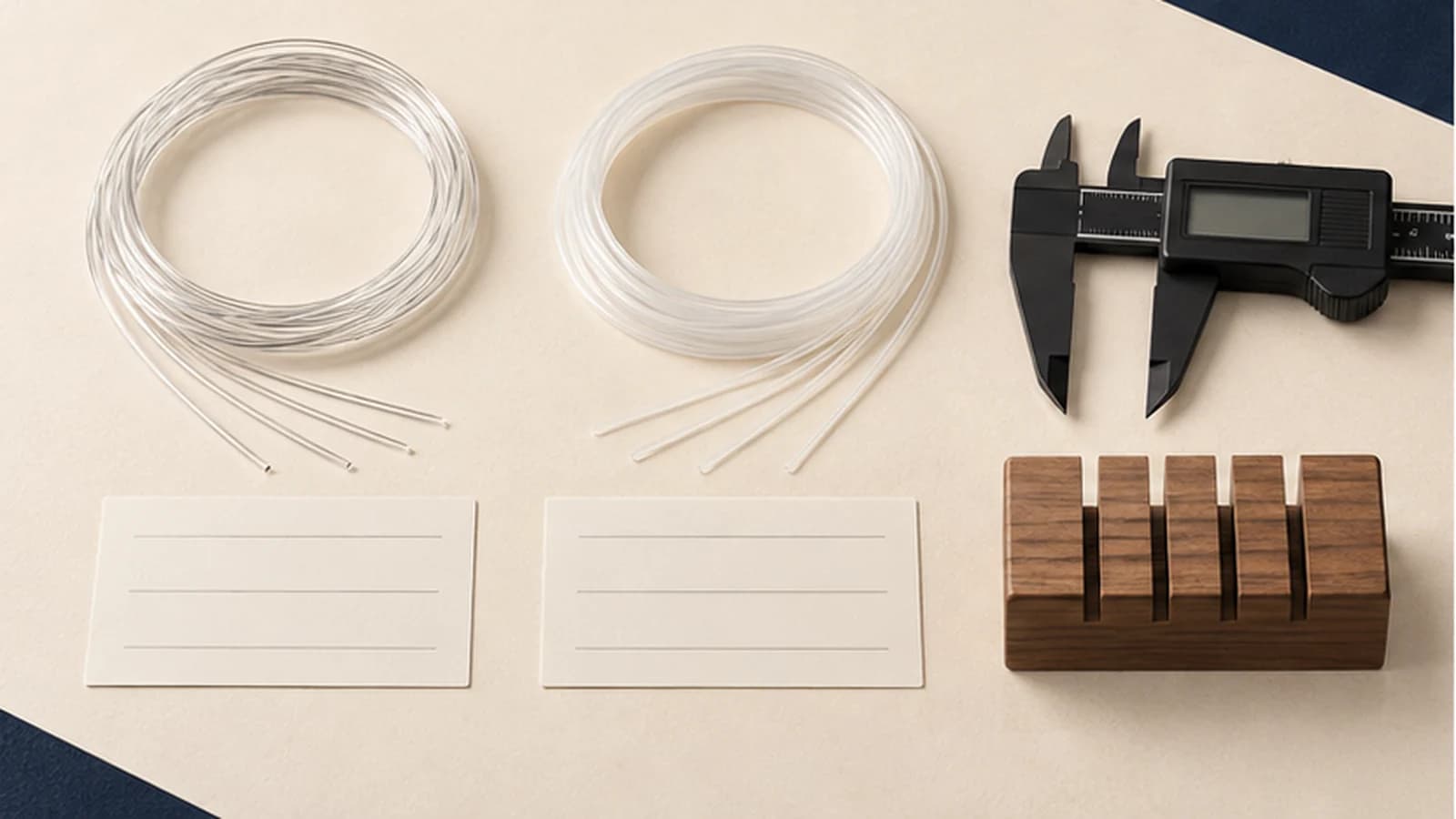
Polymer extrusion and sorting affect diameter consistency and therefore set balance. Ask the supplier how the offered material and diameter are identified, measured and grouped. D’Addario’s classical-string technical overview describes two-axis laser monitoring in its own extrusion process; that is D’Addario’s manufacturing statement, not a StringCrest capability claim. It illustrates the kind of process question a buyer can ask without assuming the answer.
Agree project-specific controls. These may cover incoming material identity, diameter, surface and translucency, overall length, four-position sorting, set count, packaging identity and visual condition. State the measurement method, sampling frequency and acceptance criteria. Soft polymers can deform under contact pressure, so a diameter reading should identify the instrument and method.
For a wound low-G revision, add core and wrap identity, wound length, transition, winding condition and any applicable fit checks. Do not combine plain high-G and wound low-G records under one vague SKU.
Design packaging that prevents material and tuning confusion
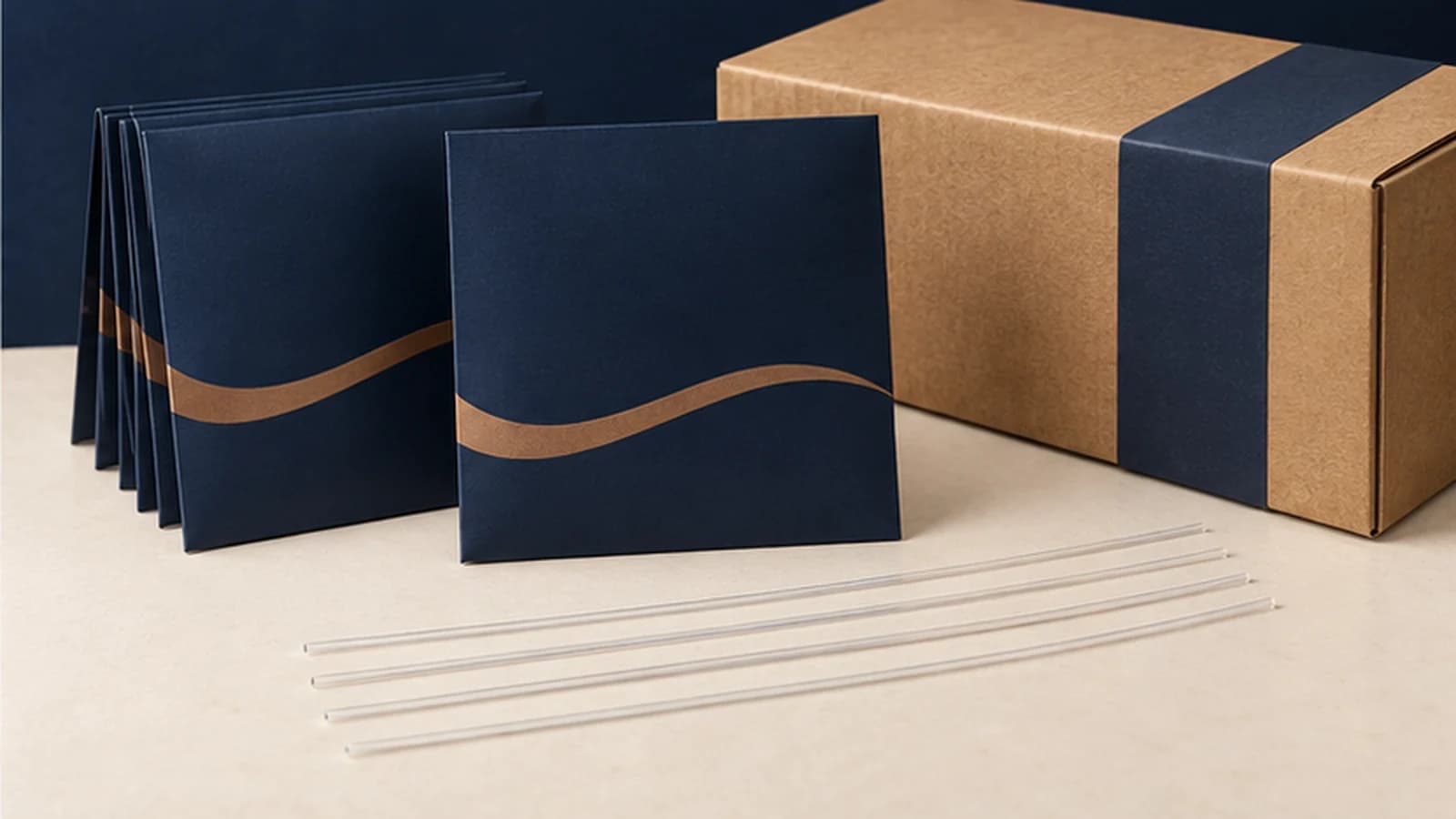
The front panel should clearly identify instrument size, tuning direction, material family and set count. If nylon and fluorocarbon packs share a visual system, use a strong SKU and material label so staff cannot confuse them. The rear or inner guide should show G–C–E–A order, high- or low-G status and tie-end installation.
Product images must match the construction. Clear polymer can be difficult to photograph, so lighting and contrast should reveal the strings without adding metal beads or false colors. All StringCrest nylon and ukulele visuals for this scope should show straight-cut ends. Captions for AI-generated scenes should identify them as illustrative and should not imply factory testing, shipment evidence or customer use.
Define protective packaging separately from branding: inner sleeve, seal, retail envelope, carton and storage instruction. Any moisture or shelf-life claim requires product-specific evidence under stated conditions. A polished pack does not prove protection performance.
Localize customer-facing terminology
Use the terms buyers actually recognize. English pages may say ukulele, fluorocarbon or carbon, nylon, high G and low G. Brazilian Portuguese commonly distinguishes ukulele product language while using clear technical phrases such as cordas de fluorocarbono and afinação com G agudo. Spanish and French need their own natural sentence order rather than English labels inserted unchanged. German may use familiar category terms while keeping the explanation precise.
Localize claims and instructions, not only headings. Check decimal separators, measurement units, tuning notation and barcode or legal fields for the actual market. Do not add local-stock, certification or delivery promises unless verified.
Compare quotations and schedules on the same revision
Send suppliers an identical brief covering instrument size and scale, tuning, high- or low-G, polymer, gauges, length, tie-end construction, packaging, quantity scenarios, destination and trade term. Separate string cost, individual sleeves, retail packaging, artwork or tooling, samples, inspection documents and logistics where possible.
MOQ, sample charge and lead time depend on the material, number of gauge combinations, packaging construction, artwork count and schedule. Request project-specific figures and validity dates after the scope is clear. Do not publish a fixed promise based on an early estimate.
Build the schedule around specification review, sample preparation, installation test, revision, artwork proof, purchase release, production, packing, inspection and shipment. If nylon and fluorocarbon versions launch together, approve each independently and verify that the two SKUs cannot be mixed during packing.
Inspect the shipment by SKU and position
Begin final inspection with approved identity: purchase order, material family, instrument size, tuning, four-position matrix, tie-end construction, package revision, barcode and carton marks. Use the agreed sampling plan to open packs and verify count, position sequence, appearance, surface, length and measurements.
Check that nylon and fluorocarbon SKUs are physically and visually separated. Clear strings can look similar under ordinary lighting, so package identity and controlled records matter. If the project uses material-specific visual cues, confirm them against the approved sample rather than guessing by transparency alone.
Record lot or batch reference, sample selection, results, deviations and disposition. A shipment photo proves that cartons existed at a moment in time; it does not prove the contents match the approved four-position revision. Retain item-level evidence appropriate to the project risk.
Shipment inspection checklist
- Purchase order and approved revision
- Nylon or fluorocarbon material identity
- Instrument size, scale claim and tuning
- Four-string count and position sequence
- Nominal diameter and agreed method
- Overall length and straight-cut tie-end construction
- Surface, translucency and visible condition
- Retail pack, barcode and carton revision
- Lot or batch reference and retained evidence
- Deviation and disposition record, if needed
FAQ
Is fluorocarbon always better than nylon for ukulele strings?
No. The materials can support different diameter, feel and response directions. The better choice depends on the intended instrument, tuning, customer role and approved sample evidence.
Are fluorocarbon strings always thinner?
They are often designed at smaller diameters than nylon for a comparable pitch and tension direction because the material properties differ. The actual result depends on the complete specification. Compare position-by-position gauges and tension conditions.
Can one set fit soprano, concert and tenor ukuleles?
Do not assume so from overall length alone. Scale changes tension and response. Validate every size claimed on the package with representative instruments and a documented specification.
Do StringCrest ukulele strings have ball ends?
The nylon and ukulele scope described here uses plain straight-cut, tie-end construction. Product images and packaging should not show metal balls, beads or eyelets.
Should I launch high-G and low-G versions together?
Only if the channel has a clear need and both revisions are fully specified and tested. A low-G fourth string can require different construction and identity, so it should not be treated as a simple packaging variation.
What information should I send for sampling?
Send ukulele size, measured scale, tuning, high- or low-G direction, four-position material and gauge targets, overall length, tie-end requirement, packaging format, quantity scenarios and the instruments available for evaluation.
Conclusion
Fluorocarbon versus nylon is not a one-word quality ranking. It is a product-development decision involving material, diameter, scale, tuning, four-position balance, tie-end construction, packaging and evidence. Define a clear role for each SKU, compare coded samples on representative instruments and preserve the approved revision through production and shipment inspection.
This method helps a buyer build a focused range without borrowing another brand’s specifications or promising universal tone. It also reduces confusion between instrument sizes, high- and low-G configurations, and visually similar clear strings.
Review the StringCrest ukulele string category and send your nylon or fluorocarbon brief. Include size, scale, tuning, four-position gauges, tie-end construction and packaging scope so the sample plan can address the real purchasing decision.
FROM GUIDE TO PRODUCT
Connect this guide to Ukulele Strings.
Review the relevant range, then bring the instrument, complete specification and open questions into one project brief.
YOUR PRODUCT · YOUR BRAND
Discuss your next string project with Frank.
Share your instrument category, target market, gauge or material direction and private-label packaging requirements.

ABOUT THE AUTHOR
Frank Zou
Frank works directly with musical-instrument brands, importers and distributors on string specifications, product selection and private-label project requirements.
Meet Frank