
Product Selection
Product Selection
Flatwound vs Roundwound Bass Strings: A Wholesale Assortment Guide
A wholesale assortment guide to winding construction, alloy, scale, gauges, physical fit, sample review, packaging and inspection.
Introduction
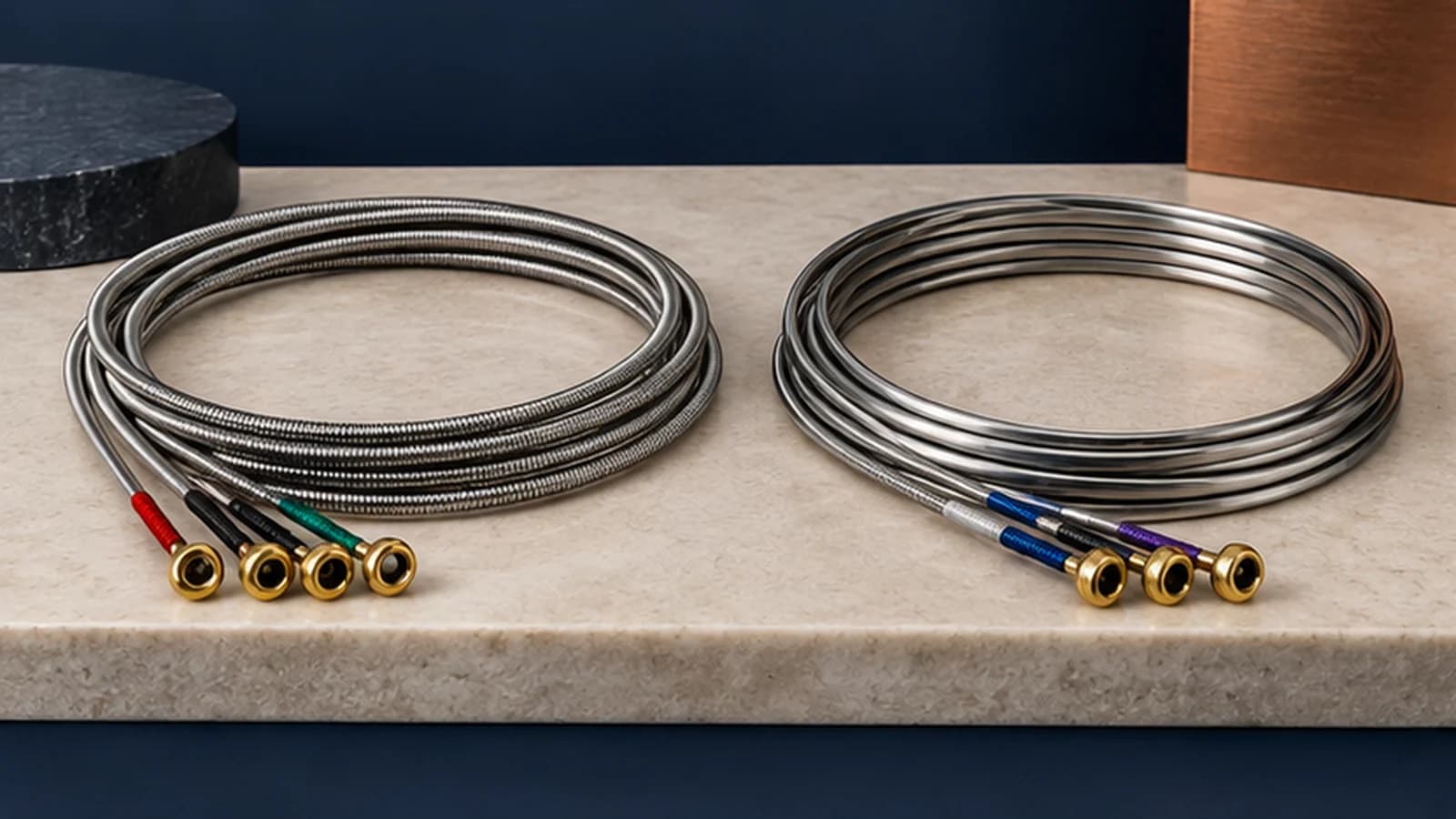
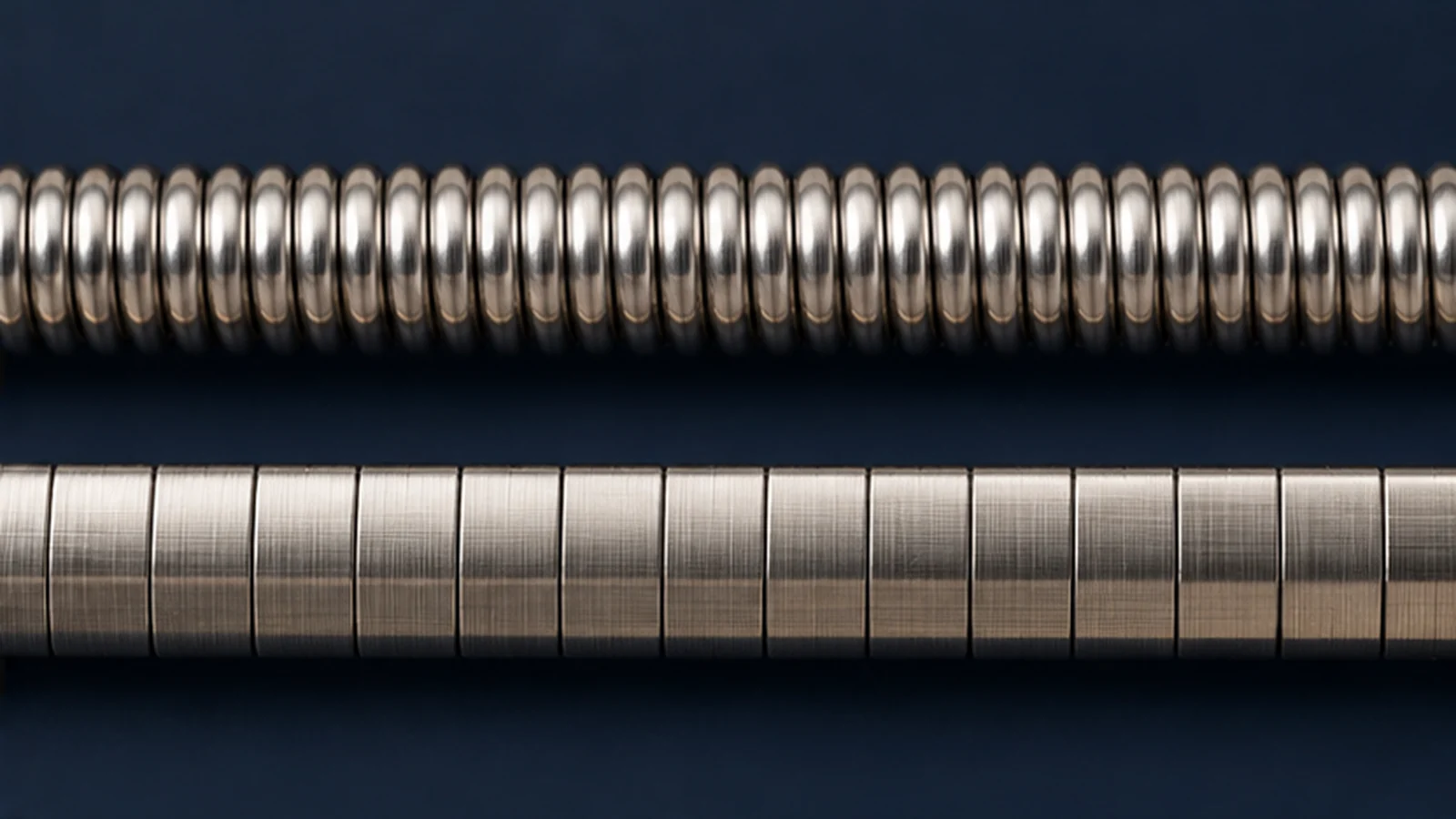
For a distributor or private-label brand, choosing flatwound or roundwound bass strings is an assortment decision before it is a tone debate. The two constructions create visibly and physically different products. Roundwound strings use a round outer wrap that leaves a ridged surface. Flatwound strings use a flat ribbon wrap that produces a smoother exterior. That construction difference influences feel, finger noise, attack and the language customers use to find the product, but it does not remove the need to specify alloy, core, gauge, scale length and taper.
A sensible opening range often gives roundwound strings the broader role and treats flatwound strings as a more focused alternative. That is a planning hypothesis, not a universal sales rule. The right mix depends on the buyer’s channel, player base, instrument mix, price position and evidence from existing sales or a controlled launch.
This guide turns the comparison into a wholesale brief. It covers construction, sample evaluation, assortment architecture, scale and gauge control, packaging, quotation comparison and shipment inspection. Published references from established brands explain category conventions; they do not establish StringCrest performance claims.
The construction difference comes first
Fender’s Bass Strings 101 describes roundwound strings as a steel core wrapped with round wire and flatwound strings as a steel core wrapped with flat wire. Fender characterizes roundwounds as brighter and more textured, while flatwounds offer a smoother feel and a warmer, mellower direction. D’Addario’s bass-string guide makes the same basic distinction and also lists half-round, tapewound, different alloys, coatings and scale options.
Those sources help define the category. They do not mean every roundwound or every flatwound behaves identically. Core shape, core-to-wrap relationship, alloy, winding tension, finishing, gauge, scale and instrument electronics can change the result. A buyer should compare specific proposed revisions rather than purchase by construction name alone.
Roundwound is a surface geometry, not an alloy
“Roundwound” describes the shape of the outer wrap. It does not tell you whether the wrap is nickel-plated steel, stainless steel, pure nickel or another offered material. A quotation should state both construction and wrap material. If the range includes two roundwound alloys, treat them as separate products with their own samples, copy and inspection identity.
Flatwound requires its own complete specification
Flat ribbon wrap changes the outer surface, but the product still needs a defined core, wrap material, gauge sequence, wound length, taper and total length. A flatwound set should not be approved simply because it feels smooth. Check whether the string fits the bridge and tuner path, reaches pitch on the intended scale and creates a coherent four-, five- or six-string set.
Decide what job each SKU performs
Define the role before discussing exact gauges. A core roundwound SKU may serve retailers that need a versatile replacement product with familiar category language. A flatwound SKU may serve customers seeking a smoother surface, reduced finger noise or a more controlled tonal direction. A specialist channel may justify multiple flatwound gauges; a general music store may need only one clearly explained option.
Build the decision around evidence available to the buyer:
- Current unit sales by construction, string count and gauge
- Search and inquiry language from the buyer’s own website
- Returns or fit complaints connected to scale length
- Requests from fretless, studio, jazz, vintage-tone or modern players
- Price bands and competing shelf space
- Staff ability to explain construction without making absolute promises
Do not describe a SKU as a “best seller” without sales evidence. If the channel has no history, call the range a launch assortment and define a review date. The first reorder cycle can provide better evidence than a generic market claim.
A practical opening assortment matrix
| Assortment role | Possible direction | Buyer question | Approval evidence |
|---|---|---|---|
| Core four-string | Roundwound, common gauge direction | Does it cover the broad replacement need? | Channel history or launch plan |
| Alternative four-string | Flatwound, clearly differentiated feel | Is the use case easy to explain? | Coded sample review |
| Five-string extension | Selected winding with defined B-string | Does the low string balance and fit? | Five-string instrument test |
| Scale variant | Short, medium, long or super-long | Does wound length land correctly? | Ball-to-taper measurement |
| Premium direction | Different material, treatment or finish | Is the benefit supported and distinct? | Product-specific evidence |
The table is a planning structure, not a prescribed catalog. A buyer can begin with fewer SKUs if each one has a clear job. Adding a flatwound option only because competitors carry one may create slow inventory unless the channel can reach the intended users.
Keep scale length and winding type separate
Construction choice does not solve fit. A roundwound and a flatwound set carrying the same gauge label may have different wound lengths, tapers or total lengths. The buyer should provide instrument scale, bridge type, ball-seat-to-nut distance, nut-to-tuner path and any through-body route. A “long scale” label is not precise enough across all brands and instruments.
Use a measured fit drawing or table. Record where the full-diameter winding should cross the bridge, speaking length and nut, and where taper or exposed core may begin. For a conventional design, the full winding should normally cover the vibrating path while avoiding unsuitable build-up around the tuner. The exact acceptance rule belongs in the project specification.
D’Addario’s current bass catalog shows construction, material, string-count and scale filters together. That is a useful reminder that these variables form one SKU. It is not evidence that two sets with the same menu labels are interchangeable.
Do not compare tone with mismatched fit
A tuner-side transition that leaves an unsuitable section at the nut can compromise the fit review. A bridge-side taper or exposed-core section may intentionally seat on the saddle; compare its contact and transition with the maker’s intended geometry rather than rejecting it solely for reaching the vibrating path. Confirm physical fit before evaluating tonal direction. Record the actual instrument and measured path so another reviewer can reproduce the installation.
For five- and six-string sets, review the lowest and highest added strings carefully. The B string may use a different taper or construction approach, and the complete set must still feel and respond coherently. Do not approve a five-string SKU by adding an untested B string to a four-string approval.
Compare samples without hiding variables
Ask for coded roundwound and flatwound samples with a complete data sheet. If the goal is to compare winding type, keep scale, tuning, nominal gauge direction, instrument, pickup setting, amplifier path and playing tasks as consistent as possible. When the alloys differ, state that clearly and avoid assigning every audible change to surface geometry.
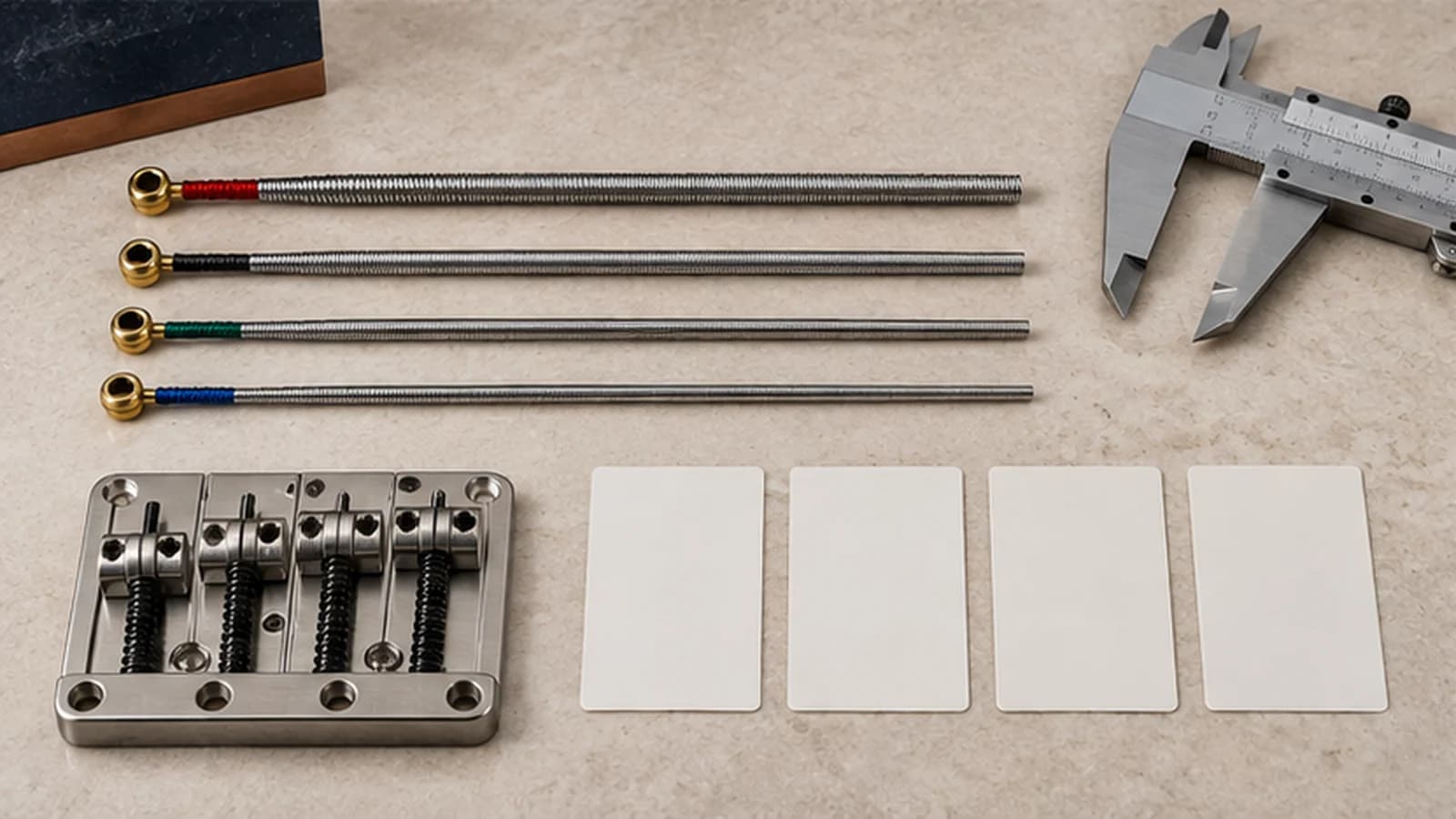
Before installation, check string count, gauge sequence, ball ends, wrap direction, surface, wound length, taper position and overall length. Photograph the unopened pack and individual positions. Inspect the bass bridge, nut, tuners and fretboard condition. On a fretless instrument, document the fingerboard material and existing wear before making a wear-related observation.
Install each set on the recorded instrument, tune gradually and allow the same preparation period. Use repeatable tasks: open notes, sustained notes, fingerstyle, pick, muted passages, position shifts and—if appropriate for the target customer—slap articulation. Record finger noise, surface feel, attack, note definition, sustain direction, tuning behavior and fit. Keep amplifier and control settings fixed or record every change.
Use language that matches the evidence
A useful note says “On Instrument A with the recorded settings, Sample R produced more audible upper-frequency attack during the pick passage than Sample F.” It does not say “roundwound always cuts through every mix.” The first statement can be traced to a condition. The second overstates a general tendency as a universal fact.
Ask more than one evaluator to use the same form when the product decision is important. Blind or neutral sample codes reduce expectation bias. Preserve disagreement instead of forcing a false average; different player groups may be exactly why two constructions deserve separate SKUs.
Turn sample observations into specifications
Once a revision is approved, convert subjective language into controlled identity and measurable fields. The product record may include core description, wrap material and shape, nominal gauge sequence, wound length, taper locations, total length, ball-end type, surface appearance and packaging code. If the project uses color wraps near the ball or tuner, list color by position and verify colorfastness or transfer risks under agreed conditions.
Agree how incoming material and process records identify the revision. Production controls may include setup verification, diameter checks, wound-length checks, visual winding review, ball-end attachment review, set assembly and packaging identity. The appropriate frequency and tolerance depend on the product and order. State them before production rather than inventing them after shipment.
For flatwound strings, surface continuity and edge condition deserve attention. For roundwound strings, review spacing, wrap consistency and unwanted gaps. Visual inspection cannot prove tone, but it can identify obvious construction or handling problems. Performance checks should use a defined sample method and representative instruments.
Build packaging around product clarity
Flatwound and roundwound packs should be easy to distinguish at a glance without relying only on subtle artwork. State winding construction, material, string count, gauge sequence and supported scale revision. If the range includes multiple lengths, give each one a distinct SKU and ensure the front, back, barcode record, inner sleeves and carton agree.
Use product photography or diagrams that accurately show the winding surface. Avoid showing an electric-guitar string when selling a heavy bass set. A macro image can help the customer understand the difference, but it should not imply a measured performance result.
Define protective packaging separately: inner sleeves or envelope, seal, retail pack, outer carton and storage instructions. If corrosion protection or shelf life is claimed, obtain product-specific evidence under stated conditions. Construction type alone does not prove lifespan.
Help retailers explain the choice
Provide concise, qualified copy. Roundwound can be described as a textured construction commonly selected for a brighter, more articulate direction. Flatwound can be described as a smooth construction commonly selected for a warmer, controlled direction with less finger noise. Add “actual response depends on the string specification, instrument and player” where space allows.
Retail staff also need fit guidance. State the intended scale and string count. Encourage customers with through-body bridges, unusual headstocks or uncertain scale labels to measure before purchase. Clear limitations reduce avoidable returns.

Compare supplier quotations fairly
Use the same matrix for every quotation: construction, alloy, core, gauges, string count, wound length, taper, total length, ball-end details, packaging, quantity scenarios, destination and trade term. Separate product, packaging, artwork or tooling, samples, inspection documents and logistics charges where possible.
MOQ and lead time may differ between roundwound and flatwound constructions or between stock and custom packaging. Request values for the actual revision, quantity and artwork scope. Do not treat an early estimate as a permanent catalog promise. Ask which inputs remain open and how a specification change affects price or schedule.
The timeline should show specification review, sample preparation, fit and playing evaluation, revision, artwork proof, purchase release, production, packing, inspection and shipment. If two constructions launch together, allow enough time to approve them independently.
Inspect shipment identity and construction
Final inspection should verify that the physical sets, retail packs and cartons match the approved revision. Begin with purchase order, SKU, winding type, material, gauge sequence, string count and length variant. Check barcode and artwork revision. Then use the agreed sampling plan for count, visible surface, ball ends, winding, taper, length and package condition.
Open-pack inspection must distinguish roundwound from flatwound by physical construction, not package color alone. Verify every position. A mixed set or mispacked length can create customer complaints even when each individual string appears well made. Retain photographs and measurements with the lot or batch identity.
When a deviation is found, record the specific SKU, lot, carton, set and string position. Isolate the affected material and follow the agreed disposition process. Avoid generalized claims until the scope is known.
Shipment inspection checklist
- Purchase order and approved revision
- Winding construction and wrap material
- Four-, five- or six-string count
- Gauge sequence and position identity
- Scale, wound length and taper placement
- Ball-end construction and optional color code
- Visible winding and surface condition
- Retail pack, barcode and carton revision
- Sampling record, deviations and disposition
FAQ
Are flatwound bass strings better than roundwound strings?
Neither construction is universally better. They serve different feel and response directions. The better wholesale choice is the one that has a defined customer role, fits the intended instruments and passes the buyer’s sample criteria.
Should a new private-label brand launch both types?
Only if each SKU has a clear purpose and the channel can explain and support it. A smaller range with one strong roundwound option may be sensible initially. A flatwound SKU can be added when customer demand or a deliberate specialist position supports it.
Can I use the same gauges for flatwound and roundwound sets?
Matching printed gauges does not guarantee matching tension, flexibility or response because construction and materials differ. Compare complete proposed sets on the intended scale and document each revision separately.
Are flatwounds always suitable for fretless basses?
They are commonly chosen for a smooth feel and reduced fingerboard wear direction, but instrument condition, fingerboard material, setup and player preference still matter. Avoid an absolute compatibility promise without an instrument-specific review.
What measurements matter most for a bass-string RFQ?
Provide instrument scale, bridge route, ball-seat-to-nut distance, nut-to-tuner distance, required wound length and taper location, string count, tuning and gauge direction. A photo with a measuring reference can clarify unusual hardware.
How should I evaluate samples?
Confirm fit first, then compare coded samples with the same instrument, setup and playing tasks. Record construction, material, gauges, fit, surface feel, finger noise, attack, sustain direction, tuning behavior and any visible change. Approve a named revision, not a loose description.
Conclusion
Flatwound versus roundwound is a useful category comparison only when it leads to a controlled wholesale decision. Define the customer role, then specify construction, material, gauges, string count, scale, wound length, taper, packaging and inspection. Compare actual samples on representative instruments and keep claims within the evidence.
That process helps a distributor decide whether it needs one core roundwound SKU, a focused flatwound alternative or a broader specialist range. It also prevents a common source of returns: a product that has the right tone description but the wrong physical fit.
Review the StringCrest bass guitar string category and send your bass assortment brief. Include winding type, alloy direction, string count, scale and bridge path, gauges and packaging so the proposed samples can be compared on the same scope.
FROM GUIDE TO PRODUCT
Connect this guide to Bass Guitar Strings.
Review the relevant range, then bring the instrument, complete specification and open questions into one project brief.
YOUR PRODUCT · YOUR BRAND
Discuss your next string project with Frank.
Share your instrument category, target market, gauge or material direction and private-label packaging requirements.

ABOUT THE AUTHOR
Frank Zou
Frank works directly with musical-instrument brands, importers and distributors on string specifications, product selection and private-label project requirements.
Meet Frank